
PTO meetings are supposed to energize people, not put them to sleep. Yet the treasurer’s report often feels like the “commercial break” — numbers get read, eyes glaze over, and no one remembers a thing. It doesn’t have to be that way.
The truth is, most people aren’t tuning out because they don’t care about the money. They’re tuning out because the information isn’t presented in a way that connects with them. A few simple adjustments can turn your treasurer’s report from a forgettable formality into one of the most trusted parts of your meeting.
Here’s how to make your financial updates short, clear, and actually useful.

Step 1: Know Your Audience
Most parents aren’t accountants. Skip the jargon and focus on what matters to them:
- How much money you have now.
- What came in since the last meeting.
- What went out (and why).
- What’s coming up financially.
When you frame your report around these four questions, you give your audience exactly what they need — without overwhelming them with line items they didn’t ask for.
Step 2: Use Visuals, Not Just Numbers
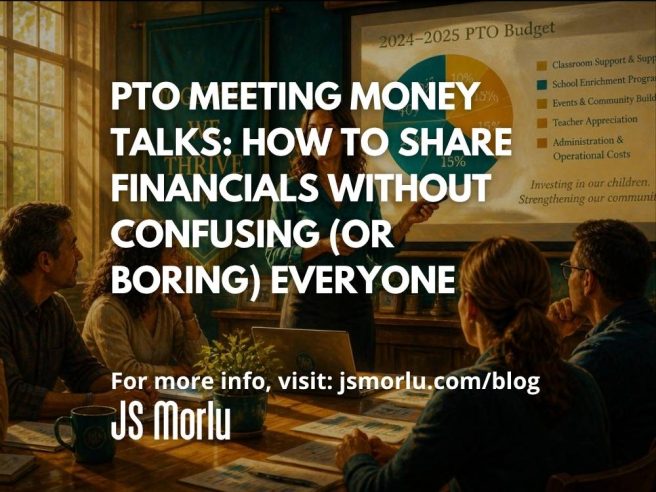
A simple chart or pie graph can make trends obvious at a glance. For example: “Here’s where our fundraising dollars came from this fall.” Visual aids don’t need to be elaborate — even a clean, printed one-pager with a basic bar chart can dramatically improve comprehension and retention. When people can see the story, they remember it.
Step 3: Keep It Short
Aim for three to five minutes maximum. Highlight the big picture and let people ask for details if they want them. Resist the urge to walk through every transaction — that’s what the written report is for. Your verbal update should be a summary, not a recitation.

Step 4: Connect the Money to the Mission
This is arguably the most important step. Don’t just say, “We spent $1,200 on supplies.” Say, “We spent $1,200 on classroom supplies — enough to give every teacher a set of science kits.” This makes the numbers feel real and meaningful. When people understand what the money actually did, they’re far more likely to stay engaged — and to keep contributing.
Step 5: Share in Writing, Too
Give members a printed or emailed version of the report so they can review it on their own time. This keeps the meeting moving and ensures the information is available for future reference. It also builds accountability and transparency, which strengthens trust in your PTO’s financial management over time.
💡 Pro Tip: Include one “fun fact” in every report — for example, “Our fall carnival netted $500 more than last year because we switched ticket vendors.” It keeps people engaged and listening, and it gives your audience something positive to walk away with.
Step 6: Be Ready for Questions
Have your backup details on hand — bank statements, event breakdowns, receipts — so you can answer quickly and confidently. Being prepared signals to your members that the finances are well-managed and that nothing is being glossed over. Even if no one asks a question, that level of readiness builds quiet confidence in your leadership.
Bottom line: A great treasurer’s report isn’t about dumping numbers. It’s about telling the financial story of your PTO in a way that builds trust, sparks interest, and keeps everyone engaged. With the right approach, your financial update can shift from the part people dread to the part that reminds everyone why they showed up.