
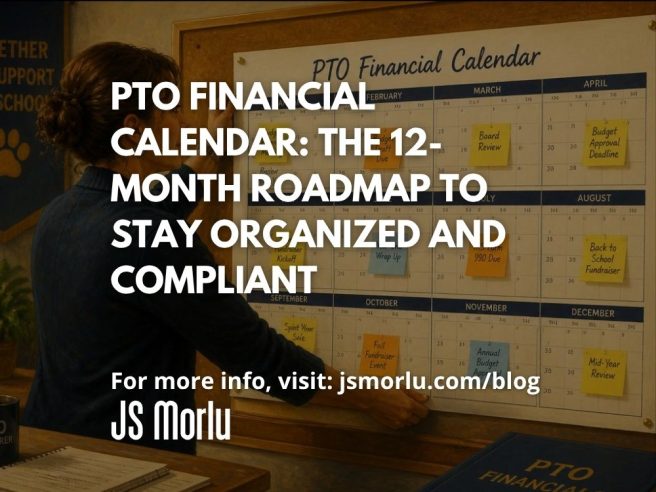
A PTO’s financial success isn’t about doing everything at once — it’s about doing the right things at the right time. The biggest mistakes PTOs make aren’t dishonest ones. They’re timing mistakes: the report that was never filed, the signer who was never updated, the fundraiser that launched without a cash-handling plan.
This 12-month calendar keeps your group on track so deadlines aren’t missed, money stays secure, and leaders aren’t scrambling when the school year gets busy.
July / August — Set the Stage
This is your reset window. The school year is about to begin, and the financial foundation you lay now will determine how smoothly everything runs through June. Don’t skip this step.
- Approve and finalize the annual budget.
- Update bank signers and remove old officers.
- Review bylaws and financial policies.
- Input all key filing deadlines into the PTO calendar.
September — Kick Off Right
The school year is live. Members are engaged. This is the best time to establish transparency before anyone has a reason to question how money is being managed.
- Share the budget with members for transparency.
- Reconcile the first month’s bank statement.
- Prepare for the first fundraiser’s money-handling plan.

October — First Quarter Review
One month in, it’s already time to check whether actual spending is tracking against the plan. Small variances caught early are easy to correct. Variances discovered in April are problems.
- Compare budget vs. actual spending.
- Make adjustments if needed.
- Begin planning winter fundraisers with a clear ROI goal.
November — Mid-Semester Check
Fall events generate cash. That cash needs to be documented, deposited, and reconciled before it gets lost in the holiday rush.
- Reconcile accounts monthly without fail.
- Ensure receipts and deposits are complete for fall events.
- Confirm insurance coverage is active.
December — Year-End Transparency
Before the break, give your members a clear picture of where the money stands. A mid-year report prevents speculation and builds the trust you’ll need when spring fundraising season begins.
- Publish a mid-year treasurer’s report to members.
- Verify all bills and reimbursements are paid before break.
January — Reset and Reassess
New semester, fresh look. Pull back and review the trends before the second half of the year builds momentum.
- Review income and expense trends.
- Plan spring fundraisers with realistic targets.
- Ensure IRS and state filing deadlines are on track.

February — Internal Mini-Audit
Having another set of eyes on the books — someone who wasn’t the one recording transactions — is one of the simplest and most effective fraud prevention steps a PTO can take.
- Have another board member review the books.
- Check for any outstanding checks or deposits.
March — Spring Fundraiser Prep
Spring fundraisers often generate the largest amounts of the year. The cash-handling procedures you set before the event determine whether that money arrives in the bank accurately.
- Finalize event budgets.
- Set cash-handling and payment collection procedures.
April — Second Quarter Review
You’re nine months into the fiscal year. At this point, you should have a clear picture of whether you’ll finish in the black — and enough time to adjust before the year closes.
- Compare year-to-date results with the budget.
- Adjust spending plans if income is lower than expected.
May — Transition Planning
Leadership transitions are one of the most common sources of financial gaps in PTOs. New treasurers who inherit disorganized books, missing signers, or undocumented procedures start from behind. Don’t let that happen.
- Prepare year-end financial summary.
- Schedule treasurer training for new leaders.
- Update signers for the upcoming term.
June — Year-End Closeout
Close the year cleanly. This is the month that sets the foundation for the next board — and the permanent record that donors, auditors, and members may review for years to come.
- Reconcile final bank statements.
- Complete the annual review or audit.
- File IRS Form 990 and any required state reports.
💡 Pro Tip: Keep this calendar in both your PTO binder and your digital drive — and review it at each board meeting so nothing slips through the cracks.
Bottom Line
When your PTO follows a clear financial calendar, you avoid last-minute chaos, keep your books clean, and protect your credibility all year long.