
Worship, Fear, and Survival
By: John S. Morlu II, CPA
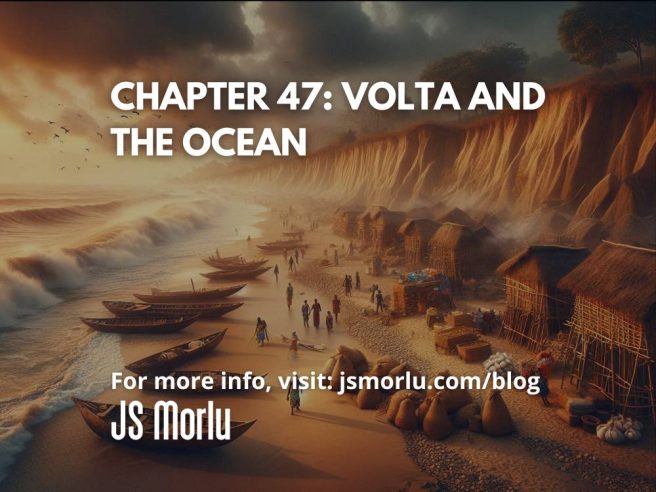
Few places in Ghana have a relationship with the ocean as intense, complicated, and emotional as the Volta Region. Here, the sea is not just water—it is spirit, history, enemy, provider, beauty, destruction, and ancestral memory, all contained in one restless body.
The ocean along Anloga, Keta, and the eastern coastline is dramatic—gentle at sunrise, deceptive by afternoon, roaring like a wounded god by evening. It is a coastline that smiles beautifully but never apologizes for its violence.
To live here is to live in negotiation with nature. To build here is to build with the expectation of loss. To fish here is to enter into a contract with spirits. To worship here is to respect the sea, not romanticize it.
The relationship between the people and the ocean is not simple—it is a tapestry woven with worship, fear, reverence, trauma, courage, and survival.

1. The Sea as Spirit — The Old Religion Still Breathes Here
To the Ewe of the coast, the ocean is a living being—not a metaphor. A presence. A personality. A deity with moods, tempers, appetite, and memory.
In the indigenous Ewe spiritual system:
- The ocean is home to powerful marine deities
- Spirits guard children and fishermen
- Waves communicate warnings
- Dream visions come from the sea
- Certain days are taboo for fishing
- Offerings must be made for protection
This is not superstition—it is centuries of lived experience.
Coastal families speak of the ocean the way you speak of a respected elder:
- carefully
- with honor
- with caution
- with understanding
- never with arrogance
When the sea is calm, elders say: “The spirit is resting.” When the sea is rough, they say: “The spirit is speaking.”
This worldview shaped an entire civilization long before Christianity and modernity arrived.
2. The Sea as Provider — Fish, Salt, Trade, and Livelihood
The coastline provides:
- fish
- shrimp
- oysters
- crab
- sea salt
- shellcraft
- seaweed
- transport routes
Fishing is not just an occupation—it is a heritage.
At dawn:
- Canoes emerge like silhouettes
- Nets stretch across the horizon
- Fishermen chant rowing songs
- The sky turns orange and gold
- The sea reveals its gifts
- The village wakes to possibility
Generations survive because the ocean decides to feed them. Every fish caught is a blessing, not entitlement. The sea gives—and the people receive with gratitude.
3. The Sea as Enemy — Erosion, Destruction, and Grief
And yet, the same sea that feeds is the same sea that destroys. The same sea that smiles is the same sea that devours.
The Volta coastline has experienced some of the worst erosion in West Africa. Entire communities have been swallowed:
- Homes
- Schools
- Churches
- Cemeteries
- Coconut groves
- Markets
- Childhood memories
- Landmarks
When the ocean takes land, it does not return it. It does not negotiate. It does not apologize.
Elders in Keta point into the water and say: “My house was there.” “My school was there.” “The market was there.”
These sentences carry a grief deeper than tears. The sea takes without mercy.
Even the famous Fort Prinzenstein, built in 1784, is now partly eaten by the sea—as if the ocean is reclaiming history itself.
4. The Sea as Teacher — Humility, Limits, and Surrender
The ocean teaches the Volta Region three lessons no university can provide.
Lesson 1: Humans Are Small
No matter how advanced our engineering becomes, the sea reminds us:
- boundaries are temporary
- nature makes final decisions
- time will erase everything built
Lesson 2: Power Is Not Always Loud
The ocean does not need to roar daily. Sometimes the worst destruction comes quietly—a slow bite of erosion, one wave at a time.
Lesson 3: Survival Requires Intelligence
Villagers learn:
- how to read wave patterns
- how to predict danger
- how to time tides
- how to retreat early
- how to rebuild wisely
The sea forces humility into the heart.
5. Fishing Life — Courage, Ritual, and Knowledge Passed Down
Fishing on the Volta coast is not an act of bravery—it is an act of faith.
Fishermen follow rituals:
- pour libation
- say protective prayers
- avoid taboo days
- listen to dreams
- observe cloud language
- respect coastal spirits
Their knowledge is older than meteorology. They read:
- waves
- winds
- seabird movements
- moon cycles
- water temperature
- cloud texture
The sea does not tolerate arrogance. Those who challenge it without wisdom do not return.

6. The Sea and Women — Salt, Smoke, Trade, and Resilience
Women are the silent backbone of Volta’s ocean economy. Their work shapes the region more than boats do.
They dominate:
- fish smoking
- fish marketing
- salt harvesting
- shellcraft production
- coastal trade
- processing and distribution
The iconic sight in Keta and Anloga:
- women bent over clay ovens
- smoke rising into the wind
- fresh fish drying in rows
- conversations layered with sarcasm and wisdom
Volta market women know:
- which days the sea will give
- which fishermen are reliable
- which fish will sell
- how to preserve during scarcity
- how to price during flood seasons
They are economists without degrees, and their work feeds entire towns.
7. The Sea and Worship — Shrines, Rituals, and Ancestral Memory
Marine shrines still exist along the Volta coast. They are not relics—they are active spiritual centers.
Rituals include:
- offerings
- drumming
- prayers
- cleansing rites
- seasonal taboos
- appeasement ceremonies
These rituals are not superstition. They are cultural negotiations for safety and survival. The ocean is unpredictable—rituals bring psychological and communal order.
8. The Sea and Migration — The Long Walk of Survival
The history of the Volta coast is marked by movement. When the sea takes land, people must move inland.
Generations have:
- relocated
- rebuilt
- resettled
- started again
- carried their memories with them
The ocean forces migration in silence, creating villages that carry the trauma of displacement. But the people endure. They endure with grace—a quiet, unbroken resilience.
9. The Sea in Modern Life — Tourism, Hotels, and Cautious Modernization
In recent years:
- beach resorts
- riverside hotels
- estuary cruises
- watersport activities
have begun to grow.
But Volta’s coastline cannot be commercialized blindly. It demands caution.
Tourism must:
- respect erosion patterns
- avoid destroying mangroves
- adjust to rising tides
- build intelligently
- honor local communities
- work with the sea, not against it
The future of Volta’s tourism depends on humility.
10. Conclusion — The Ocean Gives and the Ocean Takes
The relationship between the Volta Region and the Atlantic Ocean can be summarized in three truths:
- The Sea Is a God
Respected. Feared. Honored. Never underestimated. - The Sea Is a Provider
Fish. Salt. Livelihood. Identity. Food. Tourism. Tradition. - The Sea Is a Destroyer
Homes. History. Land. Dreams. Entire communities.
And yet, the people do not leave. They adapt, adjust, negotiate, rebuild, and remain.
Because the sea is not just water—it is ancestral memory, economic lifeline, cultural compass, and spiritual force.
Volta people do not simply live near the ocean. They live with it—in love, in fear, in respect, in survival.
The Atlantic along Ghana’s eastern coast is not calm. But neither are the people weak. This coastline is a story of power meeting power—the ocean and the Ewe, both unbroken, both eternal.
Author: John S. Morlu II, CPA is the CEO and Chief Strategist of JS Morlu, leads a globally recognized public accounting and management consultancy firm. Under his visionary leadership, JS Morlu has become a pioneer in developing cutting-edge technologies across B2B, B2C, P2P, and B2G verticals. The firm’s groundbreaking innovations include AI-powered reconciliation software (ReckSoft.com), Uber for handymen (Fixaars.com) and advanced cloud accounting solutions (FinovatePro.com), setting new industry standards for efficiency, accuracy, and technological excellence.