
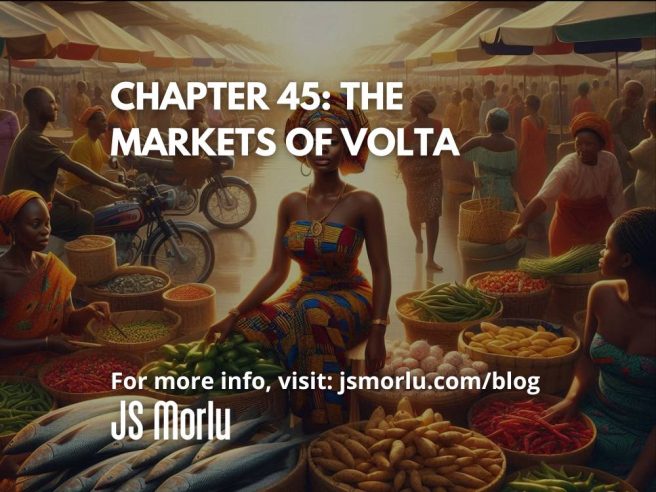
Women, Trade, and the Hidden Economy of Power
By: John S. Morlu II, CPA
Before banks existed, before microfinance institutions appeared, and before consultants wrote reports on “informal sector economics,” there were markets. In the Volta Region, markets are not merely places of commerce.
They are kingdoms ruled by women, universities without classrooms, diplomatic zones of negotiation, and the invisible engine that keeps communities alive.
To walk into a Volta marketplace is to walk into a hurricane of colour, a symphony of negotiation, a parliament of female strategists, a living museum of culture, and an economy more efficient than some governments.
- A hurricane of colour
- A symphony of negotiation
- A parliament of female strategists
- A living museum of culture
- An economy more efficient than some governments
The women who run these markets do not carry titles — but make no mistake: they are CEOs, CFOs, logisticians, credit managers, politicians, sociologists, and psychologists rolled into one.
This chapter explores the economic lifeblood of the Volta Region, where trade is not only survival, but power.
1. Why Markets Matter — The Pulse of the Region
Markets in the Volta Region are not simply places where people buy food. They are living institutions that shape how society functions.
- Feed households
- Create jobs
- Stabilise communities
- Connect villages
- Influence politics
- Dictate social rhythms
- Transfer culture
- Support education
- Give economic power to women
A market day is a cultural event. The energy is electric. The movement is choreographed chaos. The trade is precise. The relationships are lifelong.
These markets are not random. They are the infrastructure of society.
2. The Women — The Real Power Brokers of Volta
Volta women are the undisputed rulers of the marketplace. They operate with skill and dignity — without needing applause.
- Financial discipline
- Negotiation intelligence
- Risk assessment skills
- Emotional maturity
- Customer loyalty strategies
- Logistical expertise
- Psychological insight
- Social influence
You may not find these titles on a CV, but you see them clearly in daily practice.
Volta market women understand:
- Credit systems
- Wholesale pricing
- Supply chain dynamics
- Seasonal patterns
- Consumer behaviour
- Price elasticity
- Scarcity economics
They are living case studies in business education — and they are feared, respectfully, because their influence is undeniable.
3. The Markets — Each One a Universe
The Volta Region holds dozens of major and minor markets, each carrying its own personality and cultural logic.
Dzemeni Market (near Kpando)
One of the most intense fresh-food markets in Ghana, where lake economy meets land economy.
Aflao Border Market
A blend of Ghanaian, Togolese, and Nigerian traders — bilingual, trilingual, and multi-currency.
Ho Central Market
Balanced and diversified, carrying foodstuffs, textiles, electronics, crafts, and city essentials.
Keta Market
A coastal mix of fish, salt, vegetables, baskets, palm wine, and lagoon products.
Anloga Market
Traditional, structured, and culturally rich — a centre of Ewe social life.
Sogakope Market
River-driven, agriculture-focused, vibrant, and expanding.
Kpeve Market
A strategic bridge between highland and lowland trade.
Akatsi, Dzodze, and the Keta–Akatsi belt
Known for textiles, pottery, beads, village produce, and trading sophistication.
Each market is a world with its own:
- Hierarchy
- Rules
- Culture
- Rhythm
- Secrets
No two markets are the same.
4. Market Day — The Ceremony of Commerce
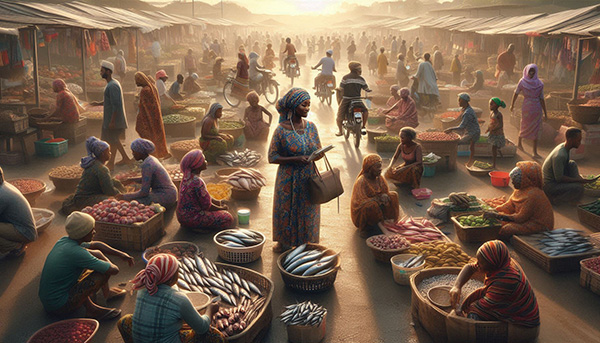
On market days, villages transform. By dawn, goats complain in the distance, traders leave home with bowls balanced on their heads, motorbikes hum across dusty roads, fishermen unload fresh catch, children run errands, and the smell of smoked fish and pepper fills the air.
- Goats announcing the morning
- Traders balancing bowls on their heads
- Motorbikes crossing dusty roads
- Fresh fish arriving from the water
- Children running messages and errands
- Smoke and pepper scent filling the air
The market queens arrive early and command space without raising their voices.
By mid-morning, the marketplace becomes packed, loud, alive, beautiful, overwhelming — organised chaos. Traders call deals. Buyers negotiate like diplomats. Children weave between legs. Distant drums echo. The sun supervises everything.
Market day is not simply buying and selling — it is the heartbeat of the community.
5. The Economics — Smarter Than Harvard Textbooks
Volta market economies operate with astonishing intelligence and efficiency.
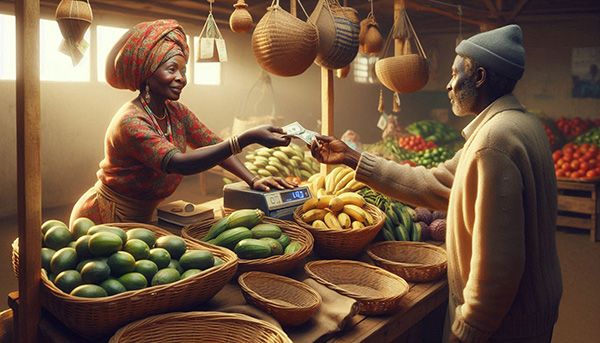
Pricing Strategy
Prices shift instantly based on:
- Supply
- Demand
- Weather
- Season
- Competitor movement
- Freshness
- Time of day
No algorithm required.
Credit System
Credit is extended based on:
- Trust
- Reputation
- Family history
- Consistency
- Character
No paperwork. No collateral. And remarkably, default remains low.
Inventory Management
- What sells fastest
- What spoils quickest
- What can be discounted
- What must be preserved
Profit Allocation
- Reinvesting
- Saving
- Supporting family
- Paying school fees
- Building homes
- Funding funerals
- Sponsoring younger traders
You cannot study African economics without studying market women.
6. The Politics — Market Queens Are Not Small People
In Volta markets, the Market Queen functions as regulator, peacemaker, judge, tax negotiator, union leader, conflict resolver, and the representative of women’s voices.
- Regulator
- Peacemaker
- Judge
- Tax negotiator
- Union leader
- Conflict resolver
- Voice of women
She may not sit in Parliament, but she shapes entire communities. Any politician seeking legitimacy in the Volta Region must pass through the market queens first.
They are the real Ministry of Trade.
7. Food Culture — The Freshest Ingredients in Ghana
Volta markets are food heavens.
- Fresh tilapia and catfish
- Crabs and smoked herrings
- Peppers, okro, and garden eggs
- Cassava, yam, and plantain
- Millet and coconut
- Palm oil and beans
- Aromatic traditional herbs
- Palm wine
- Snails and oysters
- Vegetables so fresh they look photoshopped
Volta food markets prove one truth: the best dishes come from the calmest ingredients.
8. Textiles, Crafts, and Symbolism
Beyond food, the markets carry cultural identity.
- Ewe kente
- Woven baskets
- Pottery
- Beads
- Carved stools
- Mats
- Cloth wrappers
- Handmade jewellery
These are not merely items — they are cultural signatures passed through families. The women selling them know the story behind every piece.
9. Humor and Social Dynamics — Where Laughter Is Currency
Markets overflow with humour.
- A trader lovingly insults you for bargaining too hard.
- A buyer storms off dramatically — then returns.
- Women tease men who buy ingredients without knowing how to cook.
- Arguments sound serious but dissolve into laughter.
Ewe market humour is sharp, quick, intelligent, and affectionate. Trade without humour is considered suspicious.
10. Conclusion — Markets Are the Soul of Volta
Volta markets are not merely places where goods are sold. They function as:
- Cultural classrooms
- Economic engines
- Political institutions
- Social networks
- Safety nets
- Spiritual spaces
- Community centres
Women sustain them with wisdom, strength, subtlety, dignity, resilience, and ancestral intelligence.
In the Volta Region, you cannot separate economy from culture, culture from women, or women from the market. Wherever women gather to trade, society survives.
Volta markets prove that the deepest power in Ghana has always been — and will always remain — in the hands of women.
Author: John S. Morlu II, CPA is the CEO and Chief Strategist of JS Morlu, leads a globally recognized public accounting and management consultancy firm. Under his visionary leadership, JS Morlu has become a pioneer in developing cutting-edge technologies across B2B, B2C, P2P, and B2G verticals. The firm’s groundbreaking innovations include AI-powered reconciliation software (ReckSoft.com), Uber for handymen (Fixaars.com) and advanced cloud accounting solutions (FinovatePro.com), setting new industry standards for efficiency, accuracy, and technological excellence.