
Afadjato, Gemi, and the Mountain Spirits of Volta
By: John S. Morlu II, CPA
There are places in Ghana where the land rises not just upward, but inward — into memory, myth, and meaning. Places where clouds rest like cotton stools on the shoulders of hills, where the wind speaks in a language older than borders, and where the mountains themselves feel alive. The Volta Region is one such place. Here, the land does not simply roll; it ascends. It stretches toward the sky with a quiet confidence, like a people who know who they are and where they come from.
In the Volta Region, mountains are not just geological features. They are elders, storytellers, guardians, and silent philosophers. They hold the footprints of ancestors, the whispers of hunters, the songs of the Ewe people, the breath of old kingdoms, and the unspoken dreams of villages tucked neatly on their slopes.
And when the mist settles at dawn, the mountains look like they are exhaling — as if reminding us that the Earth, too, is alive.
This chapter takes you to the high places — Afadjato, Gemi, the Togo Ranges, and the villages that cling to the hillsides like beads on a sacred string. These mountains are not mere tourist attractions; they are places where Ghana touches the sky and the sky, in return, touches Ghana.
1. Mount Afadja (Afadjato) — The Mountain of Stories and Sore Legs
Mount Afadja is famous — almost annoyingly so.
At 885 meters, it proudly holds the title of Ghana’s highest peak, a fact that Ghanaians mention with the same enthusiasm they reserve for jollof supremacy debates. But Afadjato is more than just a number on a map. It is a living character in the story of Ghana.
The name “Afadja” comes from the Ewe words “Afa” (war) and “Dja” (plant). Legend says early settlers fought a war against an irritating, thorny plant that grew around the mountain. That plant still grows today — stubborn as ever — reminding every visitor that victory against nature is never permanent.
The climb begins in places like Gbledi and Liati Wote, two villages where the people greet you warmly, even though they know exactly what you’re about to suffer. The mountain looms over these communities like a quiet guardian, its shoulders draped in mist in the early morning and golden light at sunset.
The ascent is steep — the kind of steep that makes you rethink all your life choices and promise God you will stop eating late-night fufu. Yet, every pain is rewarded. Halfway up, the world below opens like a secret. You see villages reduced to dots, farms arranged like patchwork, and the vast green expanse of the Volta Region stretching with pride.
When you finally reach the top, breathless and victorious, something happens: you understand why ancestors believed mountains were shrines. The wind changes. Time slows. And for a brief moment, you feel Ghana breathing beneath you.
Of course, modern hikers ruin the magic by immediately taking 47 pictures from the same angle just to prove they didn’t faint halfway. But that’s also part of the charm.
2. Mount Gemi — Amedzofe’s Crown and the Cross That Touches Heaven
Mount Gemi (sometimes spelled “Gaymi”) sits in Amedzofe, the cool mountaintop town that feels like Ghana’s balcony. Built at 2,400 feet above sea level, Amedzofe is one of the highest habitable points in the country — a place where mornings are chilly, afternoons are poetic, and evenings feel like God dimmed the lights gently.
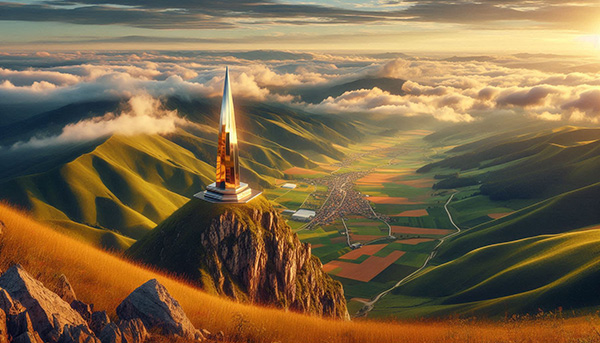
Atop Mount Gemi stands a mysterious iron cross, installed by German missionaries around 1939. No matter how much time passes, that cross refuses to rust, bend, or fall — stronger than many human relationships.
Climbing Mount Gemi is less torturous than Afadjato, but the experience is no less magical. The trail winds through farmlands, footpaths, and ridges where the wind sings like a choir rehearsing in a language only the mountains fully understand. At the summit, the cross stands firm — tall, proud, and symbolic, pointing toward heaven as if marking the place where earth and sky shake hands.
Gemi feels less like a tourist attraction and more like a spiritual checkpoint — the kind of place philosophers visit to overthink their entire existence. The views stretch endlessly: rolling hills, hidden villages, clouds drifting lazily as if they are on break, and the green quilt of the Volta landscape below.
Locals say the cross has protected them for decades. Some say it’s a symbol of blessing. Others say it’s simply a reminder that even foreign presence leaves stories in our soil. Either way, Gemi stands as one of the Volta Region’s most serene, contemplative spaces.
3. Amedzofe — The Town Above the Clouds
Amedzofe itself deserves a chapter. Perched high among the Togo Ranges, the town feels like someone lifted a Ghanaian village and gently placed it on top of a cloud. The air is cooler, the people slower in speech but sharp in wisdom, and the landscape almost theatrical.
This is a place where:
- Churches ring bells that echo across valleys
- Children run on slopes that would frighten city kids
- Farmers cultivate impossibly steep terraced farms
- Life feels like a quiet negotiation between humans and the mountain spirits
Amedzofe is also home to:
- Ote Falls — a waterfall so hidden and peaceful that it feels like nature’s private meditation room
- Old missionary buildings — remnants of German presence
- Ancient footpaths — once used by traders, warriors, and messengers
Every visitor feels the same thing: Amedzofe changes you — not dramatically, but subtly, like a soft hand adjusting your perspective.
4. The Togo Ranges — The Backbone of the Land
Stretching across Ghana and Togo, the Togo Ranges are the spine of the Volta landscape. They are older than Ghana’s borders, older than European maps, older than the colonial names that tried to define them. These mountains formed millions of years ago — shaped by tectonic pressures, volcanic histories, and the quiet patience of time.
The Togo Ranges are home to:
- Hunters’ paths older than Christianity
- Sacred groves where elders still pour libation
- Villages like Shiare, built entirely on rock with no flat land in sight
- Hidden cliffs and plateaus that look like natural fortresses
- Stories that travel between valleys like migrating birds
This is where the Ewe and Guan people shaped early life. The mountains provided protection during wars, hiding places from raiders, and vantage points for traders. Even today, some villages are accessible only by foot — no cars, no bikes, just determination.
The Togo Ranges are not just mountains; they are time capsules.
5. Life on the Mountains — Terraces, Traditions, and Triumphs
The mountain communities of Volta live differently from lowland settlements. Up here, life is an exercise in resilience and creativity.
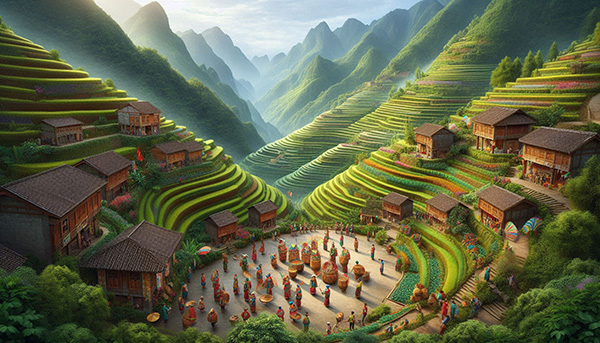
Terraced farming is common — carved into hillsides like natural amphitheaters. Farmers grow:
- Cassava
- Cocoyam
- Plantain
- Vegetables
- And small patches of cocoa
Carrying produce down the slopes is an extreme sport, mastered only by people whose calves are built like engineering designs.
Traditional architecture adapts to landscape. Houses sit on ridges, courtyards face the wind, kitchens overlook valleys. A gust of wind in these communities is not an interruption; it’s a neighbor.
Festivals held here often involve:
- Drumming that echoes across valleys
- Dances with footwork that imitate mountain spirits
- Storytelling that binds generations
- Libations to mountain gods and ancestral custodians
Life here may look simple, but it is spiritually rich and environmentally intelligent.
6. Tourism — When Adventure Meets Ancestry
The Volta mountains are a dream for:
- Hikers
- Photographers
- Bird watchers
- Spiritual retreat seekers
- Nature lovers
- Diaspora returnees seeking reconnection
Popular experiences include:
- Afadjato Climb
- Tagbo and Wli Waterfalls (the tallest in West Africa)
- Amedzofe Canopy Walkway
- Gemi Summit Exploration
- Shiare Rock Village Tour
- Sleeping in eco-lodges on hilltops
Tourism here has huge potential: eco-tourism, wellness retreats, outdoor education centers, mountain marathons, and cultural heritage tours. The infrastructure is growing slowly, but the landscape itself already does half the work.
7. The Spirituality of the Hills — Shrines, Winds, and the Old Religion
In Ewe cosmology, mountains are living beings. Not metaphors — literal living beings.
Locals believe the hills:
- Hold the spirits of ancestors
- Protect the land from evil
- Contain portals to the spirit world
- Serve as sanctuaries for gods and lesser deities
- Respond to human behavior
There are sacred spots where:
- Libation is poured
- Hunters pray
- Chiefs perform rites
- Elders speak to the land
Some mountains “refuse” certain people — a polite way of saying if your intentions are bad, the path becomes difficult or the forest becomes eerily silent.
Even the wind has a reputation. It comes suddenly, like a spirit passing through.
8. The Economic Importance — Where Nature and Hustle Coexist
The mountains contribute to:
- Farming (terraces)
- Tourism revenue
- Local crafts
- Herbal medicine
- Honey production
- Wood carving
- Eco-tourism projects
- Water sources feeding communities below
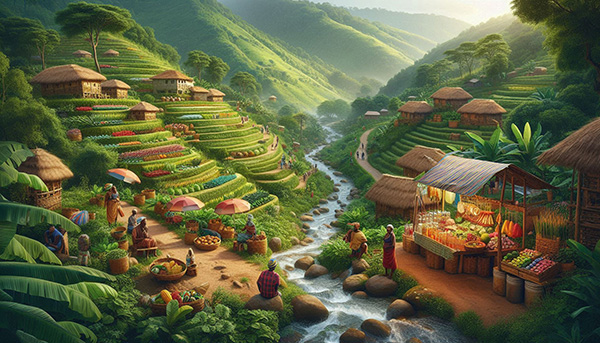
Villages on the slopes sell:
- Cocoa drinks
- Plantain chips
- Handwoven baskets
- Medicinal plants
- Locally made walking sticks for hikers
Some communities depend entirely on tourism to fund schools, clinics, and community centers.
9. Challenges — Modern Pressure on Ancient Land
The mountains face threats:
- Deforestation
- Illegal farming practices
- Erosion
- Lack of regulated tourism
- Climate change affecting cloud cover and water sources
- Poor road access
- Youth migrating to cities
Despite these challenges, mountain communities remain hopeful. The land has protected them for centuries, and they continue to protect it in return.
10. Conclusion — When You Stand on a Volta Mountain, You Stand Inside a Story
The mountains of the Volta Region are not merely high points on a map — they are living chapters of Ghana’s soul. They rise with dignity, stretch into the sky with quiet confidence, and invite anyone willing to climb to see the world from a new angle.
Afadjato teaches perseverance.
Gemi teaches serenity.
The Togo Ranges teach history.
Amedzofe teaches humility.
The wind teaches silence.
And the land teaches gratitude.
The hills teach that Ghana is bigger, older, deeper, and more sacred than politics, roads, or modern noise.
When you stand on a Volta mountain, you don’t just reach the summit — you enter the story. And the story enters you.
Author: John S. Morlu II, CPA is the CEO and Chief Strategist of JS Morlu, and leads a globally recognized public accounting and management consultancy firm. Under his visionary leadership, JS Morlu has become a pioneer in developing cutting-edge technologies across B2B, B2C, P2P, and B2G verticals. The firm’s groundbreaking innovations include AI-powered reconciliation software (ReckSoft.com), Uber for handymen (Fixaars.com) and advanced cloud accounting solutions (FinovatePro.com), setting new industry standards for efficiency, accuracy, and technological excellence.