
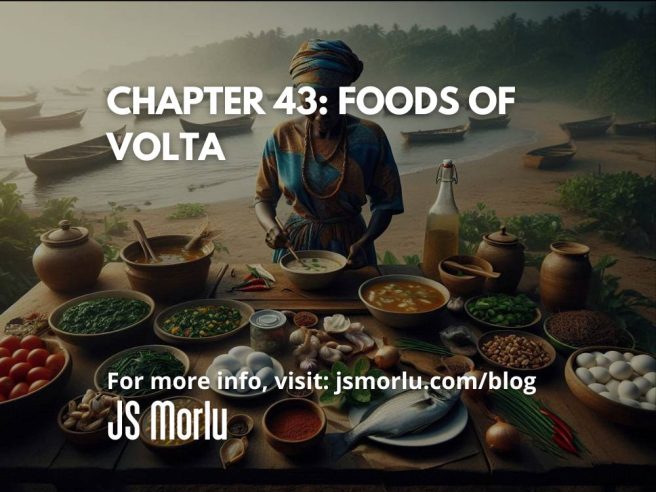
The Healing, Art, and Simplicity of Ewe Cuisine
By: John S. Morlu II, CPA
When you enter the Volta Region, you notice something immediately: the food is not loud — it is honest. It does not try to impress with unnecessary complexity or decoration. It does not beg for attention or scream for validation on Instagram.
Ewe food is the opposite of pretentious. It is clean, purposeful, medicinal, structured, balanced, and rooted in centuries of wisdom. Volta cuisine stands on three pillars: purity, moderation, and intention. Every ingredient has meaning, every flavour has a role, and every dish carries history. To eat in the Volta Region is to enter a philosophy where food becomes nourishment, healing, identity, story, and spirit.
This is food that speaks softly yet leaves a deep impression — food that soothes instead of shocks, remembers ancestors, and respects the land.

1. The Philosophy of Ewe Food — Clean, Balanced, Intentional
Ewe cuisine is defined by simplicity, not because of limitation, but because of wisdom. It favours lightly spiced dishes, minimal processing, plant-forward balance, low oil usage, and thoughtful combinations designed to ease digestion rather than punish it.
- Lightly spiced
- Minimally processed
- Plant-forward
- Health-oriented
- Purposeful in combination
- Usually low in oil
- Focused on vegetables and fresh fish
- Designed to support digestion
An Ewe cook is not racing to overwhelm the tongue. They balance spirituality, health, ancestry, environmental knowledge, and the dignity of each ingredient. The Volta Region holds some of Ghana’s healthiest food traditions — not by trend, but by heritage.
2. Akple & Okro — The Unshakable Identity Plate
If the Ewe people had a flag made of food, it would be akple and okro stew. This is not merely a meal; it is identity served in a bowl.
Akple
Made from dried corn flour and water, akple is simple, pure, soft, elastic, and deeply satisfying. It is swallowed rather than chewed, reminding you that not every battle requires teeth. Akple brings a quiet peace to the body and soul.
Okro Stew / Okro Soup
The star of Volta cuisine, okro is light, flavourful, and filled with fresh fish, crabs, shrimp, or smoked fish. It is gently seasoned, clean, fresh, and never overwhelming, often supported by tomatoes, pepper, or garden eggs, and sometimes enriched with palm oil.
- Gently seasoned
- Clean and fresh
- Never overwhelming
- Supported by vegetables and mild aromatics
- Sometimes enriched with palm oil
Akple and okro are not random — they are chemistry, balance, and harmony. When someone invites you for akple and okro, they are not simply feeding you; they are welcoming you.
3. Abenkwan (Palm Nut Soup) — Volta’s Golden Medicine
Palm nut soup in the Volta Region is lighter, more aromatic, less oily, and more disciplined than many versions elsewhere. It carries herbal depth without heaviness.
This is the soup that restores strength, comforts the grieving, celebrates victories, reunites families, and heals the body with natural oils and spices.
- Goat meat
- Smoked fish
- Snails
- Herbs
- Fresh chilli
- Traditional aromatics such as prekese
This is not merely food — it is therapy.
4. Fetri Detsi (Stewed Spinach) — Clean, Green, and Healing
Fetri detsi is among the healthiest dishes in West Africa. Built intentionally for nourishment, it combines stewed spinach with light palm oil, fresh chillies, smoked or dried fish, optional small crabs, onions, garlic, and ginger.
It is naturally rich in iron, antioxidants, fibre, and trace minerals, making it both restorative and energising.
- Iron
- Antioxidants
- Fibre
- Trace minerals
Fetri detsi is commonly served with akple, banku, boiled yam, gari, boiled plantain, and sometimes rice. Its true magic lies in how it makes you feel: lighter, clearer, nourished, and balanced. The Ewe mastered nutrition long before modern nutritionists discovered spinach.
5. Abolo — The Soft Bread of the Lagoon Shores
Abolo is a soft, spongy, slightly sweet cornbread from coastal Anloga and Keta. It pairs beautifully with grilled tilapia, fried fish, spicy shitor, or stands alone as a warm breakfast treat.
Abolo disappears quickly. You take a bite, and before you realise it, it is gone. As people in Keta say with a smile: Abolo does not stay. It evaporates.
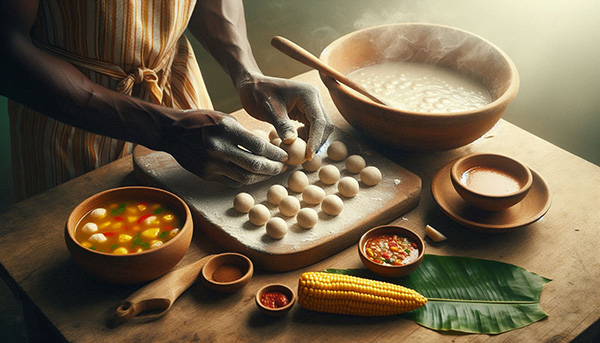
6. Dzome (Fermented Corn Balls) — The Taste of Ancestral Skill
Dzome is fermented corn dough shaped into small balls and served with okro soup, fish stew, or pepper sauce. It is slightly sour, deeply flavourful, and excellent for digestion.
Fermentation is a core strategy in Ewe cuisine because it improves flavour, nutrition, gut health, and preservation. Dzome may not be as famous as akple, but it remains a hidden treasure of the Volta kitchen.
- Improves flavour
- Enhances nutrition
- Supports gut health
- Extends preservation
7. Ayibli (Cowpea & Cassava Meal) — Volta’s Protein Powerhouse
Ayibli blends mashed cassava, cowpeas, palm oil, spices, and sometimes smoked fish into a soft, protein-rich, deeply filling dish.
This was the food mothers relied on to help children grow strong long before supplements existed. Ayibli nourishes for hours — survival food that tastes better than anything in a supermarket health aisle.
- Mashed cassava
- Cowpeas (beans)
- Palm oil
- Spices
- Optional smoked fish
8. Fish — The Crown of Volta Cuisine
The Volta Region is fish country — fresh, smoked, salted, dried, lagoon, river, and ocean fish shape everyday meals.
Fish appears in soups, stews, sauces, porridges, grills, and across breakfast, lunch, and dinner. In the Volta Region, meat is optional; fish is non-negotiable. A fisherman can catch tilapia at dawn and serve it by lunch, which is why Volta cuisine tastes alive.
- Soups and stews
- Sauces and porridges
- Grilled dishes
- Breakfast, lunch, and dinner
9. The Peppers — Heat with Purpose, Not Violence
Ewe pepper blends are purposeful, aromatic, and balanced — never recklessly hot. Their heat is designed to awaken, not punish.
- Yɔvɔ dô — mild pepper blend
- Adzomi — fresh blended pepper with onions
- Chilli oil sauces
- Shitor variations
Pepper in Volta cuisine respects the body while energising the senses.
10. Herbal Intelligence — Where Food and Medicine Meet
Ewe cooking integrates herbs strategically, blending culinary tradition with natural medicine.
- Prekese
- Basil (akoko mesa)
- Scent leaf
- Wild ginger
- Turmeric
- Lemongrass
- Cloves
- Castor seed spices
- Fermented condiments
Most dishes are intentionally anti-inflammatory, digestion-friendly, or energy-restoring. The Ewe do not separate food from medicine — to them, food is medicine.
11. Humor and Eating Culture — Where Food Teaches Manners
Ewe eating culture carries quiet rules that shape behaviour and dignity at the table.
- Eat calmly — Rushing food is considered childish.
- Respect the fish — Do not poke at it like a confused tourist.
- Soup must not spill — If it does, someone jokes: “Your hand and the soup did not agree today.”
- Do not overeat — Moderation is a virtue.
- Eat with dignity — Enjoyment never overrides respect.
Their food culture mirrors their personality: calm, wise, intentional.
12. Conclusion — Food as Identity, Health, and Ancestral Memory
Volta cuisine is not dramatic or flamboyant. It does not seek to dominate West African food conversations. Yet it remains among the healthiest, most balanced, culturally coherent, spiritually grounded, and intentionally designed food traditions.
The food reflects the people — calm, structured, wise, health-conscious, spiritually connected, and respectful of nature. Eating Ewe food becomes an act of humility, healing, and remembrance.
This is not merely cuisine; it is cultural intelligence served on a plate.
Author: John S. Morlu II, CPA is the CEO and Chief Strategist of JS Morlu, leads a globally recognized public accounting and management consultancy firm. Under his visionary leadership, JS Morlu has become a pioneer in developing cutting-edge technologies across B2B, B2C, P2P, and B2G verticals. The firm’s groundbreaking innovations include AI-powered reconciliation software (ReckSoft.com), Uber for handymen (Fixaars.com) and advanced cloud accounting solutions (FinovatePro.com), setting new industry standards for efficiency, accuracy, and technological excellence.