
By: John S. Morlu II, CPA
In Ghana, hydration is not just a biological need — it’s a full-blown business strategy.
Forget bottles. That’s for the rich, the overly cautious, or the newly arrived tourists clutching their Lonely Planet guidebooks. Here, it’s all about “pure water” — those little plastic sachets filled with hope, chlorine, and the occasional floating mystery bubble.
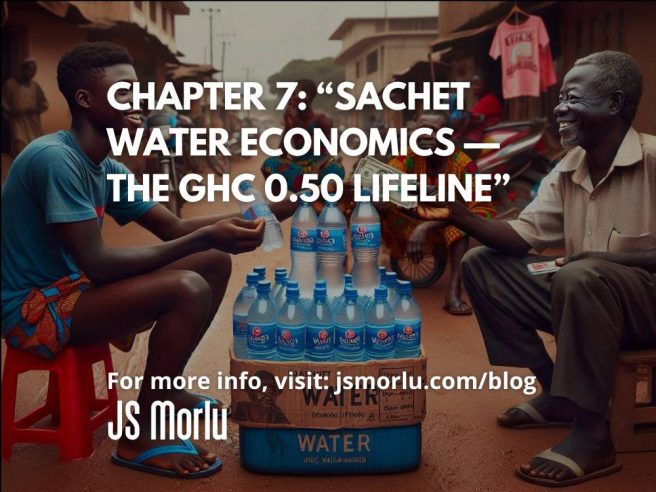
💧 One sachet? GHC 0.50 — A hydration hack for hustlers.
💧 Two sachets? GHC 1 — The budget bundle.
💧 Five sachets? You’re a distributor now. Congratulations, you’re in FMCG.
They don’t even call it water. It’s “pure.” Not “clean.” Not “filtered.” Just… “pure.” That’s branding genius right there. And the confidence is unmatched.
💡 Fun Fact: In some neighborhoods, “pure water” sachets are used as change when there’s no coin. Yes. Your change is water. Drink your refund. Sip your savings.
And don’t even try to ask for bottled water in the middle of Accra traffic. Your Uber driver will look at you like: “Ah, you think you’re in Dubai?”
🧴 Bonus Tidbit: There’s even a social hierarchy to how you drink your sachet:
- Rip it with your teeth like a local: You’re one of us. You’ve been initiated.
- Use scissors or ask for help: You’re new here. We welcome you, but we’re watching.
- Squeeze it into a bottle: You might be from the diaspora. It’s okay. It’s adorable.
Environmental Plot Twist
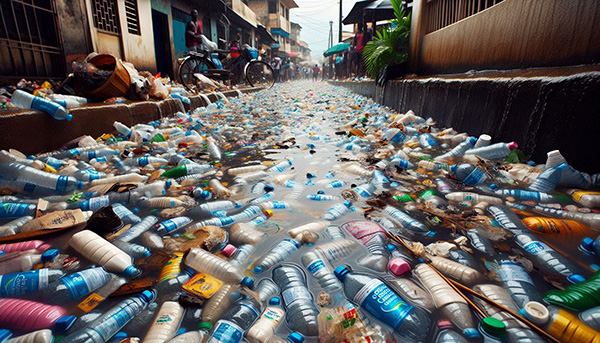
After every sip, the empty sachet mysteriously disappears… No one knows where they go. They vanish. Like common sense during a power outage.
Rumor has it, they all migrate to the gutters where they start their second life — as waterproof decor during the next flood. Some gutters have more sachets than water.
Economic Insight
Thousands of small-scale factories produce these sachets daily. It’s a micro-enterprise empire. A sachet-nation economy.
Jobs are created. Thirst is quenched. Profits are made. Ghanaians don’t just drink water — they drink opportunity.
Even better, there’s a whole logistics ecosystem around it. Someone makes the sachets, someone fills them, someone seals them (often by hand), and someone delivers them on a rickety tricycle while honking like they’re late to a wedding.
In fact, if Ghana’s economy had a mascot, it might be a sachet of pure water. Affordable. Ubiquitous. Slightly leaky, but always available.
You can use it to cool your car engine, clean your dusty shoes, wash mangoes, or even bribe a toddler into behaving at church. The sachet is multifunctional.
So the next time you see someone sipping from a plastic bag, don’t laugh. That’s not just hydration. That’s the backbone of street-level capitalism — Ghana style.
And yes, if you’re thirsty and broke… Pure water got your back. And front. And pocket.
Author: John S. Morlu II, CPA is the CEO and Chief Strategist of JS Morlu, leads a licensed public accounting and management consultancy firm. He has more than 20 years of professional experience in auditing and advisory work, including service as Auditor General of Liberia and FAR and DCAA compliance work at Unisys Federal Systems. The firm’s technology products include AI-powered reconciliation software (ReckSoft.com) and advanced cloud accounting solutions (FinovatePro.com), built for finance and operations teams.