
By: John S. Morlu II, CPA
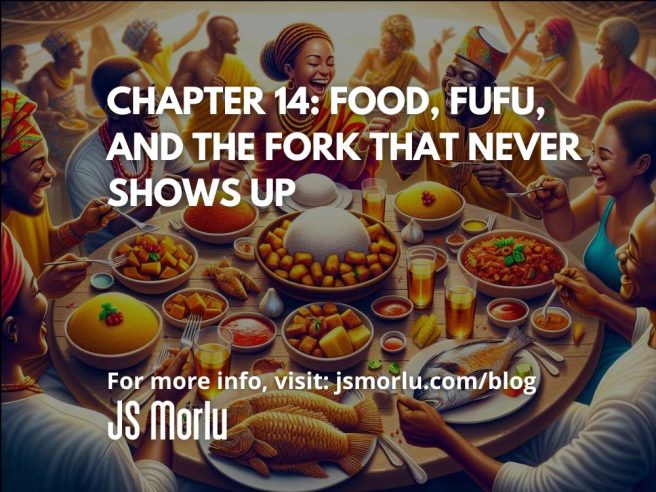
Welcome to Ghana — where food is so good, it deserves its own passport. And where the national utensil isn’t a fork or spoon… it’s your right hand. Sanitized, sanctified, and spiritually prepared to scoop, swirl, and swallow.
Fufu: Ghana’s National Gym Membership
Let’s begin with the mighty fufu — that springy, doughy ball made from pounded cassava and plantain (or yam, depending on the tribe). Fufu is not a meal; it’s a workout, a spiritual journey, and sometimes, an emotional breakdown.
Fun Fact: Making fufu is so physically demanding that it’s considered cardio. One person pounds with a giant pestle like they’re trying to impress Thor, while the other “turns” the dough with ninja-level reflexes to avoid getting their fingers smashed. If you survive fufu prep, you’ve earned your spot in Ghana’s Olympics.
You don’t chew fufu. You scoop it, dip it in hot soup, and let it slide down your throat like you’re making peace with gravity.
Try chewing and the auntie beside you will pause mid-bite and say, “This one is chewing fufu. Ah! You want to fight it?”

Where’s the Fork?
New to Ghana? You ask for a fork to eat your fufu and suddenly, the entire restaurant falls silent. Even the fan stops spinning. The waitress raises one eyebrow and says, “You eat fufu with fork? This life is hard already. Why add stress?”
The unspoken rule: Right hand only. Left hand? No. Never. You will be disowned by your table.
Interesting Tidbit: There’s a ceremonial bowl of water before every Ghanaian meal. Not for decoration — that’s your pre-game wash. And post-game too. Two hand-washes, one unforgettable experience.
Jollof Wars: The Spicy Battlefield
Let’s address the elephant in the pot — the Jollof rice war.
Ghana and Nigeria are locked in an eternal culinary Cold War over whose Jollof reigns supreme. Senegal sits smugly in the background whispering, “We invented it, though.”
Fun Fact: Ghanaian Jollof has a smoky flavor that feels like a warm hug from your ancestors. It’s usually cooked over coal, with beef stock, bay leaves, and pride. The rice grains don’t clump. The spice level is emotional. The tomato base? Award-worthy.
A Ghanaian wedding without Jollof? That’s just a long meeting.
Tilapia: The National Fish of Vibes
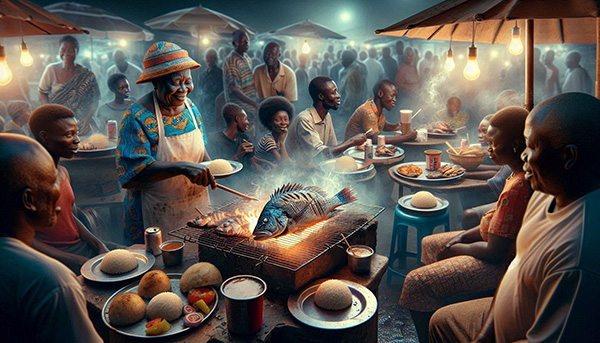
If fish had influencers, tilapia would be verified on Instagram.
Grilled on open flames, charred just right, and served with banku (a fermented corn and cassava dough with the personality of soft Play-Doh), this combo is a street classic.
But beware: The pepper sauce that comes with it? It’s hot enough to unlock your childhood memories. You will sweat. You will cry. You will come back for more.
Interesting Tidbit: Some say the best tilapia spots are the ones with plastic chairs, shaky tables, and zero menus. If the auntie looks unimpressed by your arrival, you’re in the right place.
Kelewele: Spiced Plantain Poetry
Kelewele is fried plantain with attitude. Seasoned with ginger, chili, onion, and maybe a drop of divine inspiration. Sold mostly at night, usually by a roadside woman with a glow-in-the-dark smile and no change.
Fun Fact: No one buys just GHS 5 worth of kelewele. You always return for more — even if your stomach says no. Your soul says yes.
Waakye: The Ghanaian Food Pyramid in One Leaf
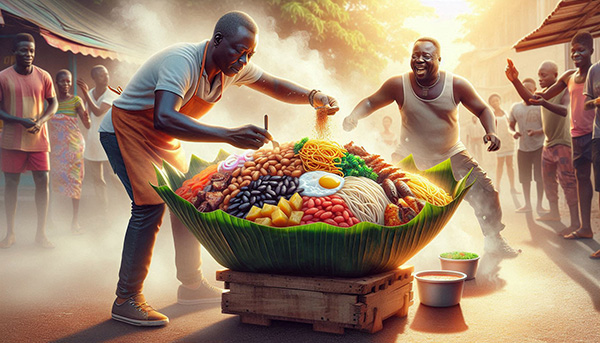
Waakye is rice + beans + spaghetti + boiled egg + fish + meat + salad + shito (hot sauce) + gari (cassava flakes) all wrapped in a giant leaf. It’s a breakfast buffet in one plate.
Ask what’s inside and the seller will list 12 things — then add one more “just small goat meat” for free.
Pro Tip: Don’t wear white when eating waakye. One drop of shito and your clothes enter early retirement.
The Budget Meal with a PhD: Gobe
Gobe is beans and gari. Student food. Hustler fuel. High in protein and potential.
You eat it on a bench with one eye on your plate and one eye on the ants gathering for fellowship.
Fun Fact: Gobe is so powerful, some claim it gives you visions. One guy said after eating Gobe, he dreamed of Elon Musk offering him a job. It was a lie — but the Gobe was real.
A Forkless Culture
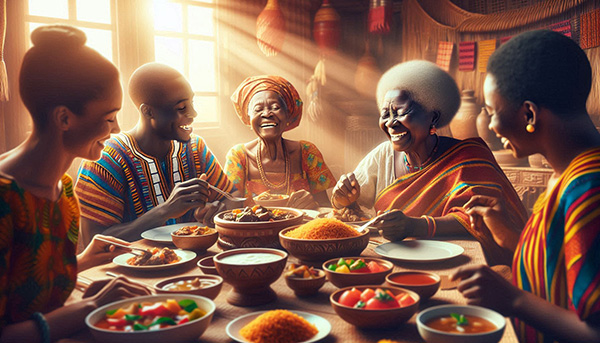
Ghanaian food isn’t about portion control or calorie counts. It’s about emotion, heritage, and bold flavors. And most importantly — it’s about using your hands.
A Ghanaian auntie once told me: “If you can’t eat with your hand, how will you raise your children?”
I still don’t know what she meant, but I washed my hands and ate quietly.
Why It Matters
Food is culture. And in Ghana, food is loud. It speaks in spice, laughs in pepper, and whispers in aroma. Forget the fork — come hungry, come curious. Because in Ghana, a simple meal is never simple. It’s a story, a ceremony, and a celebration. It’s a reflection of the heart and soul of the people.
Even if your tongue is on fire. Even if your shirt is ruined by shito. Even if you ate fufu with a fork and got publicly roasted. This is Ghana, where food isn’t just about taste — it’s about connection, tradition, and the joy of sharing. Here, the food is sacred, and the fork is… missing.
Author: John S. Morlu II, CPA is the CEO and Chief Strategist of JS Morlu, leads a licensed public accounting and management consultancy firm. He has more than 20 years of professional experience in auditing and advisory work, including service as Auditor General of Liberia and FAR and DCAA compliance work at Unisys Federal Systems. The firm’s technology products include AI-powered reconciliation software (ReckSoft.com) and advanced cloud accounting solutions (FinovatePro.com), built for finance and operations teams.