
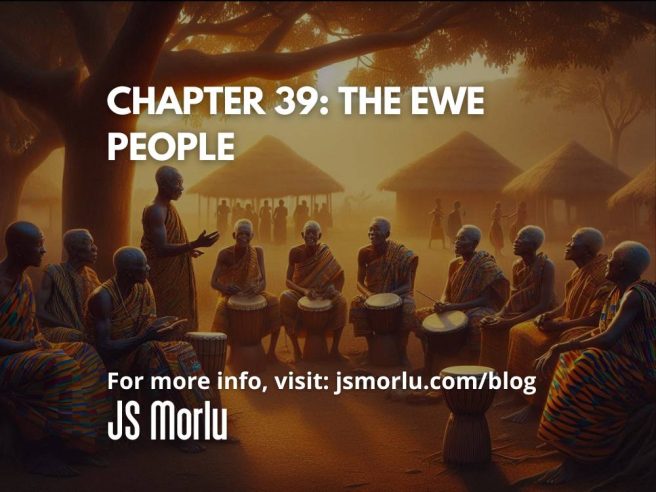
Language, Proverbs, Humor, and the Soul of a Nation
By: John S. Morlu II, CPA
To understand the Volta Region, you must understand the Ewe people. Not the shallow stereotypes, not the jokes tossed around by uninformed Ghanaians, not the assumptions born from distance — but the real essence of the Ewe identity. The Ewe people are one of Ghana’s most culturally rich, intellectually sharp, spiritually deep, musically gifted, and historically magnificent groups.
The Ewe story is a story of migration, resistance, poetry, philosophy, and pride. It is a story written in drumbeats, woven in kente, encoded in proverbs, carried through generations in names, songs, and rituals — a culture that refuses to be diluted.
Walk through any Ewe town and you feel it: a calm intensity, a watchful dignity, a quiet intelligence, a deep cultural memory. The Ewe don’t need to shout their identity. Their identity sits confidently on them like ancestral cloth.
1. Origins — A People Who Walked Out of Captivity and Never Forgot It
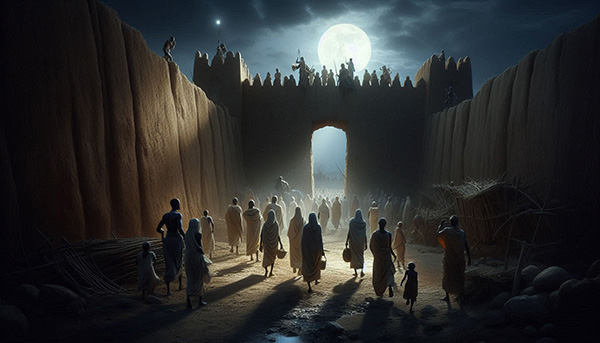
The Ewe trace their origins to Notsie, a historical settlement in present-day Togo. Their escape from the tyrannical King Agokoli is one of the most powerful migration stories in West Africa. It is a narrative of brilliance, unity, and strategic genius.
According to legend, King Agokoli was cruel, the Ewe people endured deep suffering, and eventually they devised a plan. They escaped through a hole in the city wall and walked backward to confuse their pursuers. This story is not just myth; it is memory. It shaped an Ewe identity built on caution, cleverness, and vigilance.
Even today, Ewe elders tell their children: “We are descendants of those who outsmarted a king.” This is not just pride. It is identity encoded into DNA.
2. The Language — A Symphony of Precision, Poetry, and Power
The Ewe language is one of West Africa’s most poetic and expressive tongues. It is musical but sharp, gentle but exact, metaphorical yet logical. When an Ewe person speaks, the tone carries weight — every syllable deliberate, every word layered.
Ewe is a language where one word can carry three meanings, a proverb can dismantle an entire argument, and a simple greeting can hold blessings, honor, and inquiry. Elders often speak in parables that young people must decode carefully.
For example:
“Mawu na mi loo.”
(God bless you.)
“Aƒe yi wò.”
(May your home be strengthened.)
“Ne woada gbe, na wòate ŋu.”
(If you wake up, may you understand.)
Ewe is not just communication — it is philosophy.
3. Proverbs — The Ewe Way of Speaking Without Speaking
Ewe proverbs are miniature novels. They are the intellectual backbone of conversation. Elders rarely give direct answers; they wrap truth in imagery and let you unwrap it.
Some classics:
“Nunya, adidoe.”
Knowledge is like a baobab tree — too vast to embrace alone.
“Xexeame le vevie ƒe me.”
Patience is hidden inside wisdom.
“Agbe dzi o.”
Life has no duplicate.
“Ne wòkplɔa dzimɛ dua, màtsɔa.”
If you show me the stump of your heart, I will show you mine.
These proverbs are so deep that even scholars pause to interpret them fully.
4. Humor — Quiet, Sharp, Intelligent, and Surgical
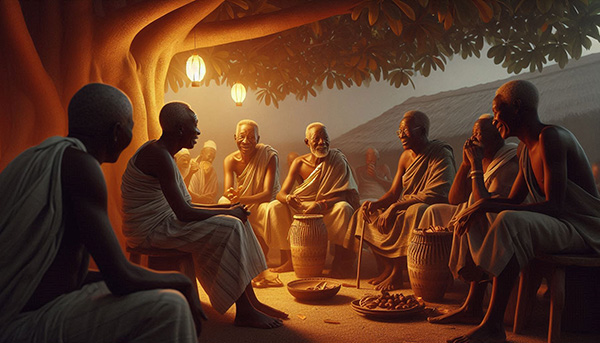
The Ewe sense of humor is not loud, slapstick, or forced. It is quiet, intelligent, and surgical.
Ewe humor comes in three forms:
- Dry wit — Delivered with a straight face so serious you may miss the joke.
- Intellectual twist — Jokes that are funny only after you think — sometimes 10 seconds later.
- Understated sarcasm — Sharper than a cutlass, but delivered gently so it feels like wisdom.
For example, if someone overeats, an Ewe elder might say:
“Ee, wòna dzidzɔ le mɔtɔ me o.”
(Ah, you are not eating to celebrate — you are eating to punish the food.)
Or if someone boasts too much:
“Woƒe ŋkɔ la, nye dzidzɔ o.”
(Your noise is not sweet to me.)
Ewe humor is not just laughter; it is character.
5. Music — Drums That Speak More Eloquently Than Politicians
Ewe drumming is a global treasure. Musicologists study it. Percussionists worship it. Cultural anthropologists analyze it. Why?
Because Ewe drumming is not rhythm — it is language.
The great ensembles include:
- Agbadza
- Atsiagbekor
- Gahu
- Kete
- Kinka
Each drum has a voice. Each voice has a story. Each story has a history.
Atsiagbekor, for example, was originally a war dance used to psych up troops and announce victory. Today, it retains that energy — fierce footwork, explosive drumming, and a rhythm that seems powered by ancestors.
Agbadza, the pride of the Ewe, is danced at funerals, festivals, and celebrations. When Agbadza drums start, even people with arthritis suddenly remember they can dance.
The Ewe drum is not an instrument — it is a cultural archive.
6. Spirituality — When God, Ancestors, and Nature Sit at the Same Table
Ewe spirituality is old, deep, and structural.
It places:
- God (Mawu) at the top
- Nature spirits beneath
- Ancestors as intermediaries
- Elders as custodians
Mawu is understood as:
- Supreme
- Genderless
- All-powerful
- Balanced
- Present in everything
But Ewe spirituality does not stop there. It embraces river spirits, mountain guardians, forest deities, clan protectors, shrine priests, and diviners. The Ewe see the world as interconnected. Nothing is random. Everything communicates.
A river has a mood.
A tree has meaning.
A dream has instruction.
A name has purpose.
This worldview produces a people who are deeply grounded, cautious, humble, and spiritually intelligent.
7. Character Traits — Calm, Wise, Principled, and Fiercely Loyal
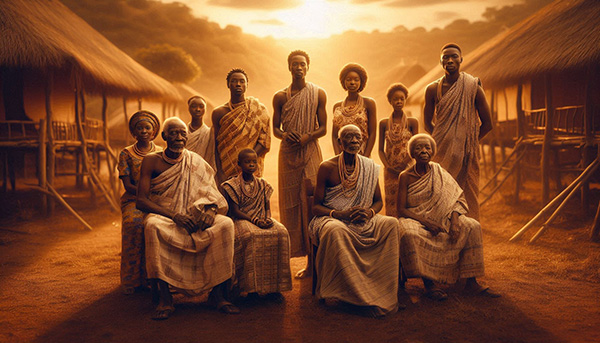
Contrary to stereotypes, the Ewe personality is not “stubborn.” It is principled.
Ewe people are known for:
- Calm temperament
- Measured speech
- Loyalty
- Intelligence
- Precision
- Respect for elders
- Deep cultural pride
- Straightforwardness
- High personal discipline
If an Ewe person calls you family, you are blessed. But if you betray them, the relationship is over — silently and permanently.
The Ewe do not shout their boundaries. They simply enforce them.
8. Craftsmanship — The Precision of Hands and Mind
The Ewe are masters of:
- Kente weaving
- Wood carving
- Pottery
- Bead-making
- Carpentry
- Agricultural engineering
- Herbal medicine
Ewe kente is especially world-renowned:
- Geometric precision
- Symbolic patterns
- Philosophical names
- Colors that tell stories
The cloth is not woven; it is composed — like poetry.
9. Food — Flavor Built on Balance, Moderation, and Purity
Ewe cuisine is humble, clean, and deeply flavorful.
Signature dishes include:
- Akple with okro
- Abenkwan
- Fetri detsi
- Aborbi tadi
- Ayibli
- Abolo
- Dzome
- Kenkey (Anlo style)
Ewe soups are usually light but elegant, crafted to highlight the purity of ingredients — not bury them.
And no Ewe gathering is complete without:
- Palm wine
- Pito
- Traditional gin (akpeteshie)
- Fish fresh from the river
Ewe people eat to nourish, not to show off.
10. Conclusion — The Ewe Are Not Just a People; They Are a Philosophy
To understand the Ewe is to understand:
- Quiet wisdom
- Deep spirituality
- Pride without arrogance
- Loyalty without noise
- Humor without theatrics
- Precision without rigidity
- Strength without aggression
The Ewe are a culture of calm intensity — a people who carry history in their posture and identity in their silence.
The Ewe don’t announce themselves. They simply are.
And that is their power.
📖 Coming Up Next: Chapter 40: Anloga & Keta
Author: John S. Morlu II, CPA is the CEO and Chief Strategist of JS Morlu, and leads a globally recognized public accounting and management consultancy firm. Under his visionary leadership, JS Morlu has become a pioneer in developing cutting-edge technologies across B2B, B2C, P2P, and B2G verticals. The firm’s groundbreaking innovations include AI-powered reconciliation software (ReckSoft.com), Uber for handymen (Fixaars.com) and advanced cloud accounting solutions (FinovatePro.com), setting new industry standards for efficiency, accuracy, and technological excellence.