
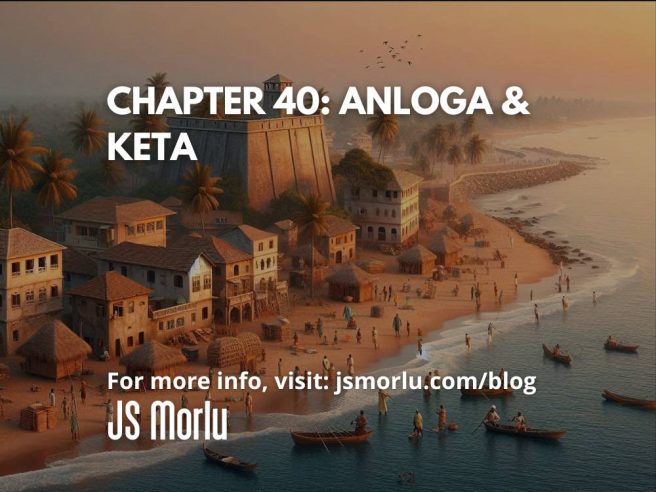
The Land, The Sea, and the Endless Negotiation With Nature
By: John S. Morlu II, CPA
If there is any place in Ghana where the land feels fragile, the sea feels alive, and history feels personal, it is Anloga and Keta. This stretch of coastline in the Volta Region is not just geography — it is drama, struggle, memory, survival, identity, and dignity woven together.
Here, every wave tells a story.
Every grain of sand remembers a loss.
Every elder recites history as if it happened yesterday.
Keta and Anloga are not simply towns.
They are living testimonies — to migration, empire, colonization, war, erosion, and resilience.
They are places where:
- The ocean is both a provider and a destroyer
- The land is both a home and a battlefield
- The people are both gentle and unbreakable
This is a chapter about coastlines that move, communities that adapt, and a people who refuse to be erased.
1. Keta — The Beautiful Town the Sea Refuses to Leave Alone
Keta is stunning.
A narrow peninsula between the Atlantic Ocean and the Keta Lagoon, the town looks like a delicate thread stitched between two powerful bodies of water. But beauty has not protected it from history’s cruelty — or nature’s.
For generations, Keta has fought a silent war with the sea.
A war without gunshots.
A war fought with sandbags, hope, engineering, and prayers.
A war where the enemy never sleeps.
The Great Erosion
The sea has swallowed:
- Homes
- Schools
- Farmlands
- Streets
- Whole communities like Havedzi, Vodza, and parts of Keta township
Elders still point to the water and say:
“That was where my father’s house used to be.”
or
“We played football where the ocean is now.”
The pain is generational — passed down like inheritance nobody wants.
Yet, the people of Keta remain dignified.
They rebuild.
They relocate.
They return.
They fight again.
2. Anloga — The Anlo State’s Spiritual Capital
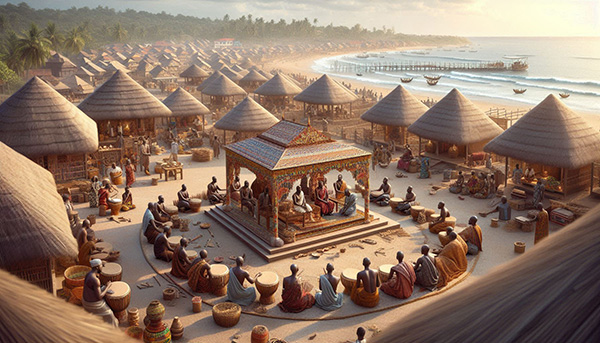
To speak of Anloga is to speak of the Anlo Ewe, one of the most influential Ewe groups in West Africa. It is the spiritual, cultural, and political home of the Anlo kingdom. This is where the great Awoamefia (King of the Anlo) reigns — the custodian of tradition, the symbol of unity, the voice of ancestral authority.
The Character of Anloga
Anloga embodies:
- Order
- Discipline
- Cultural pride
- Respect for elders
- Deep spirituality
- Artistic brilliance
- Quiet power
Anloga is not loud.
It is intentional — like a chief who speaks softly but commands the room.
Its layout reflects its heritage:
- Family compounds structured by clan
- Shrines kept with reverence
- Drumming circles where rhythm is learned like language
- Craftsmen who weave, carve, mold, and build
- Fishermen who read the sea like scripture
Anloga feels ancient, organized, and wise — like walking into history respectfully observing you.
3. The Anlo Kingdom — Warriors, Diplomats, and Philosophers
The Anlo Ewe have one of the richest and most intricate histories in Ghana.
Key traits of the Anlo state:
- Strong military alliances
- Highly organized clan structures
- Fierce independence
- Deep intellectual tradition
- Skilled diplomacy
- Complex spiritual systems
- Unshakeable identity
The famous Hogbetsotso Festival celebrates the Ewe escape from Notsie and symbolizes:
- Unity
- Freedom
- Resilience
- Historical continuity
During the purification rituals, the entire community symbolically sweeps away negative energy, conflict, and misfortune — both spiritual and social. The dance, the drumming, the processions, the costumes: everything reflects centuries of cultural memory.
Anloga is not just a town.
It is the headquarters of a civilization.
4. Fort Prinzenstein — A European Scar on African Soil
Keta is home to Fort Prinzenstein, built by the Danes in 1784 for:
- Slave trading
- Regional control
- Military presence
The fort stands even now — partly ruined, partly defiant — facing a sea that keeps trying to take it. Erosion has eaten into its foundations. Some walls are already gone.
But the fort remains a symbol:
- Of suffering
- Of resistance
- Of colonial brutality
- Of African endurance
Tourists walk through its cells, silent and thoughtful. Even laughter dies when you step inside. The walls whisper. The ground remembers. The ocean beside it feels like a witness.
Prinzenstein is not just a monument — it is an emotional body.
5. The Lagoon — Keta’s Quiet Partner
If the sea is dramatic, the Keta Lagoon is philosophical.
It is calm.
Reflective.
Balanced.
It supports:
- Fishing
- Salt mining
- Crabbing
- Birdwatching
- Canoe transportation
The lagoon is also ecologically vital:
- Mangroves
- Wetland species
- Migratory birds
- Oyster beds
It provides what the sea sometimes takes away.
In many Ewe proverb systems, lagoons are seen as gentle mothers — compared to the ocean, the unpredictable father. The Keta Lagoon is exactly that: gentle, generous, and observant.
6. Fishing Life — Nets, Canoes, and the Rhythm of Survival
In Anloga and Keta, fishing is not an occupation — it is a culture.
Fathers fish.
Sons fish.
Grandsons fish.
Even the sea knows their names.
Daily scenes:
- Canoes returning at dawn
- Nets sprawled on beaches like spiderwebs drying in the sun
- Women smoking fish in clay ovens
- Children learning knots before they learn proverbs
- Market queens bargaining louder than the waves
- Fishermen reading cloud patterns like weather apps
When the catch is good, the entire community feels it.
When the catch is bad, the silence spreads like concern.
Fishing here is an economy of courage.
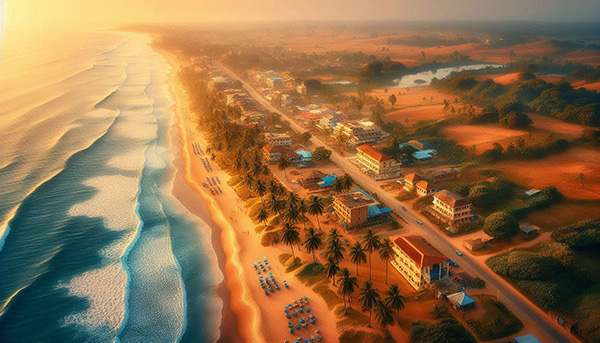
7. The Beauty of Keta & Anloga — A Coastline of Contradictions
These towns are breathtaking.
Keta offers:
- golden beaches
- wide horizons
- coconut-lined roads
- clusters of old colonial buildings
- gentle resorts emerging
Anloga offers:
- rich culture
- orderly streets
- dignified elders
- sacred sites
- strong social structure
Together they create a dual identity:
- Coastal grace
- Historical depth
- Cultural sophistication
- Natural vulnerability
This is a coastline that smiles even while battling tears.
8. Erosion — The Enemy That Doesn’t Sleep
The biggest challenge facing Keta and some communities around Anloga is coastal erosion.
Causes include:
- Rising sea levels
- Loss of natural sandbars
- Climate change
- Human activity upstream
- Reduced sediment flow
- Storm surges
The sea has swallowed:
- Roads
- Cemeteries
- Homes
- Businesses
- Farmlands
- Memories
The famous Keta Sea Defence Wall was an engineering triumph — but only a temporary victory. The sea shifts constantly, testing walls, breaking boundaries, and demanding negotiation.
Living here requires courage.
9. The People — Calm, Refined, Discerning, and Deep
The people of Keta and Anloga are some of the most:
- respectful
- thoughtful
- culturally anchored
- multilingual
- naturally disciplined
you will meet.
They carry pride quietly, like a hidden jewel.
Their strengths include:
- Skilled craftsmanship
- Masterful fishing
- Exceptional organization
- Rich artistic lineage
- Deep philosophical traditions
- Highly cultured social behavior
Nothing is done without meaning.
Nothing is said without intention.
10. Conclusion — Land, Sea, and Souls Intertwined
Anloga and Keta stand as two of Ghana’s most symbolic coastal towns:
- One is the spiritual center of the Anlo Ewe.
- The other is a historical jewel forever negotiating with the sea.
Together, they represent:
- strength
- vulnerability
- tradition
- endurance
- beauty
- loss
- resilience
- cultural dignity
The land may shift.
The sea may advance.
But the identity of these towns remains unshaken.
Anloga is the soul.
Keta is the memory.
Together, they are the heartbeat of the Volta coastline.
📖 Coming Up Next: Chapter 41: Kente
Author: John S. Morlu II, CPA is the CEO and Chief Strategist of JS Morlu, leads a globally recognized public accounting and management consultancy firm. Under his visionary leadership, JS Morlu has become a pioneer in developing cutting-edge technologies across B2B, B2C, P2P, and B2G verticals. The firm’s groundbreaking innovations include AI-powered reconciliation software (ReckSoft.com), Uber for handymen (Fixaars.com) and advanced cloud accounting solutions (FinovatePro.com), setting new industry standards for efficiency, accuracy, and technological excellence.