
By: John S. Morlu II, CPA
Every nation has its economy. Some trade in oil, others in optimism. Benin trades in sincerity — a currency so stable it should be listed on the regional exchange.
If you’ve ever visited Cotonou or Ouidah, you know what I mean. Benin doesn’t just host you — it studies you, feeds you, blesses you, and then charges you nothing but gratitude.
In a world obsessed with speed, performance, and scripted politeness, Benin’s hospitality is refreshingly unscripted. It feels like what manners were before marketing departments invented customer service.
1. The First Handshake Is an Audit
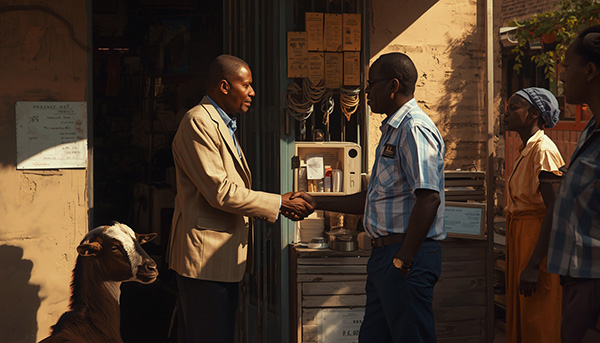
In Benin, a handshake isn’t just a greeting — it’s a moral exam. Firm enough to mean business, gentle enough to mean respect. Your host will look into your eyes as if trying to detect your intentions — not in suspicion, but in calibration.
This is the unwritten Integrity Index test.
If you pass, expect open doors and honest prices. If you fail, well… even the goats will sense it.
Hospitality here isn’t naive. It’s discerning. Beninese people have mastered what diplomats call soft power with hard logic.
2. The Art of Feeding Without Asking
Some countries ask if you’re hungry. Benin assumes you are.
Within fifteen minutes of arrival, someone will offer you rice, stew, fried fish, or something mysterious but delicious involving cassava and confidence. If you decline politely, they’ll nod — and still bring it anyway.
Refusing food in Benin is like refusing Wi-Fi: technically allowed, socially suspicious. Economists call it the Social GDP of Generosity. Anthropologists call it kinship economics. The locals just call it being human.
3. Hospitality as Governance
Beninese hospitality is not limited to homes — it extends to how institutions function. Government offices, banks, and even customs desks operate with a quiet civility.
No shouting. No chaos. Just soft-spoken efficiency that feels almost alien to anyone used to bureaucracy as sport.
“In Cotonou, even the tax officer offers you water first.”
This isn’t random kindness — it’s policy-level psychology. When people feel respected, they cooperate. When systems feel predictable, they perform.
Benin has turned courtesy into compliance — and it works.
4. The Economics of Calm
Hospitality, in Benin, doubles as economic strategy. When you’re known as the polite neighbor, investment follows naturally.
Traders cross from Nigeria not just for profit margins, but for peace of mind. Tourists linger because nobody hustles them. Foreigners settle because the tone of daily life feels trustworthy.
In a region where high energy often substitutes for efficiency, Benin proves that low noise can yield high returns.
5. The Polite Persistence Principle
You’ll often hear, “Pas de problème” — “No problem.” It’s not laziness. It’s philosophy.
Beninese calm doesn’t mean passivity; it’s strategic patience. People don’t overreact; they outlast.
A merchant can spend five days negotiating with a smile. A fisherman will mend his net twice before complaining once. A bureaucrat will wait for the exact signature rather than improvise chaos.
It’s not slowness — it’s serenity with intent.
6. Religion, Respect, and the Rule of Balance
Benin has Christianity, Islam, and Vodun — and somehow, everyone gets along. In other countries, that’s called interfaith policy. In Benin, it’s called Tuesday.
No religious superiority, no culture wars. People attend church in the morning and pour libations to ancestors in the evening — and no one sees a contradiction.
It’s this theological tolerance that bleeds into business and daily life. Benin’s greatest innovation may be that it treats diversity not as a challenge, but as a choreography.

7. The Hospitality ROI
Let’s be practical. Hospitality isn’t free — it’s investment-grade behavior.
When foreigners visit and leave impressed, they become ambassadors. When traders trust the system, they spend more. When officials act decently, aid and FDI flow more smoothly.
Benin doesn’t have to run PR campaigns screaming “Invest Here!” It simply behaves like a good host — and the world shows up.
Because in the global economy, the return on integrity always beats the yield on cynicism.
8. The Humor Dividend
Beninese humor deserves its own GDP line. It’s observational, dry, and quietly wise.
A taxi driver might say, “Traffic is like marriage — patience or prayer.” A shopkeeper will tell you, “Our Wi-Fi is faster when the spirits approve.” Laughter here isn’t escapism — it’s emotional regulation.
Humor turns discomfort into conversation. And conversation, in Benin, turns strangers into stakeholders.
9. The Market as a Metaphor
Visit the open market and you’ll understand Benin’s economy in one afternoon. Vendors compete fiercely — but respectfully. You’ll never see two traders shouting insults across stalls. Prices are firm but fair, and bargaining ends with mutual smiles, not threats.
This isn’t just commerce; it’s cultural economics — trade built on mutual dignity.
Even chaos has manners here.
10. The Secret Formula: Hospitality as Stability
Hospitality is not a side effect of peace in Benin — it’s the cause. When people respect each other’s space, there’s less conflict. When they feed you, they’re not just being kind — they’re ensuring you’re not angry on an empty stomach.
The result is a psychologically stable society, one that attracts investment without needing to shout about it.
Other nations build skyscrapers to show development. Benin builds trust — one handshake, one shared meal, one kind gesture at a time.
11. The Moral of the Story
In the end, Benin’s greatest export isn’t cotton, oil, or even data — it’s composure. A nation that doesn’t chase fame or followers but earns admiration through discipline, warmth, and sincerity.
Its hospitality is not performance — it’s principle. And its calm is not quietness — it’s confidence.
If the world ran on Beninese etiquette, there would be fewer wars, shorter emails, and longer friendships.
Because here’s the truth: Peace is not the absence of chaos — it’s the presence of character. And Benin, more than any place in West Africa, has turned character into culture, and culture into capital.
Author: John S. Morlu II, CPA is the CEO and Chief Strategist of JS Morlu, leads a licensed public accounting and management consultancy firm. He has more than 20 years of professional experience in auditing and advisory work, including service as Auditor General of Liberia and FAR and DCAA compliance work at Unisys Federal Systems. The firm’s technology products include AI-powered reconciliation software (ReckSoft.com), a handyman services platform (Fixaars.com) and advanced cloud accounting solutions (FinovatePro.com), built for finance and operations teams.