

Perspective on Liquidity, Timing, and the Silent Risks Hidden in “Positive” Cash Balances
Executive Insight
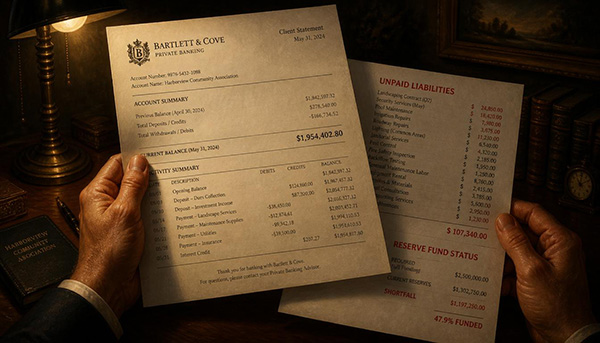
One of the most common — and most dangerous — statements in HOA finance: “We have money in the bank. We’re fine.”
It sounds logical. It feels reassuring. It is often wrong.
Cash in the bank is not financial strength. It is simply a moment in time. And in many HOAs, that moment hides underfunded reserves, unrecorded obligations, timing distortions, and structural weaknesses.
Liquidity is not stability. And confusing the two is costly.
1. Understanding the Cash Flow Illusion
Cash flow tells you what came in and what went out. It does not tell you what should have been recorded but wasn’t, what future obligations exist, whether reserves are sufficient, or whether expenses are properly classified.
The danger: cash flow is visible. Financial reality often is not.
2. Timing Distortions: When Cash Misleads
HOA cash balances are heavily influenced by timing. Common examples include:
- Annual assessments collected upfront, creating a large cash balance early
- Expenses incurred but not yet paid, meaning liabilities aren’t visible in cash
- Reserve transfers delayed, making operating cash appear stronger than it is
The result is a temporary surplus that looks like stability — but is actually a timing distortion.
3. The Hidden Liabilities Problem
Cash does not reflect obligations that are incurred but not recorded, deferred into future periods, or not yet due but unavoidable. In HOAs, these include upcoming major repairs, vendor payables not yet booked, reserve funding gaps, and deferred maintenance.
These obligations are real — even if they don’t appear in the bank account.
4. Operating vs. Reserve Cash: The Most Common Confusion
Many HOAs combine or loosely manage operating cash and reserve cash. This creates a dangerous illusion: total cash looks healthy, but in reality, operating funds may be tight while reserve funds are insufficient. Without clear separation, you don’t know what is truly available.
5. Why Cash-Based Thinking Leads to Poor Decisions
When boards rely too heavily on cash balances, they may delay reserve contributions, approve expenses that should be deferred, avoid necessary assessment increases, or assume financial flexibility that doesn’t exist. These decisions feel justified in the moment — but they create long-term instability.

6. The Right Lens: Accrual-Based Financial Reporting
To see the true financial position, HOAs must look beyond cash. Accrual-based accounting shows what has been earned, what has been incurred, what obligations exist, and what resources are truly available. It aligns financial reporting with economic reality — not just timing.
7. What Strong Cash Flow Management Actually Looks Like
High-performing HOAs don’t ignore cash — they manage it strategically. Key practices include:
- Cash flow forecasting — monthly and quarterly projections to anticipate inflows and outflows
- Clear fund segregation — strict separation of operating and reserve funds, with no commingling
- Alignment with budget and reserves — cash decisions tied to long-term plans, not short-term comfort
- Monitoring liquidity ratios — maintaining the ability to meet obligations and absorb unexpected events
When managed this way, cash becomes a deliberate resource — not a misleading signal.
8. The Strategic Advantage of Financial Clarity
When HOAs understand the difference between cash and financial reality, they gain better decision-making, fewer financial surprises, stronger reserve planning, and increased homeowner trust.
9. The Role of a Serious Financial Partner
This level of clarity does not happen by accident. It requires structured financial systems, technical expertise, and independent analysis. A serious firm brings discipline to financial reporting, insight into cash flow dynamics, and alignment between short-term liquidity and long-term stability.
10. Cash Is a Tool — Not a Conclusion
Cash is important, but it is not the full story. Relying on it alone is like judging health by appearance without running the tests.
Having cash in the bank feels safe. Understanding what that cash actually means — that’s what keeps your HOA safe.