
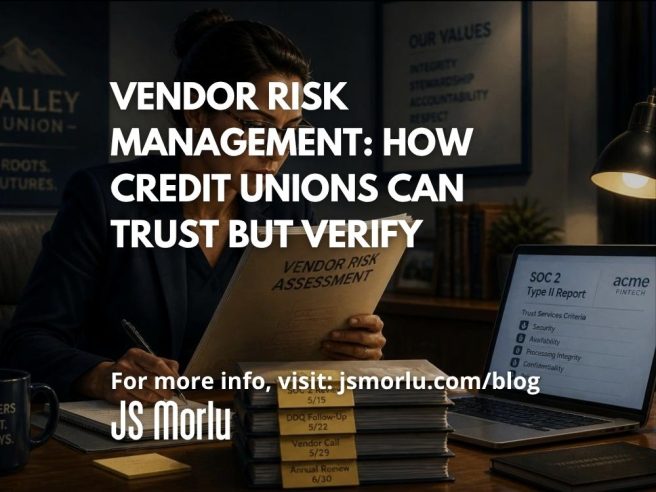
Vendors are the hidden lifeblood of modern credit unions. They power your core systems, process your payments, secure your data, and even interact directly with your members. Without them, operations stop.
But here’s the problem: you can outsource the service — you can’t outsource the risk. If a vendor fails, cuts corners, or violates regulations, your credit union owns the consequences. Regulators won’t accept “the vendor did it” as an explanation. You chose the vendor. You’re responsible for oversight.
Fun Fact #1: Regulators Care About Your Vendors Almost as Much as They Care About You
The NCUA and state regulators have clear expectations for vendor oversight, especially in areas touching member data security, payment processing, loan servicing, and marketing compliance. These aren’t soft guidelines — they’re examination criteria. A weak vendor risk management program is an exam finding waiting to happen, and findings in this area often carry significant remediation requirements.
The Biggest Vendor Risk Traps
- No Due Diligence: Onboarding without background checks or financial health reviews.
- Weak Contracts: Missing service level agreements (SLAs), termination rights, or compliance obligations.
- Poor Ongoing Monitoring: “Set and forget” vendor relationships that are never revisited until something breaks.
- Over-Reliance: Critical services concentrated with a single provider, creating a single point of failure.
Each of these traps is avoidable. But they require proactive structure — not just good intentions. The credit unions that get caught in these traps aren’t careless. They’re typically busy organizations that treated vendor management as a low-priority administrative task until it became an urgent crisis.

Example from the Field
A $900M-asset credit union outsourced its online banking platform to a fintech vendor. The vendor was well-regarded in the industry and had served the credit union for several years without incident. The relationship felt solid.
When the vendor suffered a data breach, over 12,000 member accounts were exposed. Regulators fined the credit union for inadequate vendor oversight — even though the vendor caused the breach. The fine, reputational damage, and recovery costs exceeded $1.5 million.
The credit union had trusted the vendor. What it hadn’t done was verify — through contract audit rights, annual SOC 2 reviews, and ongoing cybersecurity assessments. That gap was expensive.
Fun Fact #2: Vendor Failures Are Often Financial
Beyond security, vendors can fail simply because they run out of cash.
A bankruptcy or sudden shutdown can disrupt operations overnight — locking you out of systems, leaving members unable to access accounts, and forcing emergency replacements under pressure.
Financial due diligence before onboarding isn’t paranoia. It’s basic risk management.
CPA Insight: Vendor Risk Is Manageable — If You Treat It Like a Credit Risk
The same discipline that makes credit unions great at evaluating borrower risk applies directly to vendor risk. You wouldn’t extend a large loan without reviewing financials, references, and repayment capacity. Vendors deserve the same scrutiny.
We help credit unions:
- Perform financial due diligence before onboarding.
- Review vendor SOC 2, SSAE 18, and cybersecurity reports.
- Tie vendor performance directly to operational KPIs.

Five Keys to Strong Vendor Risk Management
- Due Diligence Before Onboarding: Background checks, references, financial health, compliance history.
- Strong Contracts: Clear SLAs, audit rights, termination clauses, and regulatory compliance obligations.
- Ongoing Monitoring: Annual reviews of performance, compliance, and financial condition.
- Exit Strategies: Contingency plans if a vendor fails or breaches contract.
- Centralized Vendor Management System: One source of truth for all vendor records and reports.
Fun Fact #3: Regulators Will Ask to See Your Vendor Files
They want proof of due diligence, contract terms, and ongoing monitoring. If it’s not documented, it’s as if it never happened.
A verbal assurance that you’ve been monitoring a vendor carries no weight in an examination.
The file either exists or it doesn’t.
The Strategic View
Vendor risk management isn’t about being suspicious — it’s about being responsible.
Your members trust you to protect their data, their money, and their experience — even when part of that trust depends on someone else’s performance.
Strong vendor oversight is how you honor that trust regardless of who’s delivering the service.
Our Role in Vendor Oversight
We help credit unions:
- Build vendor management frameworks that pass any exam.
- Perform ongoing vendor audits and compliance reviews.
- Align vendor performance with member service and strategic goals.
Call to Action
📌 Let’s make your vendors your strength, not your weakness.
With CPA-guided vendor risk management, your credit union can partner confidently, comply with regulations, and protect members from hidden risks.