
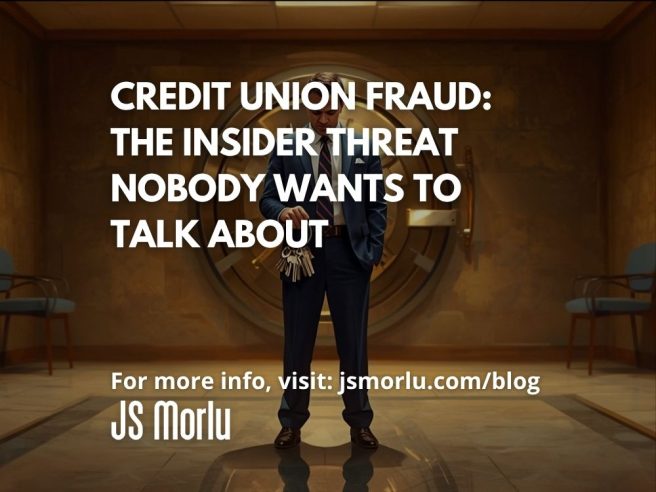
When the Danger Sits Inside the Building
Fraud in credit unions isn’t always masterminded by shadowy hackers in far-off countries.
Sometimes, it’s the smiling teller, the long-tenured branch manager, or the IT staffer who has the keys to everything.
And because they’re trusted, they know exactly where the weaknesses are — and how to exploit them.
That is what makes insider fraud so hard to see. The warning signs look a lot like loyalty, long service, and hard work.
Why Insider Fraud Is So Dangerous
1. Access + Trust = Risk
Insiders don’t need to “break in” — they already have the system logins, the transaction authority, and the member relationships to carry out fraud without raising early suspicion.
Members rarely question a familiar face. Colleagues rarely question a trusted one. That comfort is exactly what a fraudster relies on.
2. The Slow Burn Scheme
Many of the biggest CU frauds weren’t discovered overnight.
They were small thefts repeated over years, hidden by false reconciliations, manipulated reports, or exploiting blind spots in oversight.
Example: A credit union employee in the Midwest siphoned off over $2 million by skimming loan payments for nearly a decade before anyone noticed. The fraud unraveled only when she went on vacation and nobody else could “balance” the books her way.
Small amounts are easy to hide. Repeated over years, they become losses that can threaten a credit union’s capital and its members’ confidence.

3. Culture of “Family” Can Backfire
Credit unions pride themselves on being tight-knit and loyal — but this culture can sometimes make leaders reluctant to confront suspicious behavior or enforce strict controls.
When “trust” replaces verification, fraud risk skyrockets.
Asking a long-time colleague for a second review can feel like an accusation. It isn’t. It is a routine control, applied to everyone the same way.
4. Weak Segregation of Duties
If one person can initiate, approve, and reconcile transactions, you’ve basically handed them a fraud starter kit.
Yet in many smaller CUs, “wearing multiple hats” is the norm, not the exception.
Controls that protect the credit union also protect the employee. When every transaction has a second set of eyes, honest staff are never left wondering if they will be blamed.
Early Warning Signs of Insider Trouble
- Employees unwilling to take vacations or delegate duties.
- Lifestyle suddenly inconsistent with known income.
- Reluctance to let others “double-check” their work.
- Frequent “mistakes” in reconciliations that only one person can fix.
No single sign proves fraud. But two or three together deserve a closer look.

The Regulatory Reality
The NCUA and state regulators expect CUs to have internal controls and anti-fraud programs that include:
- Mandatory vacation policies for sensitive positions.
- Dual control over cash, wire transfers, and key systems.
- Surprise audits and independent reviews.
Examiners look for these controls in practice, not just in a policy binder. A written policy that nobody follows will not help during a review.
How to Reduce Insider Fraud Risk
- Enforce Segregation of Duties: No single person should control an entire transaction flow.
- Mandatory Time Off: Fraud schemes often surface when the perpetrator isn’t there to “manage” the cover-up.
- Fraud Hotline: Anonymous reporting channels can expose misconduct early.
- Regular Surprise Audits: Not just annual — random, unannounced checks.
Start with the control that closes the biggest gap. Then add the next one. Progress beats perfection.
Fun Fact
The Association of Certified Fraud Examiners has reported that insider fraud can result in significantly higher losses in the financial sector because insiders may know how to hide the evidence.
Bottom Line
Insider fraud isn’t an uncomfortable side topic — it’s a core operational risk.
Ignoring it doesn’t preserve your credit union’s “family” culture — it puts that family’s livelihood at risk.
Action for Your Credit Union:
Our Insider Fraud Vulnerability Assessment identifies high-risk access points, strengthens controls, and helps you create a culture where trust is backed by verification — every time.