
By: John S. Morlu II, CPA
Introduction
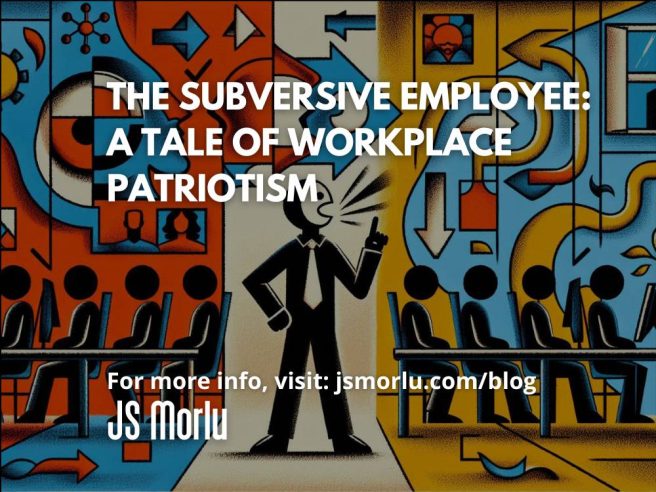
We’ve all encountered that one coworker who, with the fervor of a revolutionary leader, questions every decision made by management—be it the adoption of a new software, a change in the breakroom coffee brand, or even the audacity of updating the office Wi-Fi password. Their passionate proclamations resonate through the cubicles, driven by a steadfast belief that their comfort is crucial to the company’s success. Welcome to the world of the Subversive Employee—part warrior, part philosopher, and an ever-present challenge to upper management.
In The Subversive Employee: A Tale of Workplace Patriotism, we delve into the eccentricities of a small business called Republic Solutions, where an innocuous policy debate escalates into a full-fledged ideological clash. At the heart of this conflict are two employees with strikingly different visions: Patrick Hanley, a modern-day Patrick Henry known for his dramatic breakroom oratories, and Thomas Jeffries, the level-headed Thomas Jefferson of this corporate microcosm, who soon discovers that not all revolutions culminate in celebratory fireworks and apple pie.
Think of this tale as a blend of history lesson, office satire, and a reality show where the stakes are high but no one’s selling anything. Along the way, you’ll meet characters who passionately advocate for their rights—be it the right to a flexible schedule or the right to never endure another uninspiring meeting. In their world, as in the realm of the Founding Fathers, finding compromise is as elusive as a fully functioning copy machine.
So, grab a cup of whatever coffee is left after the heated debates, settle into your ergonomically questionable office chair, and prepare to explore a story filled with workplace patriots, office rebels, and the delicate balance between “liberty” and “HR violation.” The revolution might not be televised, but it’s undoubtedly unfolding in the conference room.

Chapter 1: The Birth of a Nation—and a Policy
It was a typical Tuesday morning at Republic Solutions, the kind of morning where coffee flowed freely, motivational posters on the walls cheerfully insisted that “teamwork makes the dream work,” and a fresh policy had just dropped into the email inboxes of unsuspecting employees. Little did management know, this innocuous PDF attachment would spark a debate so heated it could make the Constitutional Convention look like a neighborhood potluck.
Republic Solutions had just announced its new, revolutionary policy for handling client projects—one designed to usher in an era of seamless productivity, like a golden age where deadlines would no longer be dreaded, team meetings would be swift and purposeful, and every project would glide to completion with the grace of a figure skater on a freshly Zambonied rink. The system promised a unified approach to project management that, on paper, was tighter than a toddler’s grip on their favorite toy.
The senior leadership team—modern-day “Federalists,” if you will—stood behind this policy like George Washington at Valley Forge. They touted it as the solution to all the company’s growing pains: missed deadlines, miscommunications, and, most importantly, the mystery of who was responsible for restocking the office snacks. This was the kind of top-down directive they believed could bind the company together and finally answer the age-old question: Who left their Tupperware in the office fridge for six weeks?
But if history has taught us anything, it’s that no policy worth its weight in red tape goes unchallenged. Cue Patrick Hanley. Like his Founding Father doppelgänger, Patrick Henry, Hanley was the office’s senior statesman, the kind of guy who still remembered when emails were a novelty and “collaborating” meant gathering around the fax machine. Hanley had seen more policies come and go than most employees had seen holiday bonuses. He wasn’t about to let this one pass without a fight.
With the fervor of a man who had once campaigned to keep Hawaiian pizza banned from the office party, Hanley stood up, quite literally, in the middle of the breakroom and declared his opposition to this new “corporate constitution.” In Hanley’s view, the policy was missing a crucial component: a Bill of Rights for Employees.
“No policy can be trusted without protections for the people!” he bellowed, arms waving like a patriotic orator rallying his troops. He went on to list the essential “rights” he believed every employee was entitled to. First and foremost: the right to a flexible schedule. Hanley argued that any respectable worker should have the freedom to clock in at 10:30 a.m. on a Monday and call it “being proactive” if they answered an email over the weekend.
Next on his list: the right to autonomous workspaces. In Hanley’s perfect world, every employee would be guaranteed the liberty to rearrange their desk into a fortress of solitude, free from the tyranny of impromptu chats about “synergy” and “leveraging core competencies.”
And finally, the crown jewel of his demands: the right to opt out of meetings that could have been emails. “Why should anyone sit in a 45-minute discussion about printer paper orders when a simple ‘Reply All’ could handle it?” Hanley declared, to the vigorous nods of many in the room. His rallying cry? “Give me liberty, or give me a different policy!”
What started as a minor policy rollout was suddenly a full-on revolution.
Management, the so-called “Federalists,” hadn’t anticipated this level of pushback. They had thought the policy was airtight—like a well-written term sheet, free from ambiguity and rebellion. But now, faced with the impassioned cries for employee rights, they knew they had to tread carefully. Hanley had awoken a spirit of subversion in the office, and others were starting to rally behind his cause.
In a bid to stave off an all-out insurrection (or worse, a mass exodus to “work from home”), the leadership team made a concession: they would allow for an amendment to the policy—a list of “rights” for employees, crafted by none other than James Monroe, the enigmatic junior associate whose primary qualification for this task seemed to be that he had once written a 1,200-word email without using a single emoji. Monroe wasn’t exactly thrilled to be thrust into the role of policy scribe, but much like his historical counterpart, he knew that sometimes history chooses you. Plus, who could resist the opportunity to craft something so grand as the Employee Bill of Rights?
Meanwhile, Hanley, having secured his amendments, was feeling quite pleased with himself. He strutted around the office like a Revolutionary War hero after a fresh victory at Bunker Hill. But little did he know, while his demands were being enshrined in policy, a quiet storm was brewing.
Across the room, sitting in the corner with a slightly bemused expression, was Thomas Jeffries. Jeffries, much like his namesake Thomas Jefferson, had been an early supporter of the policy. A senior analyst known for his ability to turn chaotic project plans into orderly deliverables, Jeffries believed the new system would finally bring some much-needed structure to the company’s increasingly haphazard operations. He had been all-in on the policy from the start—before Hanley’s “rights” had muddied the waters.
Jeffries couldn’t help but wonder: had the amendments gone too far? Was giving employees the right to skip meetings and set their own schedules a recipe for flexibility, or just an open invitation to chaos? He imagined a world where project deadlines were suggestions, like that two-week notice for returning library books. Jeffries felt a strange unease growing, the kind of feeling you get when someone suggests making a group project “informal,” and you just know nothing’s going to get done.
As the dust settled, it became clear that what had begun as a simple policy had now birthed something far greater—and far messier. Like the young United States after the ratification of the Constitution, Republic Solutions found itself entering a new chapter, complete with debates, rights, and a handful of well-intentioned policies that might just collapse under the weight of their own loopholes.
And so, in this bustling office, where post-it notes became as divisive as post-Revolutionary War treaties, a question loomed: could Republic Solutions survive its own version of the Bill of Rights, or would the newly christened Employee Republic soon devolve into anarchy? Only time (and maybe some strategically placed calendar reminders) would tell.
In the meantime, Hanley was proudly hanging a sign over his desk: “Work-Free Wednesdays Are Coming.”

Chapter 2: Patrick Hanley—The Rebel with a Cause
Patrick Hanley was not your average employee. Much like his historical namesake, Patrick Henry, he possessed a knack for voicing his concerns loudly and unapologetically. He was passionate about the rights of his fellow employees, a zealot for what he believed was the fundamental principle of workplace freedom. Hanley was not against change per se, but he insisted that any new system must respect the freedoms of the employees—flexible schedules, autonomous workspaces, and the ability to opt out of unnecessary meetings.
His battle cry, “Give me Liberty, or Give me a Different Policy!” echoed throughout the office like an anthem of revolution, igniting a fervor in many who had felt stifled by the existing structure. Hanley was the kind of leader who could rally the troops, bringing them together under a banner of resistance against what he saw as an encroachment on their rights.
At first, many employees were hesitant, unsure of how to react to Hanley’s bold stance. After all, this was a company where change was often met with skepticism. But Hanley had a gift for persuasion, and soon his colleagues began to rally behind him. They started to share their grievances, voicing their frustrations about the rigidity of the old policies. Hanley became their voice, articulating the discontent that had long simmered beneath the surface.
His arguments were straightforward yet compelling. Why should employees be forced to adhere to a rigid 9-to-5 schedule? Shouldn’t they have the right to structure their workdays in a way that best suited their personal productivity? What about the countless hours wasted in meetings that could have been summarized in an email? These questions struck a chord, and slowly but surely, a movement began to take shape.
As the weeks went by, Hanley organized informal gatherings where employees could express their concerns and brainstorm solutions. They dubbed themselves the “Liberty Coalition,” and their meetings soon became a hotbed of ideas and strategies for ensuring that employee rights would not be overlooked.
In those brainstorming sessions, Hanley and his cohorts mapped out a vision for the workplace—one that embraced flexibility while maintaining accountability. They drafted proposals that would address the leadership’s concerns while ensuring employees were treated with the dignity and respect they deserved. Hanley, with his charismatic demeanor and genuine passion, inspired others to voice their ideas and advocate for change.
However, Hanley’s burgeoning influence also attracted the attention of the leadership team. The Federalists, who had confidently introduced the new policy, now found themselves in a precarious position. They had believed that their top-down approach would be met with compliance, but now they were faced with a growing faction of dissenters who challenged their authority. The once-united office began to fracture along ideological lines, with Hanley emerging as the figurehead of a new movement.
The leadership team decided to take action. They convened a meeting to address the concerns raised by Hanley and his supporters, believing that an open dialogue could quell the rising tide of discontent. They invited Hanley to speak, hoping to diffuse the situation and reassert their control.
In a bold move, Hanley accepted the invitation, fully aware of the weight of the moment. As he entered the conference room, he felt a rush of adrenaline. This was his chance to represent the voices of his colleagues, to articulate their hopes and fears to the very people who held the reins of power.
As the meeting began, the atmosphere was thick with tension. Hanley stood before the leadership team, a formidable group that included the CEO, the HR director, and the head of project management. With a deep breath, he launched into his speech, laying out the case for employee rights with a fervor that was both inspiring and intimidating.
“Ladies and gentlemen, we stand at a crossroads,” he began, his voice steady yet impassioned. “Our new policy is a noble attempt to bring structure to our work, but it cannot come at the cost of our rights as employees. We are not cogs in a machine; we are individuals with unique needs, talents, and preferences. A truly effective policy will recognize and respect that individuality.”
Hanley went on to highlight the specific rights he believed every employee should have, using real-life examples to illustrate his points. He spoke of the importance of flexibility in schedules, the right to a comfortable and personal workspace, and the necessity of limiting meetings that could easily be resolved through written communication.
As he spoke, he noticed a few nods of agreement from the audience. He could see that his words were resonating, sparking a flicker of hope that perhaps change was within reach. The leadership team listened intently, absorbing his message, though it was evident they were not entirely ready to relinquish their authority.
As the meeting concluded, the leaders expressed their appreciation for Hanley’s insights but remained firm in their commitment to the policy. However, they promised to consider the feedback and suggested a pilot program for flexible schedules, much to Hanley’s delight. It was a small victory, but a victory nonetheless.
The day after the meeting, the mood in the office was electric. Hanley had become a local hero, with colleagues offering high-fives and thumbs-up as he walked by. His influence had grown, and with it, the Liberty Coalition began to take on a more formal structure.
They set up a newsletter to keep employees informed about their ongoing efforts and began organizing lunchtime discussions where team members could share their experiences with the new policy. They even invited guest speakers, including industry leaders who had successfully implemented flexible work environments.
But as Hanley basked in his newfound popularity, he couldn’t shake the feeling that the battle was far from over. While he had succeeded in sparking a conversation, he knew that the leadership team would not yield their power easily. The struggle for employee rights had only just begun, and Hanley was ready to lead the charge.
And so, armed with determination and the unwavering support of his colleagues, Hanley embarked on a journey to reshape the workplace, one amendment at a time.

Chapter 3: The New Constitution Takes Shape
As the dust settled from the dramatic conference room meeting, Republic Solutions found itself in uncharted territory. The once-cohesive team was now divided between the traditionalists—those who clung to the old ways of doing things—and the newly emboldened Liberty Coalition, led by the charismatic Patrick Hanley.
The leadership team’s attempt at a compromise—a pilot program for flexible schedules—had done little to ease tensions. In fact, it had only emboldened the Liberty Coalition to push further. They saw the pilot as an opportunity to experiment with their vision of a workplace that valued autonomy and individuality.
Hanley was eager to take on this challenge. He quickly set up a meeting with Monroe, the junior associate tasked with drafting the Employee Bill of Rights. Monroe had been quietly working on a list of amendments to the new policy, incorporating feedback from Hanley and other members of the Coalition.
As the two men sat down to brainstorm, Hanley couldn’t help but feel a surge of excitement. This was their chance to shape the future of Republic Solutions, to create a workplace that valued the well-being of its employees just as much as productivity.
“Let’s make this Bill of Rights something special,” Hanley urged, his eyes sparkling with enthusiasm. “We need to ensure that every employee feels empowered to work in a way that suits them.”
Monroe, though a little more reserved, nodded in agreement. “I think we should start with the basics. Flexible schedules are a must, but we also need to address things like remote work options and mental health support. Those are huge issues for many employees.”
With that, the two men dove into a heated brainstorming session, tossing around ideas and refining their vision for the Employee Bill of Rights. They worked tirelessly, fueled by the passion of their cause and an ample supply of office snacks.
By the end of the week, they had a comprehensive draft that included the following key amendments:
1. Right to Flexible Scheduling: Employees should be able to set their hours based on their productivity and personal commitments, ensuring a healthy work-life balance.
2. Right to Remote Work: Employees should have the option to work from home at least two days a week, promoting flexibility and reducing commuting stress.
3. Right to Opt Out of Unnecessary Meetings: Employees should be able to decline attendance at meetings that do not pertain to their work or could be handled via email.
4. Right to Personal Workspace: Employees should have the freedom to personalize their workspace to create an environment that fosters creativity and comfort.
5. Right to Mental Health Resources: The company should provide access to mental health resources and support to help employees manage stress and maintain well-being.
As they finalized their draft, Hanley and Monroe felt a sense of accomplishment wash over them. They were no longer just voices in the crowd; they were leaders, shaping the future of their workplace.
With their Bill of Rights in hand, they called for a meeting with the entire Liberty Coalition to discuss the next steps. Hanley was thrilled to share the draft and encourage feedback from his colleagues.
The meeting was held in the spacious conference room, filled with eager faces and an air of excitement. Hanley opened the floor to discussion, inviting everyone to share their thoughts on the proposed amendments.
As members of the Coalition chimed in, it became clear that the draft resonated with many. Ideas flowed freely, and several employees offered suggestions for improvement. One employee proposed adding a right to “work-from-anywhere” days, allowing employees to take their work to different locations, such as cafes or co-working spaces. Another suggested incorporating a right to regular check-ins with management, ensuring that employees felt supported and heard.
The atmosphere in the room was electric, with enthusiasm building as the amendments took shape. After an hour of passionate discussion, the Coalition finalized their Employee Bill of Rights, a document that would soon be presented to management.
With the draft complete, Hanley and Monroe prepared for what they knew would be a pivotal moment in their quest for employee rights. They scheduled a meeting with the leadership team, eager to present their ideas and advocate for change.
As the day of the meeting approached, Hanley felt a mix of excitement and apprehension. Would the leadership team be receptive to their vision? Or would they dismiss the Coalition’s efforts, viewing them as mere employee grievances?
On the day of the meeting, the air was thick with anticipation. Hanley and Monroe arrived early, their hearts racing as they prepared to present their hard work. The room buzzed with energy as they waited for the leadership team to arrive.
When the executives entered, the mood shifted. Hanley took a deep breath, reminded himself of the importance of this moment, and began his presentation.
“Thank you for meeting with us today,” he started, standing confidently before the leaders. “We have been hard at work crafting an Employee Bill of Rights that we believe aligns with our company’s mission and values. Our goal is to create a work environment where everyone feels valued and empowered.”
As he spoke, he saw nods of acknowledgment from some of the leaders. This gave him the confidence to continue.
“We believe that by embracing flexibility, promoting autonomy, and supporting mental health, we can not only improve employee satisfaction but also enhance productivity and creativity. These amendments represent a commitment to a workplace culture that truly values its people.”
He passed out copies of the Bill of Rights to the leadership team, who began to scan the document with curiosity. Hanley could sense a mix of skepticism and intrigue in the room, but he pressed on.
“Our team has been engaged and enthusiastic about these amendments,” he said, “and we genuinely believe they will benefit both the employees and the company as a whole. We’re not just asking for rights; we’re advocating for a more vibrant and engaged workplace.”
As he concluded, Hanley felt a wave of relief wash over him. He had laid out their case, and now it was time for the leadership team to respond.
The executives exchanged glances, and finally, the CEO spoke. “We appreciate the effort that has gone into this draft, and we understand the importance of employee engagement. However, we need to consider the potential impact on productivity and accountability.”
A hush fell over the room as Hanley’s heart sank. This was the moment of truth. Would they dismiss the Bill of Rights, or could they find common ground?
The CEO continued, “We’d like to propose a trial period for the flexible scheduling and remote work options you’ve outlined. We’ll closely monitor the outcomes and make adjustments as necessary. If it proves successful, we can consider incorporating more of the rights outlined in your Bill.”
Hanley’s spirits lifted at this unexpected turn. “Thank you for considering our proposal. We’re excited about the possibility of trialing these amendments and are confident they will yield positive results.”
As the meeting concluded, the mood shifted from tension to optimism. Hanley and Monroe had secured a foothold for employee rights at Republic Solutions, and the stage was set for a new era.

Chapter 4: The Pilot Program—Trial and Triumph
The pilot program for flexible scheduling and remote work options began with great enthusiasm at Republic Solutions. Employees were eager to embrace the new policies, and the Liberty Coalition took on the responsibility of gathering feedback and monitoring the outcomes.
Hanley, now a central figure in this transformation, felt a renewed sense of purpose. He organized weekly check-ins with the Coalition members to discuss the progress and any challenges they faced during the pilot.
At the first check-in, employees shared their experiences with excitement. Many praised the newfound flexibility, reporting that they felt more in control of their work-life balance. “I never realized how much stress my commute added to my day,” one employee said. “Working from home has changed everything for me.”
However, not everything was smooth sailing. A few employees expressed concerns about feeling isolated while working remotely. Hanley listened intently, determined to address these issues. He organized virtual coffee breaks and team-building activities to maintain camaraderie and connection among remote workers.
As the weeks progressed, the results of the pilot program became evident. Productivity metrics improved, and employees reported higher job satisfaction. Hanley felt a sense of validation as the leadership team began to take notice.
At the next executive meeting, the CEO shared the positive feedback they had received. “The pilot program has yielded impressive results,” he stated. “Our employees are happier, and productivity has increased. This is a testament to the power of flexibility in the workplace.”
The leadership team discussed extending the pilot program and exploring additional amendments from the Employee Bill of Rights. Hanley’s heart swelled with pride, knowing that their collective efforts were making a real difference.
Encouraged by this momentum, the Liberty Coalition pushed for further amendments, advocating for the right to opt out of unnecessary meetings and the implementation of mental health resources. Hanley knew that these issues were critical to creating a truly supportive work environment.
As the Coalition prepared for another meeting with the leadership team, excitement buzzed in the air. This time, they were not just presenting a draft; they were advocating for a new vision of what a workplace could be.
When the day arrived, Hanley felt a mixture of nerves and confidence. He knew they had made a compelling case, and he was ready to speak passionately about the importance of mental health resources.
As the meeting commenced, Hanley took a moment to gather his thoughts. “We’ve seen the benefits of flexible scheduling and remote work, but we cannot stop there. We must ensure that our employees’ mental health is prioritized.”
He shared statistics about workplace stress and its impact on productivity, emphasizing the need for mental health resources. “By providing access to counseling and wellness programs, we can create an environment where employees feel supported and valued,” he argued.
The leadership team listened attentively, and Hanley could sense their willingness to engage in this critical conversation. After his presentation, the head of HR spoke up. “We’ve seen the positive impact of the pilot program, and I agree that mental health resources are essential. Let’s explore options for implementing these programs.”
The meeting concluded on a high note, with the leadership team agreeing to allocate resources for mental health initiatives. Hanley and the Liberty Coalition had successfully advocated for additional rights, further solidifying their role as change agents within the company.
As the weeks turned into months, the workplace culture at Republic Solutions transformed. Employees felt more engaged, supported, and empowered. The once-divided team began to unite around a common purpose: creating a workplace that valued individuality and well-being.
However, as Hanley reveled in these victories, he remained acutely aware of the ongoing challenges. Not everyone was fully on board with the changes. Traditionalists still clung to the old ways, hesitant to embrace the new culture of flexibility and autonomy.
One day, while reviewing employee feedback, Hanley stumbled upon a comment that left him unsettled. A colleague expressed concern that the new policies had led to a decline in accountability. “People are taking advantage of the flexibility, and it’s affecting team performance,” the comment read.
Hanley felt a pang of worry. While he firmly believed in the value of flexibility, he also understood the need for accountability in the workplace. He knew they needed to address these concerns to ensure the continued success of their initiatives.
With this in mind, Hanley called for another meeting with the Liberty Coalition. He shared the feedback he had received and posed a challenging question: “How can we promote flexibility while also ensuring accountability?”
The Coalition members engaged in a spirited discussion, brainstorming solutions to balance these two essential elements. Ideas flowed, from regular check-ins to establishing clear performance metrics. After much deliberation, they reached a consensus: transparency and communication would be key.
The Coalition drafted a proposal outlining a system of accountability that emphasized open communication and mutual support. They planned to implement regular team check-ins where employees could share their progress, challenges, and successes. This approach would foster a culture of accountability without stifling the flexibility that had proven so beneficial.
When Hanley presented the proposal to the leadership team, he emphasized the importance of transparency and collaboration. “We believe that by establishing a culture of open communication, we can maintain the benefits of flexibility while ensuring accountability. Our goal is not to micromanage but to support one another in achieving our collective goals.”
The leadership team responded positively, recognizing the importance of addressing the concerns of traditionalists while maintaining the progressive changes they had implemented.
As the pilot program continued, Hanley saw firsthand the power of adaptability. The workplace evolved, embracing flexibility, accountability, and mental health resources. Employees thrived, creativity flourished, and the company began to outperform its competitors.
In the end, Hanley realized that the journey toward employee rights was ongoing. Each victory brought new challenges, but with the support of the Liberty Coalition and the willingness of the leadership team to listen, they were forging a path toward a brighter future for everyone at Republic Solutions.

Chapter 5: The Legacy of Liberty
As the months rolled on, Republic Solutions underwent a remarkable transformation. The Employee Bill of Rights had become a living document, a guiding force that shaped the company’s culture and values. Employees felt empowered and engaged, and the workplace atmosphere was electric with creativity and collaboration.
The leadership team, once hesitant to embrace change, had become champions of the new culture. They actively promoted the benefits of flexibility and encouraged open discussions about employee well-being. Hanley was thrilled to see how far they had come.
However, he also understood the importance of sustainability. It was essential to ensure that the positive changes would endure and not fade away. With this in mind, Hanley proposed a company-wide summit to celebrate their successes and solidify the new workplace culture.
The idea was met with enthusiasm, and planning for the summit began in earnest. Hanley envisioned a day filled with engaging workshops, inspiring speakers, and opportunities for employees to share their experiences and insights.
As the date approached, the excitement within the company was palpable. Employees eagerly anticipated the event, eager to celebrate their achievements and contribute to the ongoing dialogue about employee rights.
On the day of the summit, the atmosphere buzzed with energy. Employees gathered in the conference hall, mingling and sharing stories of their experiences since the implementation of the Employee Bill of Rights. Hanley felt a sense of pride as he watched his colleagues engage with one another, sharing ideas and inspiration.
The summit kicked off with a keynote address from an influential advocate for employee rights, who spoke passionately about the importance of creating supportive work environments. The audience hung on every word, energized by the message that they were part of a larger movement toward workplace empowerment.
Following the keynote, a series of workshops and panel discussions began. Employees had the chance to participate in discussions about topics such as mental health support, work-life balance, and strategies for maintaining accountability in a flexible work environment.
During one of the breakout sessions, Hanley facilitated a workshop on the importance of communication in promoting a healthy workplace culture. He encouraged participants to share their experiences and insights, fostering an open dialogue that resonated with everyone present.
As the day unfolded, Hanley felt a sense of unity and purpose among his colleagues. They were no longer just employees; they were advocates for change, working together to create a workplace that respected individuality and valued well-being.
At the end of the summit, Hanley stood before the crowd, his heart full of gratitude. “Today, we have celebrated our achievements and reaffirmed our commitment to the Employee Bill of Rights. This is not just a document; it is a promise to one another—to create a workplace where everyone feels valued, supported, and empowered.”
As applause erupted throughout the room, Hanley felt a sense of fulfillment wash over him. They had not only changed policies; they had transformed the very essence of their company.
In the following weeks, the effects of the summit rippled through Republic Solutions. Employees felt reinvigorated, inspired to share their stories and advocate for further improvements. The Liberty Coalition continued to thrive, with new members joining and fresh ideas emerging.
However, Hanley remained vigilant. He knew that change was an ongoing process, and complacency could threaten the progress they had made. To ensure their efforts would endure, he suggested regular feedback sessions to continue gathering input from employees and leadership alike.
These sessions proved invaluable, providing a platform for open dialogue about challenges and opportunities. Employees felt heard, and the leadership team demonstrated their commitment to fostering a culture of collaboration and support.
As Hanley looked back on the journey, he felt immense pride in the progress they had made. From humble beginnings as a voice for employee rights to becoming a catalyst for change, he had witnessed firsthand the power of unity and determination.
The legacy of Liberty had taken root, and its impact was felt throughout the company. Employees were not just workers; they were empowered individuals who took pride in their contributions and advocated for their rights.
In the heart of Republic Solutions, a new culture blossomed—one that honored individuality, embraced flexibility, and prioritized well-being. And as Hanley continued to lead the charge, he knew that their journey was far from over.
With each step forward, they paved the way for a brighter future, not just for themselves but for all who would follow. The story of the Employee Bill of Rights was one of resilience, collaboration, and the unyielding belief that a supportive workplace could change lives.
As the sun set on another successful day at Republic Solutions, Hanley felt a renewed sense of purpose. He was more than just an employee; he was part of a movement—one that would shape the future of work for generations to come.

Chapter 6: Navigating New Challenges
As the momentum of change continued to gather pace at Republic Solutions, Hanley realized that with growth came new challenges. The company’s culture had evolved dramatically, but there were still pockets of resistance and skepticism among some employees who were hesitant to embrace the new policies fully.
One morning, as Hanley entered the office, he overheard a conversation between two colleagues in the break room. They were discussing how the new flexible work policy had disrupted their team’s dynamic. “I feel like we’re losing our connection,” one of them said. “Some people are just taking advantage of the system.”
Hanley’s heart sank at this feedback. He understood that while many employees thrived under the new policies, others might feel isolated or disconnected from their teams. It was clear that more work was needed to ensure that every employee felt included and engaged.
Determined to address this issue, Hanley organized a series of focus groups to gather insights from employees who felt disengaged or concerned about the changes. He invited a diverse mix of team members to ensure all voices were heard.
During the focus group sessions, Hanley listened intently as employees expressed their feelings. Some appreciated the flexibility but felt it led to a lack of clarity around roles and responsibilities. Others mentioned that they missed the spontaneous interactions that occurred in the office environment.
Hanley took detailed notes, knowing that addressing these concerns would be crucial to sustaining the positive changes. After compiling the feedback, he presented a proposal to the Liberty Coalition, emphasizing the importance of fostering a sense of community and connection among employees.
The Coalition brainstormed ideas for initiatives that could help bridge the gap between remote and in-office employees. They decided to implement a hybrid team-building program that combined virtual and in-person activities. This approach would allow employees to engage regardless of their work location.
Hanley felt invigorated by the Coalition’s enthusiasm and creativity. They planned activities like virtual trivia nights, collaborative workshops, and team challenges that encouraged camaraderie. He knew these efforts would be instrumental in nurturing a sense of belonging within the organization.
As the hybrid program launched, Hanley observed employees’ reactions closely. The initial response was overwhelmingly positive. Colleagues who had previously felt disconnected began to engage more, sharing their experiences and building relationships. Hanley felt a sense of relief, knowing they were moving in the right direction.
However, as the program progressed, he noticed a subtle tension brewing among some traditionalists who still held onto the old ways of working. They voiced concerns during team meetings about the potential decline in productivity and accountability.
One afternoon, during a particularly heated discussion, a senior employee voiced the apprehensions of many: “We can’t ignore that some employees are taking advantage of this flexibility. We need to ensure that everyone is pulling their weight.”
Hanley felt the weight of responsibility on his shoulders. It was essential to address these concerns while still championing the values of flexibility and trust. He knew that fostering a culture of accountability without micromanagement was a delicate balance.
In response, he called for a meeting with the Liberty Coalition and the leadership team to discuss potential solutions. “We need to emphasize accountability while also respecting the autonomy we’ve fought so hard to establish,” he urged.
Together, they brainstormed practical strategies to enhance accountability while preserving the spirit of flexibility. They agreed to establish clear performance metrics and expectations for teams, along with regular check-ins to facilitate communication and support.
When Hanley presented these ideas to the broader team, he emphasized the importance of collaboration and mutual support. “We’re not here to monitor every move; we’re here to uplift one another and ensure we’re all contributing to our shared goals.”
His message resonated with many, but it also sparked a heated debate among the traditionalists. Some expressed concerns that the new measures might lead to unnecessary pressure on employees.
After the meeting, Hanley felt a sense of urgency to bridge the divide. He organized a workshop focused on building trust within teams, emphasizing the importance of open communication and accountability.
Through guided discussions and activities, employees were encouraged to share their perspectives and brainstorm ways to create a supportive environment. The workshop proved to be a turning point, fostering understanding and collaboration among employees with differing viewpoints.
As the weeks unfolded, Hanley witnessed a gradual shift in attitudes. Employees began to embrace the new culture of accountability, realizing that flexibility and responsibility could coexist harmoniously.
The hybrid team-building initiatives continued to flourish, enhancing connections among employees. Hanley felt a renewed sense of hope as he saw colleagues who had once been hesitant now actively participating and engaging with one another.
Through perseverance and open dialogue, Hanley and the Liberty Coalition had navigated new challenges, fostering a culture that valued both flexibility and accountability. However, he knew that the journey was far from over.

Chapter 7: Celebrating Diversity
With the workplace culture at Republic Solutions continuing to evolve, Hanley recognized the importance of inclusivity and diversity in shaping a supportive environment. He believed that a diverse workforce could drive innovation and creativity, enhancing the company’s overall success.
Inspired by this vision, Hanley proposed the formation of a Diversity and Inclusion (D&I) Committee within the Liberty Coalition. The goal was to create a platform where employees could share their unique perspectives, experiences, and ideas for promoting inclusivity.
The proposal was met with enthusiasm, and employees quickly volunteered to join the committee. Hanley felt a renewed sense of purpose as he worked alongside a diverse group of colleagues who were passionate about fostering a more inclusive workplace.
During their first meeting, the D&I Committee brainstormed initiatives that could promote diversity and ensure that every employee felt valued. They discussed ideas such as cultural awareness workshops, mentorship programs, and employee resource groups to support various communities within the company.
One of the committee members suggested hosting a Diversity Day, a company-wide event celebrating the rich tapestry of backgrounds, cultures, and experiences within Republic Solutions. The idea sparked excitement, and plans began to take shape.
As the date approached, the D&I Committee organized engaging activities, including presentations, panel discussions, and cultural showcases. Employees were encouraged to share their heritage through food, music, and stories, creating an environment of mutual respect and understanding.
On the day of the event, the atmosphere buzzed with excitement. Employees from all departments came together to celebrate diversity, and Hanley felt a surge of pride as he witnessed the vibrant displays of culture and unity.
During a panel discussion, Hanley spoke about the importance of diversity in driving innovation. “When we embrace our differences, we unlock new perspectives and ideas that can propel our company forward,” he said passionately.
The audience engaged with questions and discussions, eager to learn from one another’s experiences. The event fostered a sense of camaraderie and connection, reinforcing the idea that diversity was not just a checkbox but a vital aspect of the company’s identity.
Following the event, Hanley received overwhelmingly positive feedback from employees who felt a renewed sense of belonging. Many expressed gratitude for the opportunity to share their stories and learn from their colleagues.
Inspired by the success of Diversity Day, the D&I Committee continued to meet regularly, developing initiatives that promoted inclusivity. They focused on implementing training programs that addressed unconscious bias and fostered open discussions about diversity in the workplace.
As the months passed, the impact of these efforts became evident. Employees reported feeling more engaged and valued, and the company’s innovation metrics began to reflect this cultural shift. Hanley felt invigorated, knowing they were on the right track.
However, he remained aware that the journey toward inclusivity was ongoing. There would always be challenges to overcome, and Hanley was determined to ensure that the D&I Committee continued to be a driving force in shaping the company’s culture.
As part of their ongoing commitment, the committee decided to establish a Diversity Council, consisting of employees from various backgrounds and levels within the organization. The council would provide input on policies, initiatives, and strategies related to diversity and inclusion.
Hanley felt a sense of excitement as he envisioned the future of Republic Solutions. The culture they were building was one that celebrated individuality and fostered collaboration, driving the company toward greater success.
In the end, the commitment to diversity and inclusion became a core value of Republic Solutions. Employees felt empowered to bring their authentic selves to work, contributing to a workplace where everyone belonged.

Chapter 8: The Ripple Effect
As the culture of Republic Solutions flourished, Hanley began to notice the ripple effect of their transformative initiatives extending beyond the company. Employees who felt empowered and engaged were increasingly sharing their experiences with friends, family, and their professional networks.
During a casual conversation with a colleague at a networking event, Hanley learned about the growing reputation of Republic Solutions as a model for progressive workplace culture. “People are starting to talk about your company,” the colleague said. “They’re impressed with how you’ve embraced flexibility and inclusivity.”
Hanley felt a sense of pride wash over him. Their efforts were not only enhancing employee satisfaction but also positioning Republic Solutions as a leader in the industry. He realized that the changes they had implemented were becoming a source of inspiration for others.
Encouraged by this positive feedback, Hanley proposed the idea of hosting an industry summit focused on workplace culture and employee rights. The summit would bring together leaders from various organizations to share best practices, lessons learned, and innovative approaches to fostering a supportive work environment.
The Liberty Coalition rallied around the idea, excited about the opportunity to showcase Republic Solutions’ journey. They set to work organizing the event, reaching out to industry experts, thought leaders, and employees who could share their stories.
As the day of the summit approached, anticipation filled the air. Hanley felt a mix of excitement and nerves, knowing that they would be sharing their successes and challenges with a broader audience.
On the day of the event, leaders from various organizations gathered to hear about Republic Solutions’ journey. Hanley kicked off the summit with an inspiring keynote address, highlighting the importance of creating a workplace that values flexibility, accountability, and diversity.
“Change is possible, and it starts with each of us,” he said passionately. “We’ve seen firsthand how empowering employees leads to greater innovation and collaboration. It’s time for us all to embrace this shift.”
Throughout the summit, speakers shared their experiences and insights, sparking meaningful discussions among attendees. Hanley watched as conversations flowed, ideas sparked, and connections were made. It was clear that the ripple effect of their efforts was gaining momentum.
During a panel discussion, Hanley sat alongside leaders from other organizations who had implemented similar initiatives. They shared their challenges and triumphs, highlighting the importance of perseverance in creating a culture of change.
As the event concluded, attendees expressed gratitude for the insights gained and the opportunity to connect with one another. Many pledged to take the lessons learned back to their organizations, igniting a wave of cultural transformation across the industry.
After the summit, Hanley received messages from attendees expressing their appreciation for Republic Solutions’ leadership. “You’ve inspired us to make changes in our own workplaces,” one message read. “Thank you for sharing your story.”
The impact of the summit resonated deeply within Hanley. He realized that Republic Solutions had not only transformed its own workplace culture but had also sparked a movement for change within the industry.
As the weeks passed, Hanley continued to receive inquiries from organizations seeking guidance on implementing similar initiatives. He felt a sense of responsibility to share their knowledge and experiences, recognizing the opportunity to amplify their impact.
Inspired by the positive feedback, Hanley and the Liberty Coalition began to develop a toolkit for organizations looking to create a supportive workplace culture. The toolkit would include resources, templates, and best practices based on their experiences at Republic Solutions.
As they compiled the toolkit, Hanley felt a renewed sense of purpose. He understood that the journey toward a transformative workplace culture was not just about their organization but about creating a broader impact on the industry and beyond.

Chapter 9: The Turning Point
Despite the progress made at Republic Solutions, Hanley sensed an undercurrent of tension building within the organization. While many employees had embraced the changes, some still clung to the old ways of working, resistant to the shift in culture.
One afternoon, during a leadership meeting, Hanley sensed the discomfort in the room. A senior executive voiced concerns about productivity and accountability, suggesting that the new flexible policies might be undermining the company’s performance.
“While I appreciate the intention behind these changes, we can’t ignore the fact that some employees are not meeting expectations,” the executive said firmly. “We need to ensure that our standards are upheld.”
Hanley felt a pang of frustration but also understood the validity of the concerns. He recognized that accountability was essential for the success of the new culture. However, he was determined to address the issue without reverting to a culture of micromanagement.
In the days that followed, Hanley initiated a series of one-on-one conversations with team leaders to understand their perspectives on the current state of productivity. He encouraged open dialogue and sought to uncover the root causes of the challenges they faced.
Through these discussions, Hanley discovered that many leaders were struggling to adapt to the new approach. They felt uncertain about how to maintain accountability while allowing flexibility for their teams. It became clear that more guidance and support were needed.
Inspired by this feedback, Hanley called for an all-hands meeting to address the concerns head-on. He aimed to foster an environment where employees felt comfortable discussing their challenges and finding collaborative solutions.
During the meeting, Hanley acknowledged the valid concerns surrounding accountability and productivity. “I understand that the transition hasn’t been easy for everyone, and it’s natural to feel uncertain,” he said candidly. “But we’re in this together, and we need to support one another in this journey.”
He encouraged employees to share their experiences and suggestions for improving accountability within the flexible framework. As people began to speak up, a range of ideas emerged, from implementing clear performance metrics to establishing regular check-ins between team members and leaders.
One employee suggested creating a mentorship program, pairing experienced team members with those who might be struggling to adapt. “Having someone to guide you can make a huge difference,” they said, resonating with many in the room.
Hanley felt a sense of optimism as he listened to the discussions unfold. The meeting had transformed into a collaborative brainstorming session, fostering a sense of unity and shared purpose.
By the end of the meeting, Hanley announced a plan to pilot the mentorship program and implement regular team check-ins to enhance accountability. “We’re committed to creating a supportive environment where everyone can thrive,” he reassured the team.
In the weeks that followed, the mentorship program gained traction. Employees began pairing up, sharing insights, and offering support. Hanley witnessed firsthand the positive impact of these initiatives, as team members felt more empowered and accountable.
The tension that had lingered began to dissipate, replaced by a renewed sense of collaboration and trust. Hanley felt a profound sense of gratitude for the employees who had stepped forward to share their experiences and contribute to positive change.
Through perseverance, open communication, and a commitment to continuous improvement, Hanley and the Liberty Coalition had navigated a turning point in their journey. The company was now poised to move forward, stronger and more unified than ever.

Chapter 10: A Vision for the Future
As the culture of Republic Solutions solidified, Hanley found himself reflecting on the journey they had taken. From the initial discussions about employee rights to the establishment of a supportive and inclusive workplace, the transformation had been nothing short of remarkable.
One evening, Hanley gathered with the Liberty Coalition to celebrate their achievements. They shared stories of how the initiatives had positively impacted employees’ lives, reinforcing their commitment to creating a workplace where everyone could thrive.
During the celebration, Hanley expressed his gratitude for the dedication and hard work of the Coalition members. “This journey wouldn’t have been possible without each of you. Your passion and commitment have been instrumental in shaping our culture,” he said, raising a toast.
As the night progressed, the group began discussing the future. Hanley shared his vision of expanding their initiatives beyond the company, reaching out to other organizations to inspire a broader movement for workplace transformation.
“I believe we have an opportunity to be leaders in this space,” he said. “By sharing our experiences and insights, we can help other organizations create supportive cultures that empower employees.”
The Coalition members nodded in agreement, energized by the prospect of amplifying their impact. They brainstormed ideas for workshops, webinars, and resources to help other organizations implement similar initiatives.
In the following months, Republic Solutions became a beacon of hope and inspiration in the industry. Hanley and the Liberty Coalition began hosting events, sharing their journey, and providing tools and resources to help others navigate the challenges of workplace culture.
As their influence grew, Hanley received invitations to speak at conferences and participate in panel discussions on workplace transformation. He relished the opportunity to share their story and connect with like-minded individuals who were passionate about fostering supportive work environments.
Through these engagements, Hanley witnessed the ripple effect of their efforts. Organizations across the industry began to adopt similar policies, focusing on employee rights, flexibility, and inclusivity. It was a movement that was gaining momentum.
As he stood before a large audience at a national conference, Hanley felt a profound sense of purpose. “We have the power to shape the future of work,” he declared. “It starts with each of us making a conscious choice to prioritize our people and create a culture that values trust, collaboration, and diversity.”
The audience erupted in applause, and Hanley knew that they were not just advocating for change at Republic Solutions but inspiring a collective shift in workplace culture across the industry.
As the journey continued, Hanley remained committed to fostering a culture of collaboration, transparency, and growth at Republic Solutions. He understood that the work was ongoing, but he was confident in the foundation they had built together.
With each passing day, Hanley felt a renewed sense of purpose and fulfillment, knowing that he was part of a movement that would shape the future of work for generations to come. The story of Republic Solutions was one of resilience, collaboration, and an unwavering belief that a supportive workplace could change lives.

Chapter 11: A Legacy of Change
As the dust settled from their whirlwind journey, Hanley found himself reflecting on the transformative path Republic Solutions had taken. The company had evolved from a traditional workplace into a pioneering model of flexibility, accountability, and inclusivity. It was more than just a shift in policy; it had become a movement that resonated throughout the industry, inspiring countless organizations to reconsider their own workplace cultures.
During a particularly reflective evening, Hanley revisited the notes from their early discussions. Each idea, concern, and aspiration had contributed to the larger narrative of change. The power of those initial conversations, fueled by the collective passion of the Liberty Coalition, had sparked a revolution—one that was just beginning to unfold.
In the months following their outreach efforts, Hanley received messages from leaders at various organizations expressing gratitude for the insights and tools shared. “Your journey has inspired us to take action,” one leader wrote. “We’re implementing our own initiatives to create a more supportive workplace.” This feedback filled Hanley with a sense of pride; their efforts were not in vain, but rather igniting a broader shift across the industry.
Reflecting on the impact of the mentorship program, he recalled the stories of employees who had found renewed confidence and motivation through their partnerships. These connections were not just professional; they were personal. They fostered a culture where vulnerability was met with support, where challenges were faced together. Hanley understood that this was the essence of true collaboration.
At a company-wide gathering, Hanley stood before his team, a palpable sense of pride swelling in his chest. “We’ve built something remarkable here,” he began, “but our legacy will not be defined solely by our success at Republic Solutions. It will be defined by the lives we touch, the organizations we inspire, and the culture we foster for future generations.”
He emphasized the importance of continuing to evolve. “Change is not a destination; it’s a journey. Let us not become complacent in our success, but rather, let it fuel our commitment to continuous improvement.” The room erupted in applause, and Hanley felt the energy of a shared purpose radiating from his team.
With the groundwork laid, Hanley and the Liberty Coalition turned their focus toward sustainability and innovation within their culture. They initiated a series of regular workshops where employees could share insights and explore new ideas for further enhancing workplace collaboration. This became a living dialogue, a testament to the belief that every voice mattered.
As they navigated this new chapter, Hanley understood that the real legacy of Republic Solutions lay not only in its successes but also in its challenges. Every obstacle faced was an opportunity for growth, a lesson learned that would shape the future. It became clear to him that resilience was not just about bouncing back; it was about rising stronger and wiser with each setback.
Years later, as Hanley watched the next generation of leaders rise within the organization, he felt a deep sense of fulfillment. These individuals were not just products of a transformed workplace; they were champions of change, carrying forward the torch of empowerment and collaboration. The cultural shift had not only transformed Republic Solutions; it had redefined what it meant to be an employer, a leader, and a colleague.
In his final address as CEO, Hanley reflected on the journey that had brought them to this moment. “We’ve seen the power of unity, the strength of diversity, and the beauty of collaboration. Let us remember that our most valuable asset is not our technology or our profits but our people. We are a community, and together we can shape a future that prioritizes well-being, inclusivity, and innovation.”
As he stepped down, Hanley left with a sense of closure, knowing that the foundation for a bright future was secure. Republic Solutions was no longer just a workplace; it was a thriving ecosystem where creativity flourished, and everyone felt empowered to contribute.
The legacy of Republic Solutions would continue, echoing through the industry and beyond—a testament to the belief that when we prioritize our people and foster a culture of trust and collaboration, we can change the world. Hanley had not just built a company; he had ignited a movement, one that would inspire countless others to follow suit. And in doing so, he had secured his place as a catalyst for a brighter, more inclusive future.
Author: John S. Morlu II, CPA is the CEO and Chief Strategist of JS Morlu, leads a globally recognized public accounting and management consultancy firm. Under his visionary leadership, JS Morlu has become a pioneer in developing cutting-edge technologies across B2B, B2C, P2P, and B2G verticals. The firm’s groundbreaking innovations include AI-powered reconciliation software (ReckSoft.com) and advanced cloud accounting solutions (FinovatePro.com), setting new industry standards for efficiency, accuracy, and technological excellence.