
Because gratitude feels like submission — and pride always wins over peace.
By: John S. Morlu II, CPA
Dostoevsky’s Brutal Truth: Humans Aren’t Rational — They’re Ungrateful by Nature
Yes — Dostoevsky absolutely believed man is profoundly ungrateful — and he wrote about it often and brutally.
This wasn’t a passing complaint about etiquette or manners. It was a spiritual diagnosis. He believed that humanity’s defining flaw isn’t ignorance or sin — it’s ingratitude.
Man builds civilizations, then forgets who built them with him.
He prays for miracles, then resents the people who help deliver them.
In Notes from Underground, Dostoevsky mocked the Enlightenment fantasy that humans are rational creatures.
To him, man wasn’t logical — he was self-destructive in his pride.
“Man is stupid, phenomenally stupid; or rather, he is not stupid, but ungrateful — that’s what he is.”
— Fyodor Dostoevsky, Notes from Underground
Ungrateful — not because he doesn’t know better, but because acknowledging gratitude feels like lowering himself.
And that — Dostoevsky said — is the oldest and most universal sin.

The Machinery of Pride
Humans worship reason and self-sufficiency, but Dostoevsky saw the truth: we’re not powered by logic; we’re powered by ego.
Give man paradise — he’ll torch it out of boredom.
Give him truth — he’ll twist it for attention.
Give him help — he’ll pretend it was destiny.
Man doesn’t want salvation; he wants authorship.
He doesn’t want heaven; he wants to be the one who earned heaven.
Gratitude shatters that illusion.
It reminds him that grace — divine or human — didn’t originate from him.
And that, he cannot tolerate.
The Bible Already Told Us This
Ten lepers healed. Ten lives restored.
Only one returned to thank Jesus.
The rest disappeared into their new freedom, muttering religious rationalizations like,
“It was God who sent Him. Jesus was just the middleman.”
Dostoevsky would’ve laughed bitterly at that logic.
The ego will always invent a reason not to bow.
Even today, we thank the “universe,” “the algorithm,” “luck,” or “manifestation” — anything but the actual human who showed up when no one else did.
Because if we thank people, we admit we’re not gods — just helped humans.
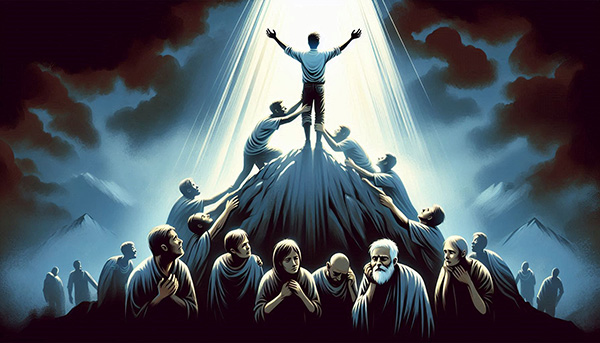
The Greatest Sin in Scripture: Ingratitude
And Dostoevsky, without knowing it, echoed one of the most consistent teachings in both the Bible and the Qur’an:
that ingratitude is humanity’s oldest and greatest sin.
Both scriptures teach that while all good ultimately comes from God, failing to acknowledge the human instruments of that good — those who helped, gave, or lifted us — is a rejection of God Himself.
The Prophet Muhammad ﷺ said:
“He who does not thank people, does not thank Allah.” — Hadith: Tirmidhi 1954
Meaning: when someone does good to you, thanking them is not just manners — it’s worship.
Because in that moment, you’re recognizing that God used that person as His vessel.
Ignoring them isn’t humility — it’s denial.
It’s like rejecting the mail because you prefer the sender.
Even Jesus practiced gratitude.
When the woman anointed Him with oil (Luke 7:36–50), He didn’t dismiss her act by saying, “All thanks to God alone.”
He praised her publicly — acknowledging that human kindness is sacred.
Both faiths agree: gratitude to people is gratitude to God.
And ignoring people’s efforts — especially those who helped you rise — isn’t spirituality. It’s arrogance dressed in piety.
The ungrateful don’t say “thank you” because they believe God alone deserves praise — but the irony is, that belief makes them ungrateful to both God and man.
Gratitude Is Rare Because It Feels Like Debt
Saying thank you sincerely is the emotional equivalent of bowing. It humbles you.
It says: “You played a part in my story.”
And to most people, that’s unbearable.
That’s why gratitude today is a brand — not a virtue.
“So grateful for my journey 🙏🏽✨ #blessed #selfmade #manifesting”
They post it not to honor anyone — but to appear enlightened.
It’s gratitude without memory, humility without debt, spirituality without accountability.
Dostoevsky would’ve called it “theatrical repentance” — fake contrition designed to preserve self-image.
The Underground Man would’ve said: “Man would rather post his gratitude than feel it.”

The Underground Man Saw Through It All
Man doesn’t want peace — he wants the right to destroy peace on his own terms.
He doesn’t want utopia — he wants the freedom to set it on fire just to prove he can.
That’s why real gratitude dies in modern life.
Gratitude requires surrender — and surrender sounds too much like losing control.
We call it “boundaries” now, or “protecting our energy,” but often it’s just sophisticated selfishness.
Gratitude vs. Pride: The Eternal Tug-of-War
You help someone — they thank you.
You help them again — they tolerate you.
Help them a third time — they resent you.
Every act of kindness reminds them of dependence, and dependence kills the ego’s buzz.
That’s why humanity keeps rebuilding the Tower of Babel.
Every generation wants to touch heaven — without thanking the architect who gave them the blueprints.
We call it innovation, but it’s just vanity in a lab coat.

The Psychology of Ingratitude
Even modern neuroscience confirms it: gratitude triggers vulnerability.
The same brain circuits that make you say “thank you” also make you feel exposed — like you owe something back.
And since modern culture worships independence, we’ve replaced gratitude with detachment.
“I didn’t need help. I manifested it.”
“I would’ve figured it out.”
“Anyone would’ve done the same.”
That’s ego-speak for: “I refuse to let you be part of my victory.”
We rebrand pride as confidence.
We rename arrogance as self-belief.
And call ungratefulness “boundaries.”
Modern Translation: The Same Story, Just With Wi-Fi
- Your boss takes a risk on you — you get promoted. Suddenly, it’s “God’s timing.”
- Your friend helps you survive — you succeed — and later call it “fate.”
- Your mentor shapes you — you outgrow them — and label it “self-made.”
We sanitize betrayal by calling it “closure.”
We erase human faces from divine stories.
But both scripture and psychology say the same thing:
when you stop thanking people, you stop growing spiritually.
Because humility is the soil of wisdom — and pride never grows anything.

Dostoevsky’s Final Verdict
Man doesn’t hate gratitude; he hates mirrors.
He can’t stand seeing the reflection of his own dependency.
He’ll accept your help — but attribute it to destiny.
He’ll accept your sacrifice — but spiritualize it into coincidence.
He’ll accept your love — but label it divine fate, not human care.
That’s why Dostoevsky’s Underground Man sneers:
“Give man paradise — he’ll break it just to prove he’s free.”
Ungratefulness, to Dostoevsky, wasn’t just moral failure.
It was cosmic treason — the same sin Lucifer committed first.
Even Satan’s fall was rooted in pride — “I will not bow.”
And what is ingratitude, if not pride refusing to kneel?
So What Now?
Next time someone says, “I’m grateful,” listen closely.
Are they actually grateful — or just performing virtue for applause?
True gratitude lives in action, not captions.
It remembers who lifted you when you had nothing.
And it knows what both Dostoevsky and the Prophets knew:
ignoring human goodness is ignoring God Himself.
Because when you say “God sent you,” but fail to thank the one He sent, you’re not being spiritual — you’re being evasive.
And after enough encounters with that kind of false humility, you stop being surprised.
You help quietly. You love cautiously.
You expect nothing.
Not out of bitterness — but wisdom.
Because Dostoevsky was right:
Help is divine. Gratitude is optional.
And sometimes…
it makes you wonder whether to help anyone at all.
Author: John S. Morlu II, CPA is the CEO and Chief Strategist of JS Morlu, leads a globally recognized public accounting and management consultancy firm. Under his visionary leadership, JS Morlu has become a pioneer in developing cutting-edge technologies across B2B, B2C, P2P, and B2G verticals. The firm’s groundbreaking innovations include AI-powered reconciliation software (ReckSoft.com) and advanced cloud accounting solutions (FinovatePro.com), setting new industry standards for efficiency, accuracy, and technological excellence.