
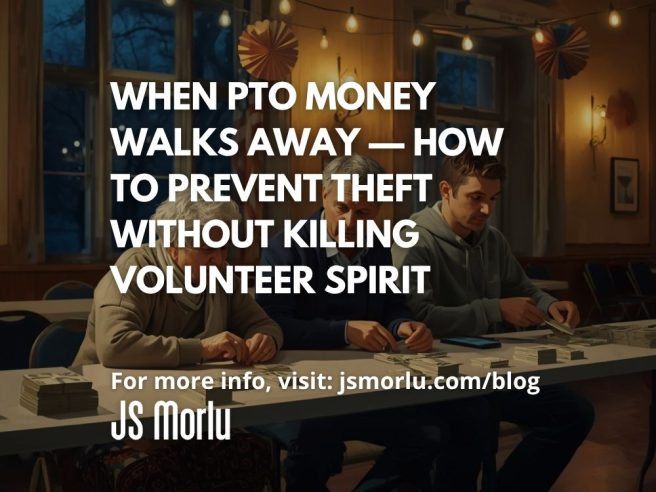
Most PTO theft doesn’t start with a mastermind in a ski mask.
It starts with a “trusted” volunteer or leader thinking, “I’ll just borrow it for now…” — and then never putting it back.
It’s rarely about greed alone.
Sometimes it’s financial stress, other times it’s entitlement (“I do all the work anyway”).
But here’s the truth: once money walks away, it almost never comes back.
PTO money is public trust. It comes from bake sales, raffles and small cash donations. Every dollar was given in good faith.
That is why prevention matters more than punishment.
Why PTOs Are Prime Targets
- Small, close-knit groups — People trust each other too much.
- Weak controls — One person handles all the money.
- Cash-heavy fundraisers — Bake sales, raffles, carnival tickets.
- “We’re all friends” mentality — No one wants to “insult” a volunteer by checking their work.
None of these are crimes. They are gaps. And a thief, or even a good person under pressure, only needs one gap.
Volunteers change every year. Knowledge and habits leave with them.

The Warning Signs
- Reports are late or vague.
- Bank statements don’t match the treasurer’s numbers.
- Cash from events “takes a while” to be deposited.
- A volunteer resists oversight or avoids giving receipts.
One sign alone may mean nothing. A late report can be a busy week. Several signs together deserve a closer look.
Ask early. Ask kindly. A simple question is not an accusation.
Write down what you see. Dates. Amounts. Who. Facts help if you ever need to escalate.
True Story:
A PTO president in New England discovered $9,800 missing after a volunteer chair quietly skimmed cash from multiple events over two years. The worst part? Parents were too embarrassed to press charges, so the thief walked away without consequence — but the PTO’s reputation never recovered.
Stories like this are not rare. The pattern is usually the same: one person, no checks, and a lot of trust.

How to Protect PTO Funds Without Killing Trust
1. Always Have Two People Count Cash
Count money immediately after events — never at home.
2. Require Two Signatures on Checks
This makes it harder for one person to act alone.
3. Separate Duties
The person collecting money shouldn’t be the one reconciling the account.
4. Deposit Funds Immediately
Waiting even a few days increases the risk of “borrowed” money never returning.
5. Conduct an Annual Audit
Use an outside accountant or a parent with financial experience who isn’t on the board.
You do not need all five on day one. Start with two. Add the rest each season.
Write the rules down. Share them with every volunteer. When everyone knows the rules, no one feels singled out.
Give every volunteer a receipt or a signed count sheet for cash they hand in.
The Balance: Trust, But Verify
Protecting PTO funds doesn’t mean treating every volunteer like a suspect.
It means building systems so no one is ever put in a position where they could take advantage — because temptation is a risk management issue, not a moral judgment.
Good controls protect volunteers too. If a number is ever questioned, a clear record clears their name.
Trust is the goal. Verification is how you keep it.
Bottom line:
It’s easier to set strong controls now than to explain to parents later why the money they raised for field trips paid for someone’s vacation.
Set the rules before the next fundraiser. Not after something goes missing.
A PTO that protects its money keeps its volunteers, its donors and its reputation.