
The Human Brain: A Luxury Car With a Donkey Steering Wheel
By: John S. Morlu II, CPA
Human beings are amazing.
We build rockets. We perform surgery. We created Wi-Fi, mobile money, cloud computing, and rice cookers with more buttons than a cockpit.
Then, inside a company, someone will quietly sabotage a project because they do not like how Alex talks.
Congratulations. Civilization has entered the group chat.
This is one of the strangest things about work: people will damage the very system that pays them, feeds their family, builds their résumé, and keeps the lights on.
Not because the strategy is wrong.
Not because the market rejected the product.
But because someone wanted to prove a point.
And the point was usually stupid.

The Silent Strike: When Employees Quit Without Resigning
There is a special kind of workplace sabotage that does not look like sabotage.
Nobody throws a chair.
Nobody deletes the database.
Nobody walks into the meeting wearing a villain cape.
Instead, they do something more dangerous.
They delay.
They withhold.
They ignore.
They “forget.”
They do only their part, badly.
They watch the product fail and act surprised, like a firefighter who brought popcorn.
This is what I call the silent strike.
The person is still on payroll, still attending meetings, still saying “noted,” still using company internet — but mentally, they have resigned and become an unpaid consultant for failure.
A company cannot grow when everyone is playing hide-and-seek with the truth.
“Let Alex Fail” Is Not a Strategy. It Is Corporate Arson in Church Clothes.
Some people think:
“Let Alex fail. That will teach him.”
No, my friend. That will teach everybody.
It teaches the founder that the team is not aligned.
It teaches investors that execution risk is real.
It teaches lenders that repayment depends on personalities.
It teaches customers that the product is unreliable.
It teaches good employees that fools have veto power.
And it teaches the saboteur nothing, because people committed to ego rarely attend their own graduation from foolishness.
This is the part many people miss:
Failure does not fall on one person.
It spreads.
A bad SMS integration does not only embarrass Alex.
It delays staging.
It delays production.
It delays customer testing.
It delays revenue.
It creates founder stress.
It burns cash.
It weakens trust.
It gives competitors free oxygen.
That is called second-order consequences: the thing after the thing.
Or, in street language:
You were trying to slap Alex, but you punched payroll.
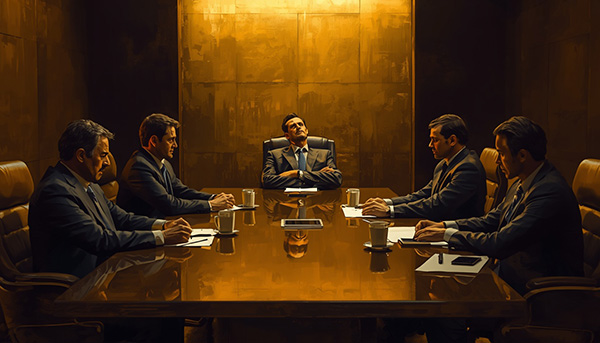
The Ego Economy: Where Pride Has a Higher Salary Than Performance
In weak company cultures, ego becomes the unofficial operating system.
Not Slack.
Not Jira.
Not QuickBooks.
Ego.
People stop asking:
“What does the company need?”
They start asking:
“Who will get credit?”
“Who gave the instruction?”
“Do I like this person?”
“Can I delay this without looking guilty?”
“Can I make someone else look bad while still looking innocent?”
This is how companies die slowly.
Not always from lack of money.
Not always from lack of talent.
Sometimes they die because the adults in the room are emotionally in middle school with laptop access.
Undermining Is Expensive. Very Expensive.
Undermining is not just a personality problem.
It is a business cost.
It creates rework.
It destroys speed.
It increases supervision.
It forces founders to become babysitters with revenue targets.
It makes every task require three meetings, two reminders, one prayer, and a detective.
That is not operations.
That is daycare with invoices.
When people undermine, the company pays twice.
First, it pays their salary.
Then, it pays to clean up what their attitude damaged.
That is like hiring someone to wash your car, then paying another person to remove the mud they added.

The Developing-Country Company Trap
This is not because people in developing countries are less intelligent.
Far from it.
The real issue is often weak institutions, low trust, poor accountability, inconsistent management practices, and survival-based workplace behavior.
When people grow up in systems where relationships matter more than processes, they often bring that mindset into companies.
So instead of building systems, people build alliances.
Instead of respecting roles, they respect personalities.
Instead of solving problems, they protect egos.
Instead of asking:
“What is best for the company?”
They ask:
“Whose side am I on?”
And that is how a startup becomes a village dispute with software.
The tragedy is that many organizations do not fail because the people lack intelligence.
They fail because trust is too low, execution discipline is too weak, and accountability arrives late wearing bathroom slippers.
The Founder’s Curse: Seeing the Pattern Before Everyone Else
The founder sees patterns early.
The founder sees the delay before it becomes a crisis.
The founder sees the attitude before it becomes sabotage.
The founder sees the “small issue” before it becomes a failed launch.
Everyone else says:
“You are overreacting.”
Then the product fails.
The customer complains.
The deadline collapses.
And suddenly everybody becomes a historian.
“Actually, I noticed that too.”
Wonderful.
The Museum of Late Wisdom is now open.
Founders are not angry because one person made a mistake.
Founders are angry because they have seen the same movie twelve times, and somehow the villain still works in operations.

Stubborn Talent Is Still Dangerous
There is a myth in business that if someone is talented, you must tolerate their behavior.
Wrong.
Talent without teamwork is a beautifully wrapped liability.
A brilliant but stubborn person can do more damage than an average person with discipline.
The average disciplined person may move slowly.
But at least they move in the right direction.
The arrogant genius may build one feature and burn five relationships.
That is not talent.
That is a software update with malware.
You can have feelings.
But production still needs to work.
The Real Question: How Can You Undermine Where You Eat?
This is the question that should be printed on company walls:
How can you undermine the place that pays you?
How can you damage the product that funds your salary?
How can you slow the company that gives you status?
How can you sabotage the founder, lenders, investors, customers, and coworkers because you dislike one person?
The answer is painful.
Many people do not think in systems.
They think in emotions.
They do not see the company as an ecosystem.
They see it as a battlefield for personal validation.
So they win the argument and lose the business.
They prove the point and destroy the platform.
They punish one person and injure twenty.
That is not intelligence.
That is emotional poverty wearing a company badge.

Leadership Lesson: Do Not Confuse Patience With Weakness
A leader can coach.
A leader can warn.
A leader can explain.
A leader can document.
But at some point, the company must decide:
Are we building a business or hosting a personality festival?
Because the market does not care who was offended.
Customers do not care who had attitude.
Investors do not care who felt disrespected.
Cash flow does not care who was misunderstood.
Execution is cold.
It does not cry.
It simply exposes.
The Emotional Armor Rule
Here is the rule:
Never allow personal ego to become operational risk.
Disagreement is allowed.
Questions are allowed.
Correction is allowed.
Debate is allowed.
But silent undermining is not disagreement.
It is betrayal with office manners.
A serious company must make this clear:
If you see a risk, raise it.
If you disagree, say it.
If you need help, ask.
If you made a mistake, own it.
If you cannot support the mission, leave respectfully.
But do not collect a salary while secretly campaigning for the company to fail.
That is not employment.
That is undercover opposition.

Final Punchline: Some People Do Not Need Competitors. They Hire Them Internally.
The most dangerous competitor is not always outside the company.
Sometimes the competitor is on payroll.
They attend the meeting.
They nod seriously.
They say:
“I will handle it.”
Then they quietly convert delay into strategy.
That is why Emotional Armor matters.
Because leadership requires seeing human behavior clearly without becoming poisoned by it.
You observe.
You map.
You connect patterns.
You document.
You act.
And when necessary, you remove the person who keeps trying to burn down the kitchen while asking what time dinner will be served.
Because no company can survive when the people paid to build it are emotionally invested in proving why it should collapse.
And that, ladies and gentlemen, is how businesses fail.
Not always from bad strategy.
Not always from bad products.
Not always from lack of funding.
Sometimes from small egos with system access.
Author: John S. Morlu II, CPA, is the CEO and Chief Strategist of JS Morlu and leads a licensed public accounting and management consultancy firm. He has more than 20 years of professional experience in auditing and advisory work, including service as Auditor General of Liberia and FAR and DCAA compliance work at Unisys Federal Systems. The firm’s technology products include AI-powered reconciliation software (ReckSoft.com), a handyman services platform (Fixaars.com) and advanced cloud accounting solutions (FinovatePro.com), built for finance and operations teams. Signal Playbook AI and Ratevora are the newest additions.