
By: John S. Morlu II, CPA
People keep saying, “Everything feels crazy right now.” They’re right. But what’s happening is not chaos. It’s a super cycle.
A super cycle is not a trend. It’s not a crash. It’s not a boom. A super cycle is a once-in-a-generation reset—when old systems stop working and new ones fight to replace them. And when that happens, the world always feels uncomfortable.
“Other advice I would give is to not blindly follow trends. Question and challenge the status quo.” — Elon Musk
What Is a Super Cycle?
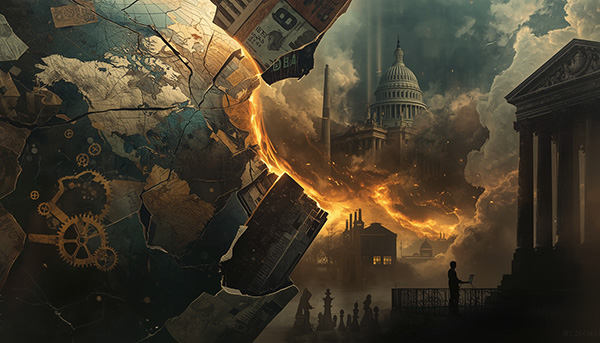
A super cycle happens when too many systems break at the same time. Not just markets. Not just politics. Not just technology. Everything.
Money systems strain. Governments lose trust. Old careers stop paying. New skills appear overnight. Institutions look strong—but move slowly. Individuals move faster—and break rules.
History shows this pattern clearly. Every major super cycle includes:
- A debt problem
- A trust problem
- A technology shift
- A power realignment
- A new winner class
This has happened before. It will happen again. We are inside one now.
The Current Super Cycle
This super cycle is powered by artificial intelligence, language models, and machine learning. These technologies are transforming how work gets done, how decisions are made, and how value is created. AI can write, code, design, and analyze at speeds no human ever could—and it can reshape entire industries almost overnight.
Companies and institutions are noticing. Even top firms like McKinsey are rethinking employment qualifications and what skills matter most, because the traditional requirements no longer match the new reality. What used to be safe—degrees, experience, long résumés—is now less important than the ability to work with AI, learn fast, and adapt. That’s how fundamental the change is.
“AI will eventually replace all human jobs… There will be universal high income… The question will be how you find personal meaning if a computer can do everything better than you.” — Elon Musk
And it’s not just Musk talking about this shift. Leaders across industries now recognize that the rules are changing, and that adaptability is the core skill of the future.
“The most contrarian thing of all is not to oppose the crowd but to think for yourself.” — Peter Thiel
Why Super Cycles Hurt Ordinary People First
Super cycles punish comfort. If your life depends on stability, you feel the pain first.
If your life depends on:
- Stable rules
- Predictable jobs
- Slow promotions
- Institutions protecting you
Why? Because super cycles reward adaptability, not loyalty. They don’t ask, “Have you been here a long time?” They ask, “Can you still produce value?”
That’s uncomfortable to hear—but it’s true. Super cycles don’t care about titles, résumés, or past success. They care about output, speed, and leverage.
“Maybe the rest of us are too risk-averse.” — Peter Thiel, on why breakthrough success requires embracing risk that others won’t touch.
Why Super Cycles Create New Elites (Quietly)
Every super cycle creates a new class of winners. Not the loudest people. Not the most famous people. Not the most ideological people.
The winners are usually:
- Technically competent
- Calm under pressure
- Financially literate
- Willing to learn fast
- Willing to let go of old identities
They don’t scream online. They don’t argue all day. They build.
By the time the public notices them, the cycle is already over.

Technology Is Not the Story—Leverage Is
Most people think super cycles are about technology. They’re not. Technology is just the tool. The real story is leverage.
Super cycles reward people who can:
- Use technology to multiply effort
- Use capital to compress time
- Use systems instead of brute force
That’s why small teams now outperform large organizations. That’s why individuals can compete with institutions. That’s why old gatekeepers feel threatened.
It’s not personal. It’s structural.
“Technology is probably the single biggest driver of productivity gains for the developed countries.” — Peter Thiel
Why Institutions Struggle During Super Cycles
Institutions are designed for stability. Super cycles demand speed. That mismatch is the problem.
So institutions often:
- Move slowly
- Over-regulate
- Add layers
- Protect the past
This makes them look powerful—but fragile. When the environment changes faster than decision-making, institutions lose relevance.
That’s not rebellion. That’s physics.
What Super Cycles Reward
Every super cycle quietly selects for the same traits. The people who master them don’t panic—they prepare.
- Clear thinking
- Numerical literacy
- Emotional control
- Skill over status
- Execution over narrative
They don’t chase headlines. They build quietly. They don’t wait for permission. They understand timing.
Why This Is a Once-in-a-Lifetime Window
Super cycles compress decades into years. What used to take 30 years now takes 5. What used to require massive capital now requires skill and timing.
But the window doesn’t stay open forever. Once the new system stabilizes, the easy phase ends—and the new winners defend their positions.
Once the new system stabilizes:
- Rules return
- Barriers rise
- Winners defend positions
That’s why super cycles are dangerous—but generous. They punish delay. They reward decisiveness.
The Most Important Truth About Super Cycles
Super cycles don’t destroy value. They reassign it.
From:
- Old systems → new systems
- Passive roles → active builders
- Titles → competence
- Narratives → results
History never apologizes for this. It just moves on.
Final Thought
If the world feels unstable, that doesn’t mean it’s broken. It means old maps no longer match the terrain.
The people who survive super cycles don’t ask, “When will things go back to normal?” They ask, “What is becoming normal—and how do I position early?”
That question—asked calmly, early, and honestly—is what separates spectators from architects. And super cycles always reward architects.
Author: John S. Morlu II, CPA is the CEO and Chief Strategist of JS Morlu, leads a licensed public accounting and management consultancy firm. He has more than 20 years of professional experience in auditing and advisory work, including service as Auditor General of Liberia and FAR and DCAA compliance work at Unisys Federal Systems. The firm’s technology products include AI-powered reconciliation software (ReckSoft.com), a handyman services platform (Fixaars.com) and advanced cloud accounting solutions (FinovatePro.com), built for finance and operations teams.