
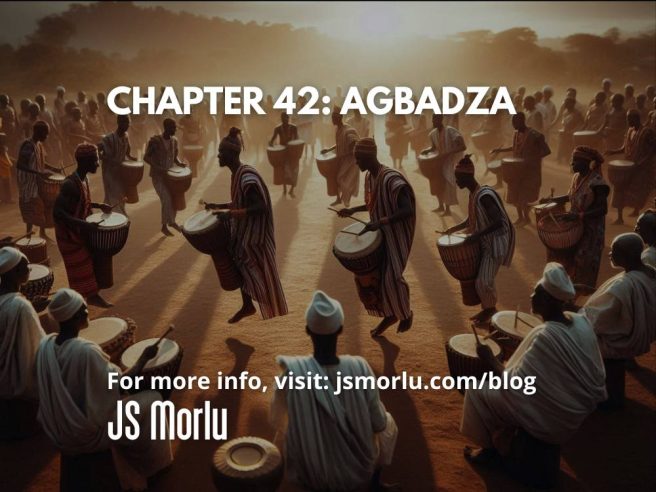
The Dance That Never Dies
By: John S. Morlu II, CPA
If Kente is the cloth that speaks, then Agbadza is the dance that remembers. It is the heartbeat of the Ewe people — a rhythm older than colonisation, older than Christianity, older than Ghana itself. When the Agbadza drums begin, something ancient awakens. The air changes. The ground vibrates. Elders sit up straighter. Children’s eyes widen. Even those who claim they “don’t dance” suddenly feel their shoulders responding automatically.
Agbadza is not performed; it happens, moving through people like a spirit with unfinished business. To the Ewe, it is not entertainment. It is history, identity, philosophy, healing, mourning, celebration, resistance, spirituality, and community — all happening at once.
1. Origins — When War Became Music
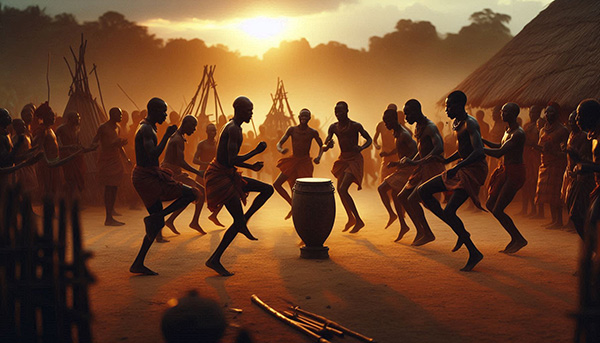
Agbadza began as Atsia, a war dance — the rhythm warriors used to gather courage before battle, communicate during war, celebrate victories, and honour the fallen. Its movements were originally martial: stamping feet, a chest-forward posture, shoulders rolling like a warrior preparing to charge, and arms swinging as if slicing through danger.
Every step carried memory. It remembered the escape from Notsie, the battles of migration, and the defence of land and people. Over centuries, as wars ended, the dance softened. Atsia transformed into Agbadza — the civilian expression. Yet beneath the gentle swaying lies the warrior’s heartbeat. Agbadza is peaceful, but its soul remembers war.
- Gathering courage before battle
- Communicating during war
- Celebrating victories
- Honouring the fallen
2. The Drums — When Rhythm Becomes Language
To understand Agbadza, you must understand its drums. Ewe drumming is not background noise; it is a conversation. Each instrument speaks with purpose, and together they form a disciplined dialogue of sound and meaning.
The Agbadza ensemble includes:
- Sogo — the lead drum
- Kidi — the supporting drum
- Kagan — the small, sharp-talking drum
- Gankogui — the double iron bell that acts as the “clock”
- Axatse — the shaker that fills the spaces between heartbeat and breath
Each drum carries a role: one commands, one responds, one argues, one organises, one advises, and one fills silence. Together, they form a parliament — not the chaotic type in Accra, but a disciplined one where every voice contributes meaningfully. When the drums begin, your body is no longer entirely yours. It remembers things it never lived.
3. The Dance — Shoulders That Speak, Feet That Remember
Agbadza looks simple — until you try it. Then the truth reveals itself: Agbadza is precision disguised as relaxation. The basic movement appears gentle: feet gliding across the ground, shoulders rolling rhythmically, arms swinging in controlled freedom, chest steady, back upright, eyes calm.
But the magic lives in the shoulders. If the shoulders do not speak, you are not dancing Agbadza. They interpret the drum, tell your story, and separate “I tried” from “I am Ewe.” The elders will know instantly which one you are.
- Feet gliding gently on the ground
- Shoulders rolling rhythmically
- Arms swinging in controlled freedom
- Chest steady and back upright
- Eyes calm and focused
4. When Agbadza Appears — Funerals, Festivals, and Every Moment That Matters
Agbadza is omnipresent in Ewe life. It appears in every chapter that truly matters. At funerals, it honours the dead, celebrates the life they lived, consoles the family, and reconnects the community. Ewe funerals are not quiet affairs; they are cultural ceremonies of remembrance and acceptance, with Agbadza as the soundtrack of farewell.
At festivals — especially Hogbetsotso — Agbadza becomes thunder. Dance circles widen, drummers enter deep spiritual focus, elders move with dignity, youth dance with energy, and children imitate with pride. In home gatherings the drums may be smaller and the dancers fewer, but the spirit remains unchanged.
At political or social events, the presence of Agbadza signals unity, seriousness, ancestral presence, and cultural pride. It is never casual. Its presence means something important is happening.
- Unity
- Seriousness
- Ancestral presence
- Cultural pride
5. Agbadza as Philosophy — A Dance That Teaches Life
Agbadza is not just movement; it is instruction. It teaches how to live, how to belong, and how to remember.
- Community — The circular formation means no one stands above another. Unity becomes visible.
- Courage — Born from war, Agbadza teaches resilience in peaceful form.
- Balance — Feet steady, shoulders free, mind calm, heart open. Life should be lived the same way.
- Memory — Every drumbeat reminds you that you descend from survivors.
- Identity — Agbadza declares: “Know who you are before the world tells you who to be.”
This philosophy lives not in books, but in bodies, rhythm, and shared movement.
6. Humor and Social Commentary — Agbadza Never Lies
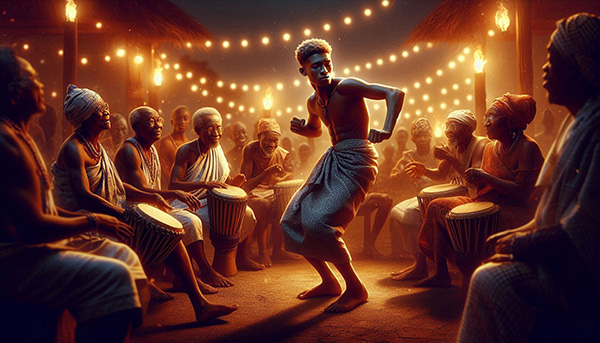
Ewe gatherings overflow with humour, especially during Agbadza. The dance becomes a kind of truth serum, revealing character without a single spoken word.
- The Overconfident Dancer — Swinging shoulders like a malfunctioning ceiling fan. Elders whisper, “He dances with confidence, not with wisdom.”
- The Rhythm-Challenged Dancer — Painful to watch. Someone mutters, “He is dancing Atsiagbekor while the drums are playing Agbadza.”
- The Elder Who Still Has It — Shoulders moving like they are twenty-five. Respect fills the circle: “The ancestors live in this one.”
Agbadza reveals personality, dignity, humour, and truth. It never hides what a person carries inside.
7. Agbadza in the Diaspora — The Dance That Travels Well
Wherever Ewe people go — Europe, America, Nigeria, Togo, Benin, Brazil, and the Caribbean — Agbadza travels with them. It appears at weddings, naming ceremonies, funerals, African festivals, and diaspora cultural events.
Agbadza becomes the anchor that prevents roots from being lost. Even if an Ewe child grows up abroad, their shoulders will one day remember home.
- Weddings
- Naming ceremonies
- Funerals
- African festivals
- Diaspora cultural events
8. Agbadza Today — From Villages to TikTok
Agbadza has entered modern life with quiet confidence. It appears in music videos, dance workshops, Afro-fusion choreography, national events, and even blended into Afrobeats rhythms.
The youth reinterpret it, but the soul remains unbroken. Agbadza is not threatened by modernisation — it is too old, too wise, too rooted. You cannot kill a dance built from survival.
- Featured in music videos
- Taught in dance workshops
- Used in Afro-fusion choreography
- Performed at national events
- Blended into contemporary rhythms
9. What Agbadza Means to the Ewe — Identity in Motion
Agbadza is language, memory, history, philosophy, spirituality, resistance, unity, and healing — all moving through rhythm and body.
It is the sound of a people who have crossed rivers, wars, borders, and centuries, and still dance with grace. Agbadza is not merely a dance; it is a declaration: We are still here.
- Language
- Memory
- History
- Philosophy
- Spirituality
- Resistance
- Unity
- Healing
10. Conclusion — The Dance That Outlives Time
Agbadza will outlive all of us. It has survived migration, oppression, colonisation, modernisation, and globalisation — and it will continue to thrive.
Why? Because Agbadza is not dependent on fashion or trend, youth or age, politics or economy. It is rooted in the one thing that never fades: identity.
When the drums begin, Ewe people are no longer in the world — the world is in them. Agbadza is the dance that never dies, the dance that remembers, the dance that unites, the dance that breathes. Agbadza is the heartbeat of the Ewe.
Author: John S. Morlu II, CPA is the CEO and Chief Strategist of JS Morlu, leads a licensed public accounting and management consultancy firm. He has more than 20 years of professional experience in auditing and advisory work, including service as Auditor General of Liberia and FAR and DCAA compliance work at Unisys Federal Systems. The firm’s technology products include AI-powered reconciliation software (ReckSoft.com), a handyman services platform (Fixaars.com) and advanced cloud accounting solutions (FinovatePro.com), built for finance and operations teams.