
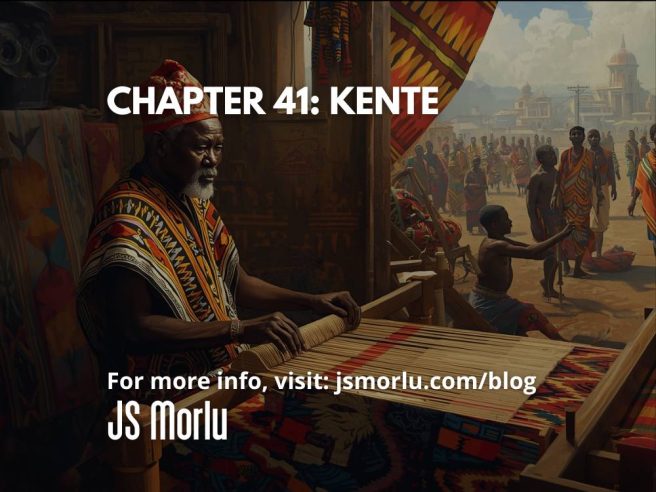
The Cloth That Speaks, Remembers, and Refuses to Be Ordinary
By: John S. Morlu II, CPA
Kente is not just cloth. It is memory woven into color, history threaded into patterns, philosophy coded into fabric, and identity made visible — bold, intelligent, spiritual, royal, and intentional.
When an Ewe or Akan weaver sits behind a loom, they are not creating fabric; they are composing meaning. To understand Kente is to understand imagination, discipline, mathematics, spirituality, and the quiet genius of Ghanaian artisans.
Kente exists in two great traditions — the Ewe tradition and the Asante tradition. Both are monumental. Both are magnificent. Both carry centuries of cultural brilliance. And the Volta Region’s contribution to Kente remains one of Ghana’s greatest artistic legacies.
This chapter is about the cloth that speaks, the cloth that remembers, and the cloth that demands respect.
1. Origins — Woven by Ancestors, Perfected by Time
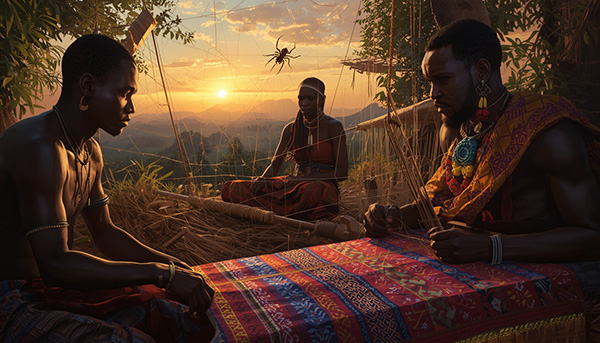
No one can fully claim where Kente began, because Kente was shaped in the hands of many ancestors, across many regions, through many centuries. Among the Asante, legend tells of two brothers who observed a spider weaving its web and imitated the technique. Among the Ewe, history traces skilled weavers migrating from ancient weaving cultures in Ketu, Tado, and Notsie, carrying patterns, philosophies, and loom technologies that evolved into Ewe Kente.
What is clear is this: Kente did not appear by accident. It was born from generations of observation, creativity, spiritual symbolism, mathematical precision, and cultural storytelling.
- Observation
- Creativity
- Spiritual symbolism
- Mathematical precision
- Cultural storytelling
Kente emerged because the people needed a cloth that was worthy of their identity.
2. The Loom — A Sacred Machine of Geometry and Genius
If you have never seen an Ewe Kente loom, picture wooden frames, strings stretched like the ribs of a small house, shuttles dancing with the grace of a musician, feet tapping pedals like a drummer, and a weaver moving with meditative focus. The loom is not just technology — it is ancestral engineering.
Every movement must be precise. Too much tension and the cloth tears. Too little tension and the pattern distorts. A wrong rhythm causes misalignment. One mistake can collapse the entire story.
- Too much tension → cloth tears
- Too little tension → pattern distorts
- Wrong rhythm → misalignment
- One mistake → the entire story collapses
It is a machine that demands respect and rewards skill. When a master weaver sits behind a loom, it feels like watching a philosopher write with thread instead of ink.
3. Ewe Kente vs. Asante Kente — Different Dialects of the Same Language
Many Ghanaians do not realise that the Ewe Kente tradition is just as deep, ancient, and sophisticated as the Asante tradition. The difference is not in quality, but in cultural philosophy.
Asante Kente
- Bright and bold
- Symmetrical
- Highly symbolic
- Named after royalty and kingship
- Often used for state functions
- Geometric and assertive patterns
Ewe Kente
- More varied in expression
- Sometimes subtle, sometimes striking
- Incorporates figurative symbols (animals, stools, objects)
- Expresses personal stories or family identity
- Woven for both royalty and ordinary families
- Experimental with texture and dye combinations
- Softer, more fluid, and narrative-driven
Asante Kente speaks loudly. Ewe Kente speaks intelligently. One embodies regal authority; the other carries poetic wisdom. Both are Ghana’s glory.
4. Patterns — Philosophies Stitched Into Shape
Every Kente pattern has a name, and every name carries a story, a warning, a memory, or a philosophical lesson.
Ewe Kente names include:
- Aklala (the net of life)
- Kpetoe (after the weaving town)
- Adanuvor (“the thinking cloth”)
- Agbamevor (“the cloth of the forest spirit”)
- Kodzovi (“little brother”)
- Dzidzɔkple (bundle of joy)
- Agbodzi (freedom)
Asante names include:
- Adwene Asa (I have exhausted my wisdom)
- Sika Futoro (gold dust)
- Obaakofoɔ mmu man (one person does not rule a nation)
- Fathia Fata Nkrumah
These are not marketing slogans; they are teachings. When an elder wears Kente, they are not simply dressing — they are communicating: This is my identity. My story. My philosophy. My journey.
5. Color Symbolism — When Color Becomes Language
Kente was built on color psychology long before modern design schools existed.
- Black — Mysterious, ancestral, enduring; maturity, spiritual strength, and ancestral presence.
- White — Purity, festivity, peace; rites of passage, celebration, and sacred rituals.
- Gold — Royalty, wealth, glory; the sun, prestige, and achievement.
- Red — Blood, sacrifice, struggle; memory of war, ancestors, and courage.
- Green — Fertility, life, growth; harvest, vitality, and renewal.
- Blue — Depth, peace, harmony; sky, immortality, and divine favor.
Kente is not random. It is science applied to art.
6. Craftsmanship — Precision, Patience, and Pure Genius
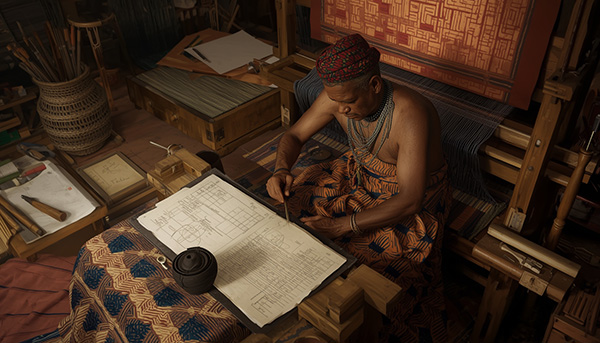
To weave one high-quality Kente cloth requires weeks of work, thousands of careful movements, absolute concentration, years of training, and an artist’s imagination.
- Weeks of work
- Thousands of careful movements
- Absolute concentration
- Years of training
- An artist’s imagination
The process involves:
- Designing the pattern
- Preparing the warps
- Dyeing the threads
- Stretching the loom
- Weaving strips
- Sewing strips together
- Final inspection
This is not casual work; it is intellectual labour wrapped in physical discipline. Master weavers are not simply craftsmen — they are mathematicians, engineers, artists, historians, and philosophers, all seated behind a loom.
7. The Kpetoe Weaving Tradition — Pride of the Volta Region
Volta’s weaving heritage centres on Kpetoe, a town renowned across Ghana for its exceptional Kente artisans.
- Fine
- Smooth
- Elaborate
- Historically grounded
- Technically superior
- Spiritually expressive
Each year, thousands gather for the Agbamevor Za (Kente Festival) in Kpetoe to celebrate the art, the ancestors, the weavers, the community, and the legacy. During the festival, Kente is not merely displayed — it is honoured.
8. Kente in Modern Life — Global Symbol, Local Soul
Today, Kente is worn at graduations, featured in high fashion, used in diasporan ceremonies, incorporated into diplomacy, embraced across Africa, and admired by global designers.
Yet its soul remains Ghanaian. A Ghanaian wearing Kente is not following fashion — they are wearing centuries of dignity.
- African Americans
- Afro-Caribbeans
- Afro-Brazilians
- Global Africans who see Kente as a symbol of identity reclaimed
Kente has become a global flag for African pride.
9. Kente Economics — The Industry That Clothes Generations
Kente is a major economic engine across the Volta and Ashanti Regions. It provides income for entire ecosystems of labour and creativity.
- Weavers
- Thread dyers
- Pattern designers
- Seamstresses
- Traders
- Festival coordinators
- Cultural educators
- Tourism operators
It supports entire families and, sometimes, entire towns. Unlike industries that fade with technology, Kente grows richer with time because meaning can never be automated.
10. Conclusion — Kente Is Ghana’s Greatest Poem
Kente is not cloth; it is identity. It is the pride of a people who refuse to forget themselves. It is the art of turning thread into philosophy, the genius of ancestors carried across generations, and the cloth that survives erosion, colonisation, modernisation, and globalisation.
Kente is the story of Ghana woven into fabric. When a person wears Kente, they are not simply dressed — they are declaring history, wearing wisdom, carrying ancestors, and announcing who they are.
Kente is a poem. Kente is a spirit. Kente is Ghana made visible.
Author: John S. Morlu II, CPA is the CEO and Chief Strategist of JS Morlu, leads a licensed public accounting and management consultancy firm. He has more than 20 years of professional experience in auditing and advisory work, including service as Auditor General of Liberia and FAR and DCAA compliance work at Unisys Federal Systems. The firm’s technology products include AI-powered reconciliation software (ReckSoft.com), a handyman services platform (Fixaars.com) and advanced cloud accounting solutions (FinovatePro.com), built for finance and operations teams.