
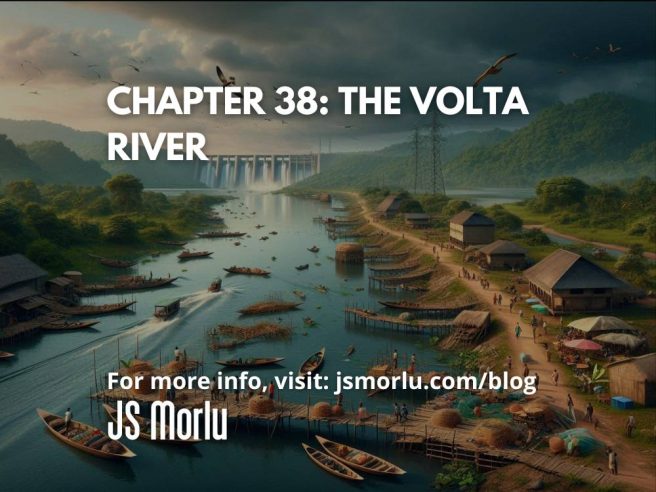
A Spirit, A Highway, A Provider
By: John S. Morlu II, CPA
Before roads were carved, before electricity hummed, before Independence raised its flag — there was the Volta River. Long before nations were named and borders drawn, the river flowed. It carried people, fed villages, whispered prophecies, and carved a path through time. The Volta River is not just a body of water; it is one of West Africa’s oldest storytellers — older than the modern Ghanaian state, older than the colonial maps, older than the kingdoms that once negotiated with its currents.
The Volta River is a contradiction in motion.
A wild river and a gentle mother.
A roaring force and a healing stream.
A path for traders and a shrine for believers.
A resource for engineers and a mystery for spiritualists.
This chapter explores the Volta River as three things at once: a spirit, a highway, and a provider.
1. The Spirit — The River Older Than Borders
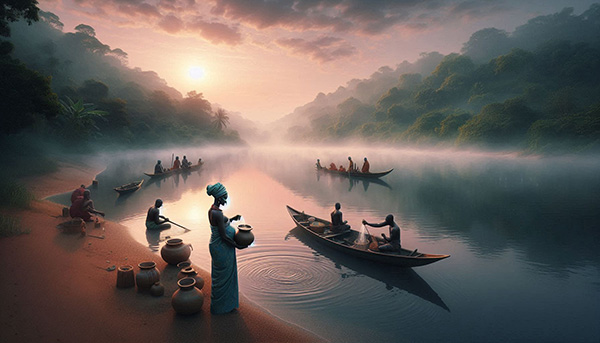
Every river has a personality. But the Volta River has charisma. It rises from Burkina Faso, gathers strength in the savannah, then sweeps through Ghana like a spirit on a mission. In Ewe belief, water is living — a being with moods, desires, warnings, and blessings. The Volta River carries all of that and more.
Along its banks, elders still say: “The river hears. The river remembers.”
For centuries, communities approached the Volta not as a resource, but as a living entity. Fishermen poured libation before casting nets. Pregnant women prayed at riverbanks for protection. Travelers carried charms to appease river spirits. Children were warned.
It was not fear — it was respect.
The Volta is known for sudden shifts in temperament. One minute, calm as a sleeping deity; the next, churning like a warrior recalling an old grudge. Many stories tell of spirits living beneath its surface — guardians who decide who crosses safely and who returns home soaked in regret.
2. The Highway — When Water Was the First Road
Before asphalt, trucks, and Google Maps, the Volta River was Ghana’s original transportation system. It connected villages and kingdoms. Canoes carried everything — kolanuts, textiles, palm oil, smoked fish, messages, marriages, political alliances, and gossip.
The river linked:
- Northern traders to southern markets
- Settlers to new lands
- Families separated by distance
- Cultures divided by geography
Long before the Akosombo Dam interrupted its ancient flow, the Volta River was a superhighway. Communities like Kete-Krachi, Yeji, Dambai, and Ada lived in constant dance with the river. The river decided when they traveled, when they fished, when they performed rituals, and when they respected its silence.
Some elders still remember the days when:
- A canoe was the equivalent of a delivery truck
- The river decided market days
- Travelers tied leaves to their wrists for protection
- Traders paddled overnight guided only by moonlight and courage
The Volta River wasn’t just a route — it was a connector of worlds.
3. Lake Volta — When the River Became a Giant
Then came 1956–1965, the era of Kwame Nkrumah’s great vision: the Akosombo Dam. The construction transformed the Volta River into Lake Volta, the largest man-made lake by surface area in the world.
With one engineering decision:
- Whole towns relocated
- Forests submerged
- Fishing patterns changed forever
- New islands emerged
- Old footpaths disappeared
- Generations were uprooted
- A new economic frontier was born
Today, Lake Volta powers:
- Ghana’s hydroelectric grid
- Aluminum smelting
- Irrigation
- Aquaculture projects
- Transport of goods and people
But it also carries the weight of history. Beneath its calm waters lie:
- Over 700 submerged villages
- Churches
- Cemeteries
- Schools
- Ancestral lands
Under Lake Volta is a world we will never see again — a reminder that development can be both creation and erasure.
4. Fishing — The River’s Oldest Gift
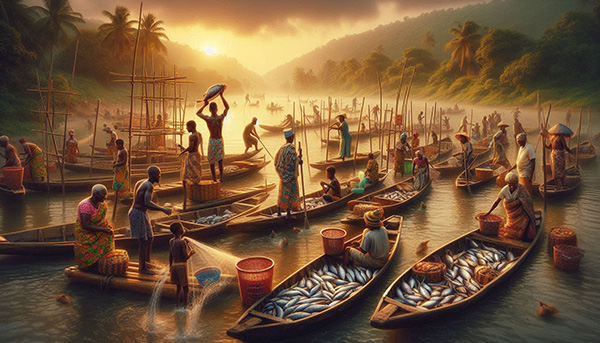
For centuries, the Volta River has been Ghana’s fish basket. Even today, communities survive on:
- Tilapia
- Catfish
- Nile perch
- Mudfish
- Crabs
- Shrimps
- Small pelagic species
Fishing here is not a job — it is a lifestyle, an identity, a birthright. Children learn to paddle before they learn to write their names. Nets are passed down like inheritance. Canoes are carved with prayers.
Every riverbank has its drama:
- Fishermen arguing about who set their nets first
- Women smoking fish while yelling at their husbands
- Canoes repaired with creativity that defies physics
- Tilapia sizes hotly debated like election results
Yet, beneath the humor lies real value. The Volta fishing economy supports:
- Schools
- Market women
- Cross-regional trade
- Household survival
- Local tourism
- An entire ecosystem of labor
It is one of the most democratic economies in Ghana — anyone with a net and courage can earn a living.
5. The Delta — Where the River Meets the Sea
At Ada, the Volta River relaxes. After traveling hundreds of kilometers, fighting rocks, feeding villages, and shaping landscapes, it finally meets the Atlantic Ocean — a dramatic union between river and sea.
The Volta Estuary is:
- A mixture of freshwater and saltwater
- A haven for birds
- A sanctuary for mangroves
- A breeding ground for fish
- A tourist hotspot
- A battleground against erosion
Here, the river slows its pace, as if exhaling after a long journey. Islands like Ada Foah, Big Ada, and Azizanya feel like peaceful worlds suspended between water and sky.
Modern tourism has transformed the estuary:
- Luxury resorts
- Jet ski activities
- Island cruises
- Mangrove tours
- Waterside festivals
But traditional life continues quietly:
- Fishermen fix nets at dawn
- Women smoke fish under wooden sheds
- Elders sit under trees debating history with fierce confidence
It is a place where old Ghana and new Ghana coexist in delicate harmony.
6. The Economic Lifeline — Energy, Transport, Jobs, Survival
The Volta River is not romanticism alone — it is a national economic engine. It powers or supports:
- Over half of Ghana’s hydroelectricity
- Thousands of fishing families
- Cross-regional transport
- Irrigation for farming
- Boat tourism and cruises
- Tilapia farms and aquaculture
- Local markets and trading routes
Entire towns exist because of the river:
- Akosombo
- Kpando-Torkor
- Dzemeni
- Sogakope
- Mepe
- Ada Foah
- Dambai
To lose the Volta would be to lose a major artery of Ghana’s economic body.
7. The River’s Challenges — Human Pressure on an Ancient Spirit
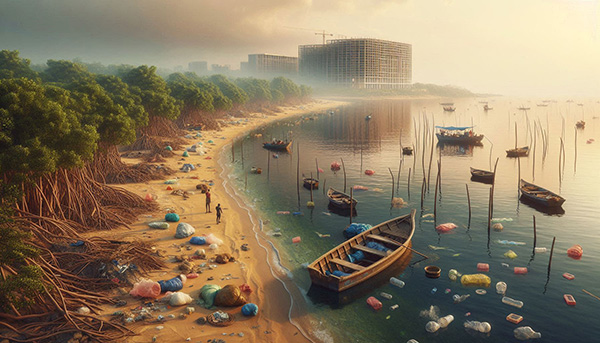
The Volta River now faces new threats:
- Pollution from plastics
- Overfishing
- Sand mining
- Illegal resort development
- Mangrove destruction
- Child labor
- Climate change shifts
- Rising water-level instability
The river that once governed villages now negotiates with modern chaos. And like all rivers, it can only endure so much before it changes character.
The next twenty years will determine whether the Volta River remains a blessing or becomes a warning.
8. The River in the Modern Imagination — Relaxation, Luxury, and Identity
Today, the Volta River is increasingly becoming a retreat for:
- Urban Ghanaians seeking peace
- Diaspora returnees seeking reconnection
- Tourists seeking a slice of nature
- Couples seeking resorts for pre-wedding photos
- Wellness seekers looking for silence
Places like:
- Sogakope Bridge View
- Holy Trinity Spa
- Volta Serene cruises
- Safari Valley day trips
- Ada estuary beach houses
have transformed the river into a symbol of relaxation.
Instagram loves the Volta River. But the river, with its ancient spirit, does not care for captions.
9. The River as a Teacher — Lessons in Flow and Resilience
The Volta River teaches one of life’s most important lessons:
Flow does not mean weakness.
Stillness does not mean inactivity.
Depth is more important than noise.
This river has:
- Carried kingdoms
- Survived colonialism
- Powered a nation
- Buried history under a lake
- Adapted to modern life
- Continued feeding people
And through it all, it never stopped flowing.
The Volta River is the perfect Ghanaian metaphor — resilience without boasting.
10. Conclusion — When a River Becomes a Nation’s Memory
To understand the Volta River is to understand Ghana itself:
- Layered
- Ancient
- Patient
- Storied
- Powerful
- Wounded in parts
- Healing in others
- Essential everywhere
The river is a living archive of the land and its people. It has been a spirit, a road, a provider, a witness, and a warning.
The Volta River does not simply pass through Ghana — it shapes Ghana. And Ghana, in return, shapes it.
Stand at its edge, watch the water move, and you will feel the country breathing.