

By: John S. Morlu II, CPA
So, picture this: you’ve landed in the office of your dreams, where every workplace cliché comes to life in glorious Technicolor. Ping-pong tables line the walls like medieval weaponry, bean bags are scattered about like you’re in a kindergarten classroom for adults, and there’s a snack wall so expansive it looks like it’s sponsored by Costco. This is startup paradise, the antithesis of those gray, lifeless corporations where middle managers worship PowerPoint, decisions have to climb a five-layer approval mountain, and half the staff spends their day in meetings they didn’t want to attend and promptly forget as soon as they leave. Here, it’s just you, a bunch of like-minded pals, and the collective dream of building the next big thing without anyone telling you how to do it. Right?
Well, here’s the reality check that no startup fanfare ever advertises: this boss-free, all-friends office dream works… as long as the team is small enough to split a pizza. When it’s just a handful of friends, things are smooth. Need a decision? Just shout across the beanbags. Want a quick project approval? Toss a gummy bear at your buddy across the snack wall. But as soon as you grow, adding more voices and personalities, things start getting… shall we say, a bit chaotic.
Suddenly, the simplicity turns complex. A project that took five minutes to decide on now needs five people to give input. Disagreements happen. Someone suggests a meeting to discuss how everyone feels about the project vision, and someone else rolls their eyes. And here comes the secret no startup hipster wants to admit: hierarchy—a friend dressed in a corporate suit—could actually save the day. It’s a reality that even the most rebellious, authority-hating founders who thought they’d forever keep things flat and “fun” have learned the hard way.
So, buckle up and read on as we unravel the surprise hero in the startup world—the one nobody wants to admit they need until it’s a little too late!

Why Hierarchy Gets a Bad Rap
Hierarchy often feels like that thing you don’t want but end up needing—like kale in your smoothie or those overpriced compression socks everyone swears by. No wonder it gets such a bad rap. It’s associated with all the clichés we’ve been conditioned to hate: soul-crushing gray cubicles, endless spreadsheets, and meetings that make you wish you’d taken up knitting instead. It feels like the antithesis of everything a startup or “cool” office is supposed to be, denying the idea that everyone’s a star and deserves an equal say.
But in a completely flat organization, everyone does have a say—which sounds amazing, like democracy at its peak…until you realize that every minor decision is now a 50-minute debate. That “team-driven” decision-making everyone was so excited about? It’s now a time-sucking vortex where everyone has an opinion on what color the office pillows should be. Meanwhile, your big projects are stalled, and no one’s sure who’s actually responsible for moving anything forward.
Plus, let’s be honest: if you’re working hard, it’s easy to look at your manager (the one who’s always in some mysterious “strategy session” or “brainstorming lunch”) and wonder what, exactly, they do that you can’t do yourself. Admit it—most of us have secretly wondered if having a boss is like finding raisins in your cookie: unexpected, disappointing, and you’re left questioning who thought it was a good idea in the first place. The appeal of a totally boss-free workplace is obvious: no one hovering over your shoulder, no one sending late-night “urgent” emails about your slide formatting, and definitely no one sending you calendar invites with “high importance” for things that are…decidedly not.
But as much as we hate to admit it, managers and hierarchy actually do serve a purpose. They can help keep the chaos contained, bring clarity to roles, and—believe it or not—ensure that stuff actually gets done. When everyone’s responsible, it turns out, no one really is. And that’s how you end up with projects that “everyone” was supposed to handle but somehow didn’t. A little bit of hierarchy, in this sense, can keep the team aligned, provide direction, and prevent every decision from turning into a full-blown community discussion. It’s like having a captain on a ship—it doesn’t mean you’re all not in it together, but it sure helps to have someone steering when the seas get rough.
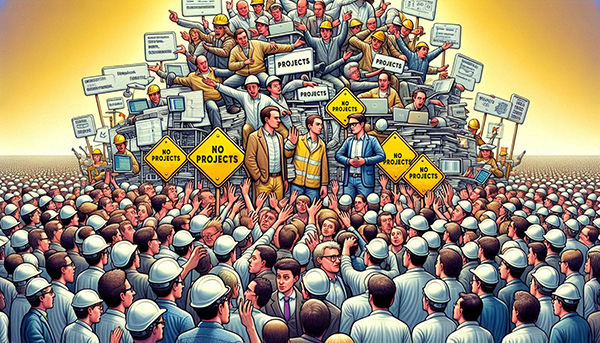
Google’s Wild Hierarchy Experiment (Spoiler: It Didn’t Last)
Even Google, where the vibe is all about inventing the future and rethinking the rules, decided to try going boss-free. Larry Page and Sergey Brin, in their infinite wisdom, thought, “What if we just ditched all the engineering managers?” The logic? More innovation, fewer bottlenecks! They assumed that without managers, ideas would flow like free kombucha, projects would magically align, and engineers would hit peak creativity.
Reality, however, had other plans. Within weeks, “manager-free” meant “problem everywhere.” Engineers started piling into Page and Brin’s office to ask questions like, “Can I expense this $30 pack of pens?” or, “Whose approval do I need for a whiteboard?” Without managers, they had no clue where to go for guidance, and projects were not only stalled—they were mysteriously duplicating each other. It reached the point where someone reportedly cornered a founder to ask, “Um, so, like, who do I talk to about a raise?” Imagine going to the head of a multibillion-dollar company to discuss your raise because… well, no one else was around.
Google eventually reintroduced good old-fashioned managers. Because as much as everyone likes to think of themselves as a free-spirited innovator, it turns out even the most rebellious company needs structure if they want to get things done.
And Google wasn’t the only one to give the “no-boss” model a whirl. Zappos, famous for its quirky culture, went all-in on something called “holacracy”—a hierarchy-free system where people form self-managed teams, tackling projects without top-down directives. The theory? Pure organizational utopia, where autonomy would spark unprecedented creativity and efficiency. The result? Chaos. A third of the staff took severance packages just to escape the experiment. What Zappos found was that when you remove managers, you don’t just lose hierarchy—you lose direction, accountability, and even a sense of purpose. People didn’t know who to ask for help, let alone who to blame when things went south.
It turns out that hierarchy isn’t just there to squash freedom or stifle innovation. It’s there because, without it, you’ve got an office full of people with big ideas and no plan on how to execute them. The idea of a totally flat organization may sound romantic—like living in a commune where everyone takes turns leading the morning meeting. But in reality, it’s more like driving a car without a steering wheel: everyone’s excited, but no one’s entirely sure where they’re going or who’s in charge of the map.

The Real Benefits of a Sensible Hierarchy
Let’s clarify one thing right off the bat: sensible hierarchy doesn’t mean suffocating under mountains of bureaucracy. We’re not talking about creating a 10-step approval process for ordering coffee beans—though some corporations might try! No, we’re advocating for a structure that helps keep things moving, clarifies roles, and gives your office a collective sense of what’s going on. Think of it as an organizational GPS, guiding everyone on the road to success while steering clear of potholes.
Columbia professor Adam Galinsky found that, surprise surprise, teams solve problems faster when they have a leader. You can attempt a friendly, all-equals approach, but if no one’s steering the ship, you’re likely to end up lost at sea, circling back to that same pizza joint for another round of arguments about whether pineapple belongs on a pizza. Want more proof? Just take a look at video game studios, where fun and creativity should reign supreme. Wharton’s Saerom Lee discovered that a little hierarchy—say, one manager for every ten developers—boosted sales by 14%. Why? Because teams could focus on creating instead of engaging in endless debates over whether the hero should wear blue or green spandex for six days straight.

Wait, So Managers Aren’t Always the Enemy?
Here’s where it gets interesting: a manager worth their salt should be more like an air traffic controller than a dictator. Their job? To clear up bottlenecks, keep everyone aligned on big goals, resolve conflicts, and generally make sure people don’t trip over each other like an ill-timed pratfall in a sitcom. The goal isn’t control for control’s sake; it’s to bring a bit of order so creativity can flourish. Think of it this way: in a world without managers, you’d have a team of brilliant minds running around like headless chickens, each one convinced they have the best idea for the next groundbreaking project. The chaos would be impressive—until you realize no actual work is getting done.
Imagine you’re in a band. Going manager-free might work if you’re all equally skilled, equally dedicated, and never argue over who gets to do the guitar solo. But toss in a few more members with varying goals and personalities, and suddenly you need a band leader just to ensure practice doesn’t devolve into a series of “creative differences.” “I want to play my song!” “No, I want to play mine!” Before you know it, your jam session turns into a soap opera.
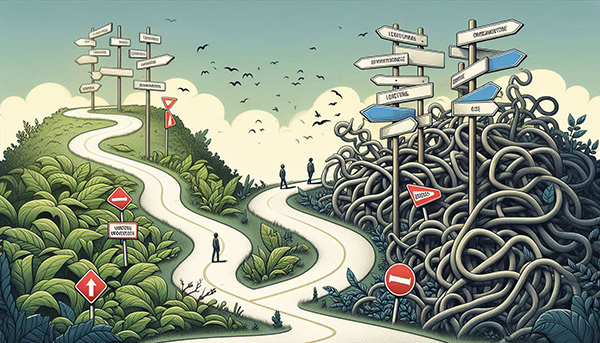
Can We Have Structure Without Bureaucracy?
Yes, you absolutely can! A bit of hierarchy can be like having a trail map—showing you the paths and helping you avoid the quicksand of decision-making paralysis. With just enough structure, startups can grow fast and maintain focus without falling prey to endless debates or directionless work. And while nobody wants a system where you need three signatures to take a vacation day (seriously, who has time for that?), an efficient, well-placed manager can be the difference between a productive, happy team and one where everyone ends up locked in decision gridlock, pondering the meaning of life while waiting for approval to buy snacks.
In the end, a sprinkle of hierarchy can be exactly what lets a startup stay creative and nimble, rather than crashing and burning in its own innovation. Just think of it as a bit of grown-up common sense: even the coolest startups need a few rules. So the next time you think about tossing out all hierarchy, remember that a little structure can help keep the creative juices flowing while ensuring that everyone knows who’s responsible for bringing the snacks to the brainstorming session!
Author: John S. Morlu II, CPA is the CEO and Chief Strategist of JS Morlu, leads a licensed public accounting and management consultancy firm. He has more than 20 years of professional experience in auditing and advisory work, including service as Auditor General of Liberia and FAR and DCAA compliance work at Unisys Federal Systems. The firm’s technology products include AI-powered reconciliation software (ReckSoft.com), a handyman services platform (Fixaars.com) and advanced cloud accounting solutions (FinovatePro.com), built for finance and operations teams.