
By: John S. Morlu II, CPA
Once upon a time, in the whimsical and opportunity-filled land of Entrepreneurshipia, where every coffee shop napkin held the promise of a million-dollar idea, lived a young dreamer named Brad Jasperson. To his devoted circle of LinkedIn connections, he wasn’t just Brad—he was “Brad, CEO and Visionary.” At the tender age of 24, Brad had yet to meet an industry he couldn’t disrupt, a market he couldn’t revolutionize, or a TED Talk he couldn’t quote. Fresh out of college and radiating the unshakable confidence of someone who had completed precisely one online course in “Disruptive Leadership,” Brad believed he was destined for greatness.
Armed with nothing but ambition and $175, he performed the modern entrepreneurial miracle: registering an LLC. In just 15 minutes, Brad had ascended from mere mortal to business mogul, transforming into the founder and CEO of what would surely be a global empire. He could now use all the buzzwords he’d been practicing in the mirror, like “synergy,” “let’s circle back,” and the perennial favorite, “we need to table this discussion until Q3.” In Brad’s hands, the world was his oyster—well, at least his growing one-man Zoom empire was.
He had everything: a sleek LinkedIn title, a logo that looked like it came straight from Silicon Valley, and the self-assured certainty that he was changing the world. Never mind that his company’s sole offering was e-invoicing—he believed, with every fiber of his entrepreneurial being, that it was the kind of innovation that would alter the course of history. And why wouldn’t it? He was Brad, after all—CEO, Visionary, and soon-to-be tech titan.
But as you’ll see, in the land of Entrepreneurshipia, having a business and having a button are often confused. And Brad’s tale? Well, it’s one of blind ambition, tiny features masquerading as world-changing products, and the power of self-delusion—a story that might just sound familiar in this age of startups. So sit back, get ready to laugh, and discover how Brad’s $175 company turned out to be more “tiny feature” than global empire.

Chapter 1: The Idea: A World-Changing Product
Brad, our ambitious (some might say overly ambitious) hero, had a vision. In his mind, this vision was nothing short of world-changing—up there with the moon landing or the invention of sliced bread. What was it, you ask? A mind-blowing, revolutionary product that was sure to shake the very foundations of modern life.
Was it a groundbreaking AI that could solve climate change? A health-tech marvel to end all diseases? No, Brad wasn’t quite aiming for those. He had created… wait for it… an e-invoicing app. Yes, you read that correctly: an invoicing feature. And not even a full accounting suite, just the part that lets you send a bill.
Now, Brad knew that naming is everything. He didn’t call it something boring like “Invoicing Software.” No, no. His creation was “NextGen InvocePro™”—because nothing screams “cutting edge” like deleting a couple of vowels and adding “Pro” at the end. After all, we all know that vowels are relics of a bygone era, clogging up progress. This wasn’t just another app; this was a movement. Who needed vowels when you had such visionary thinking?
Even Brad’s elevator pitch sounded like it had been pulled straight out of a tech TED Talk: “NextGen InvocePro™ is here to enhance the digital invoicing experience, redefining how small businesses connect with their clients through seamless, integrated solutions.” Translation: it sends bills. But boy, did it sound good!
Little did Brad know, though, that the product itself wasn’t what was going to shake the world. No, it was his unshakable confidence in the magnitude of this tiny, single-feature app. After all, in Brad’s mind, it wasn’t the size of the idea that mattered—it was how big you made it sound.
Chapter 2: The Glorious Launch
The big day had arrived. Brad had finally reached that all-important milestone in the life of any entrepreneur: Launch Day. Armed with nothing but a freshly minted LLC certificate (it cost him $175, a sum he was quite proud of) and a 15-slide pitch deck filled with stock photos of people who definitely didn’t work for him, Brad was ready.
He took to social media with all the confidence of a seasoned Silicon Valley titan:
“Today, the world changes. We are officially live. #CEO #Entrepreneur #Innovation #Gamechanger #ForbesNext100”
Brad’s confidence was unshakable. After all, hadn’t Bill Gates, Steve Jobs, and Elon Musk started in a garage too? Granted, Brad’s “office” was his kitchen table, and his biggest expense so far had been a premium Canva subscription for designing the logo, but that was just the scrappy nature of startups, right?
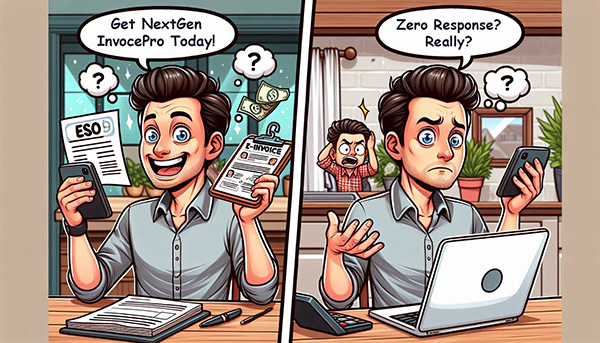
The grand announcement was made. NextGen InvocePro™ was live. Brad was ready for the flood of users, the press inquiries, and—of course—the inevitable acquisition offers from the tech giants.
But something strange happened. Nothing. His phone didn’t buzz. His inbox remained as barren as it had been the day before. But Brad wasn’t discouraged! In fact, he remained undeterred by the complete lack of immediate response. After all, the startup game was a marathon, not a sprint.
A few days later, Brad was recounting his launch to a friend who innocently asked, “Wait, what exactly does your app do again?”
Brad’s chest puffed out with pride. “It’s a revolutionary invoicing system—well, more like a feature—that allows businesses to send bills.”
“Isn’t that already a feature in, like, every accounting system?” the friend asked, clearly missing Brad’s brilliance.
“Yes,” Brad replied, smiling knowingly, “but this one has blockchain integration.”
And just like that, Brad was back in the game.

Chapter 3: Enter the Rest of the Disruptive Startups
As Brad basked in the glow of his “successful” launch, little did he know that elsewhere in the land of Entrepreneurshipia, other visionaries were working on equally monumental, single-feature startups.
Take, for instance, Sophia McFlash from the neighboring town of Mediocreville. She had just launched MedCareLive, a health-tech startup that offered virtual temperature checks. Now, you might think that a simple temperature check isn’t exactly the pinnacle of disruptive innovation, but Sophia would vehemently disagree.
“Every revolution starts small,” she told investors with a dramatic flair. “And what’s more critical to healthcare than a person’s temperature?”
Sure, you could do the same thing with a $5 thermometer, but Sophia wasn’t about to let logic get in the way of her pitch. Investors loved it. “Telemedicine is the future,” they nodded sagely, despite the fact that MedCareLive offered no other telemedicine features. Details, schmetails!
Then there was Greg Tiddlesworth, whose EdTech startup TeachBee had raised a jaw-dropping $5 million in seed funding. TeachBee’s groundbreaking service? It reminded students to turn in their homework. Not grading, not personalized learning analytics—just reminders. But these reminders were automated, and Greg had somehow managed to weave blockchain into the pitch. It was a masterpiece.
“I know Google Classroom already does reminders,” Greg would say in his pitch, “but ours is much more… friendly. Also, we’re blockchain-enabled.”
And thus, TeachBee became the darling of Edtechistan.

Chapter 4: The Rise of the Feature-preneurs
Before long, Entrepreneurshipia was teeming with entrepreneurs just like Brad, Sophia, and Greg. They were armed with confidence, pitch decks full of buzzwords, and products that were essentially single features wrapped in shiny marketing. They called themselves “founders” and “visionaries.” In reality, they were feature-preneurs.
There was HackSafePro™—a cybersecurity company that secured your Wi-Fi password. Just your Wi-Fi password. No protection for the rest of your network, but hey, that’s niche marketing! In fintech, BankSave™ allowed you to save the receipt of your credit card transaction, but not the transaction itself. Important? Maybe not, but there was definitely a market for it! In Edtech, ReadAPlenty™ let students mark books as “read.” No summaries, no learning tools, just a button that said, “I’ve read this.”
And each of these entrepreneurs—Brad included—was convinced that their product was destined for greatness. Investors, drunk on buzzwords and flashy pitch decks, were more than happy to fund these ventures. As long as you could throw in words like “blockchain,” “AI-driven,” or “disruption,” you were set.
“What’s the Total Addressable Market (TAM)?” an investor would inevitably ask.
“Oh, it’s huge,” Brad would answer confidently. “At least $3 billion. Everyone invoices, right?” Of course, the number was based on nothing more than a hunch, but hey, that’s how the game is played.

Chapter 5: The Reality Check: Common Sense Arrives
As the land of Entrepreneurshipia became saturated with single-feature startups, something strange started happening. Customers, who were actually using the products, began to realize something: they didn’t need all these fragmented tools.
Enter Wendy Wiseacre. Wendy wasn’t a tech visionary or a founder of anything fancy. She owned a coffee shop. But Wendy had something these “CEOs” didn’t—common sense. She’d been running a profitable business for years. She didn’t have a pitch deck or a company valuation. She had loyal customers and a cash register.
One day, Wendy invited Brad, Sophia, Greg, and a few other feature-preneurs to a casual meetup at her shop. She opened with a simple question: “What problem are you solving?”
Brad puffed out his chest. “We’re redefining the B2B invoicing experience,” he said, still believing in his own hype.
Sophia proudly stated that her virtual temperature checks were “the future of telemedicine.”
Greg confidently mentioned blockchain and mindfulness in education for the third time in 30 seconds.
Wendy just sighed and shook her head. “But… do people need these things as separate businesses? Aren’t they just features in larger systems that already exist?”
The room fell silent. Brad scratched his head. Sophia stared into her latte. Greg shuffled uncomfortably. “Well, we do have pretty cool logos,” Brad muttered.
Chapter 6: Lessons from the Land of Entrepreneurshipia
After their meeting with Wendy, the feature-preneurs had a lot to think about. Slowly, reality began to dawn on them. Maybe, just maybe, a single feature didn’t justify an entire business. They realized that just because you could charge someone for something didn’t mean they needed it as a stand-alone service.
Brad eventually shut down NextGen InvocePro™ and joined a real accounting software company. Ironically, his first assignment? Integrating an invoicing feature into a larger system.
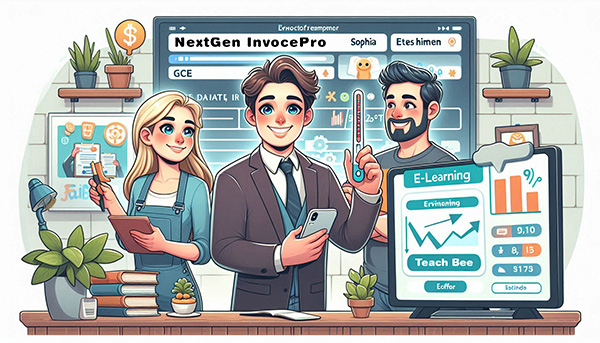
Sophia merged MedCareLive into a telemedicine platform that offered more than just temperature checks. Greg, ever the optimist, pivoted TeachBee into a full-fledged learning management system. He kept mentioning blockchain though—because some habits die hard.
And Wendy? She kept making coffee and shaking her head at the latest crop of feature-preneurs. They just couldn’t resist the allure of calling themselves a “CEO.”
In the end, the true lesson of Entrepreneurshipia was simple: It’s okay to dream big, but make sure your big dream actually solves a problem. Preferably one that requires more than just deleting a few vowels and adding “Pro.”
Author: John S. Morlu II, CPA is the CEO and Chief Strategist of JS Morlu, leads a licensed public accounting and management consultancy firm. He has more than 20 years of professional experience in auditing and advisory work, including service as Auditor General of Liberia and FAR and DCAA compliance work at Unisys Federal Systems. The firm’s technology products include AI-powered reconciliation software (ReckSoft.com) and advanced cloud accounting solutions (FinovatePro.com), built for finance and operations teams.